
How to Prevent Premature Skin Ageing: 7 Ways to Protect Your Skin

how to prevent premature skin ageing​

Premature skin ageing means fine lines, dark spots, or sagging that show up earlier than they should. Genes play a part. But most early changes come from things within your control, and the sun tops that list. UV exposure is the leading preventable cause of premature skin ageing.

That’s why daily sun protection is the most effective way to keep your skin from ageing early, and sunscreen is the easiest place to start. Every other habit helps too.

The seven habits below show how to prevent premature skin ageing, from sun protection to sleep, food, and stress. There’s also a simple routine built for Singapore’s heat and humidity.

How to Prevent Premature Skin Ageing: 7 Habits That Work

The habits below cover the main things you can change, starting with sun protection. You don’t need all seven on day one.

1. Protect your skin from the sun
How to protect your skin from the sun

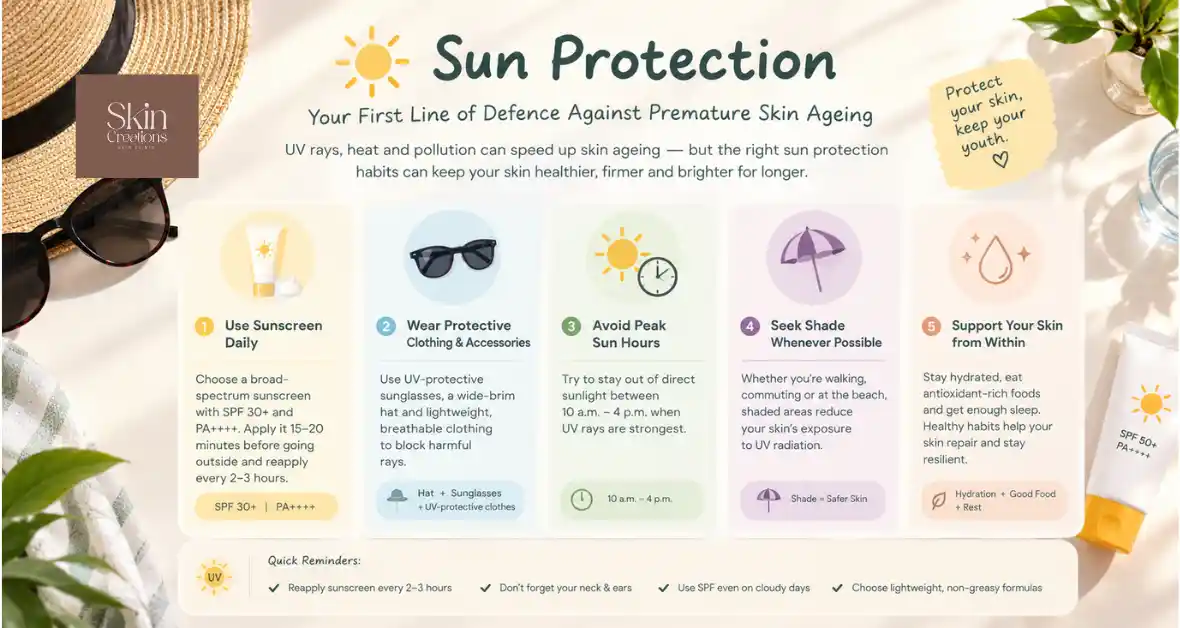
The most effective step is avoiding strong sun. A dermatologist at Singapore General Hospital puts it ahead of protective clothing, hats, and umbrellas. In Singapore, UV radiation typically peaks between 11 am and 3 pm, according to NEA, though levels vary with cloud cover. On clear days, the UV index often reaches very high or extreme levels. Sunglasses help too, because squinting leaves lines around the eyes over time. 

Sunscreen covers what shade can’t. Choose a broad-spectrum formula, which blocks UVA rays (the ones that age skin) and UVB rays (the ones that burn it). The basics:

  • Pick SPF 30 or higher, and go for SPF 50 if you’re outdoors a lot.
  • Apply a generous, even layer to your face, ears, and neck about 15 minutes before you head out.
  • Reapply every two hours outside, or after heavy sweating.

Daily use is worth it. In a 4.5-year Australian trial of 903 adults, people who used sunscreen every day showed no detectable increase in skin ageing, and about 24% less ageing than those who used it only when they chose. The sunscreen was SPF 15 or higher.

One thing people skip: UVA rays pass through window glass, so a desk by a window still counts.

2. Add a retinoid at night

Retinoids are vitamin A products that can improve signs of sun damage, including fine lines and dark spots, and support collagen, the protein that keeps skin firm. Retinol is sold over the counter. Tretinoin is stronger and needs a prescription.

Go slowly. Begin with two or three nights a week, use a pea-sized amount for the whole face, and follow with moisturiser. Some dryness or peeling early on is common. Skip exfoliating acids on the same night. Retinoids also make skin more sensitive to the sun, so sunscreen the next morning is a must. Avoid retinoids if you’re pregnant or planning a pregnancy. If you’re breastfeeding, check with your doctor first.

3. Use antioxidants in the morning

Sun and pollution create free radicals, unstable molecules that can damage skin cells. Antioxidants help neutralise them. Vitamin C is the best known. Apply a vitamin C serum after cleansing and before sunscreen. Niacinamide (vitamin B3) is another option.

Antioxidants add to sunscreen, not replace it. And pills aren’t a shortcut. In the same sunscreen trial, beta-carotene supplements had no overall effect on skin ageing.

4. Look after your skin barrier

The skin barrier is the outer layer that keeps water in and irritants out. When it’s damaged, skin gets dry and irritated.

Moisturiser helps. Singapore General Hospital dermatologists explain that skin moisture is achieved at the barrier level, and moisturisers trap water so cells stay plump. Drinking enough water is good for you, but it isn’t a substitute for moisturiser. Oily or sweaty skin still needs a moisturiser, and in our humidity a light gel usually feels better than a rich cream.

Cleanse gently in the morning and evening, and again soon after heavy sweating. Scrubbing irritates skin and can speed up ageing. Harsh or heavily fragranced products can do the same.

5. Get enough sleep

Poor sleep may age skin faster. In a small US study of 60 women aged 30 to 49, poor sleepers slept five hours or less and good sleepers slept seven to nine. The poor sleepers showed more fine lines, uneven pigmentation, and slacker skin, and their skin barrier recovered less well after it was disrupted. It shows a link, not proof of cause, but it’s one more reason to protect your sleep. Aim for at least seven hours, and if late nights come with your work, a fixed bedtime is a good place to start.

6. Cut back on sugar and alcohol

A few studies link diets high in sugar and refined carbs to faster skin ageing, while plenty of fruit and vegetables seems to help protect skin. The research is still limited, so treat this as a sensible nudge, not a promise. Alcohol can dehydrate skin, and heavy drinking over time may leave it looking older.

An easy first step: swap one sugary drink a day, bubble tea included, for water or unsweetened tea.

7. Quit smoking and manage stress

Smoking is one of the best-established lifestyle causes of premature facial ageing. In a study of 79 pairs of identical twins, the twins who smoked showed more signs of ageing, with visible differences from as little as five years’ difference in smoking history. Twins share the same genes, which helps separate smoking from family traits, though it is one study. If you smoke, quitting helps your skin and everything else.

Stress is harder to pin down, but it affects sleep and can show on your skin. Exercise, short breaks, and a regular bedtime all help.

Putting it together: a simple skincare routine for Singapore’s humid climate

Seven habits can feel like a lot. The skincare ones fit into two short routines.


Step

What to use

Why

Morning

1. Cleanse

Water or a mild cleanser

Removes sweat and oil without stripping skin


2. Antioxidant

Vitamin C serum

Helps neutralise free radicals from UV and pollution


3. Moisturise

Light gel moisturiser

Traps water without feeling heavy in humidity


4. Protect

Broad-spectrum SPF 30+

Helps protect against the main cause of early ageing

Night

1. Cleanse

Gentle cleanser (twice if you wore sunscreen all day or make-up)

Clears sunscreen, sweat, and pollution


2. Retinol

Over-the-counter retinol, pea-sized amount, 2 to 3 nights a week at first

Supports renewal and collagen


3. Moisturise

Same gel or a slightly richer cream

Seals in moisture overnight

Short on time? Three steps are enough: a gentle cleanser, a light moisturiser, and sunscreen. Add the rest once those feel automatic.

What to adjust as you get older:

  • 20s: Sunscreen every day, plus an antioxidant. Consider adding an over-the-counter retinol when you’re ready.
  • 30s: Use retinol more regularly and keep everything else simple.
  • 40s and beyond: Many people find skin gets drier, so choose gentler cleansers and richer moisturisers.

What Causes Premature Ageing of the Skin in Singapore?

Skin ages in two ways. Natural ageing comes from your genes, and you can’t change it. Premature ageing comes mostly from your environment and lifestyle, which is the part you can influence.

Cause

What it does to your skin

Why it hits harder here

Sun (UV)

Damages skin cells and speeds up collagen loss. It’s the biggest preventable cause of visible ageing.

We’re near the equator, so the sun is strong all year, and the UV index often reaches very high levels.

Pollution and haze

One study linked fine particles and soot to more dark spots and, less strongly, wrinkles.

Heavy traffic and seasonal haze.

Heat, humidity, and air-con

Humidity can leave skin feeling sweaty or oily, and dry air-conditioning can still pull moisture out.

Many of us move between humid streets and cold offices all day.

Daily habits

Smoking, short sleep, sugar, alcohol, and stress all speed up visible ageing.

Busy city routines make late nights and stress easy to pile up.

The seven habits above target each of these.

Premature Skin Ageing Signs to Watch For
How to protect your skin from the sun

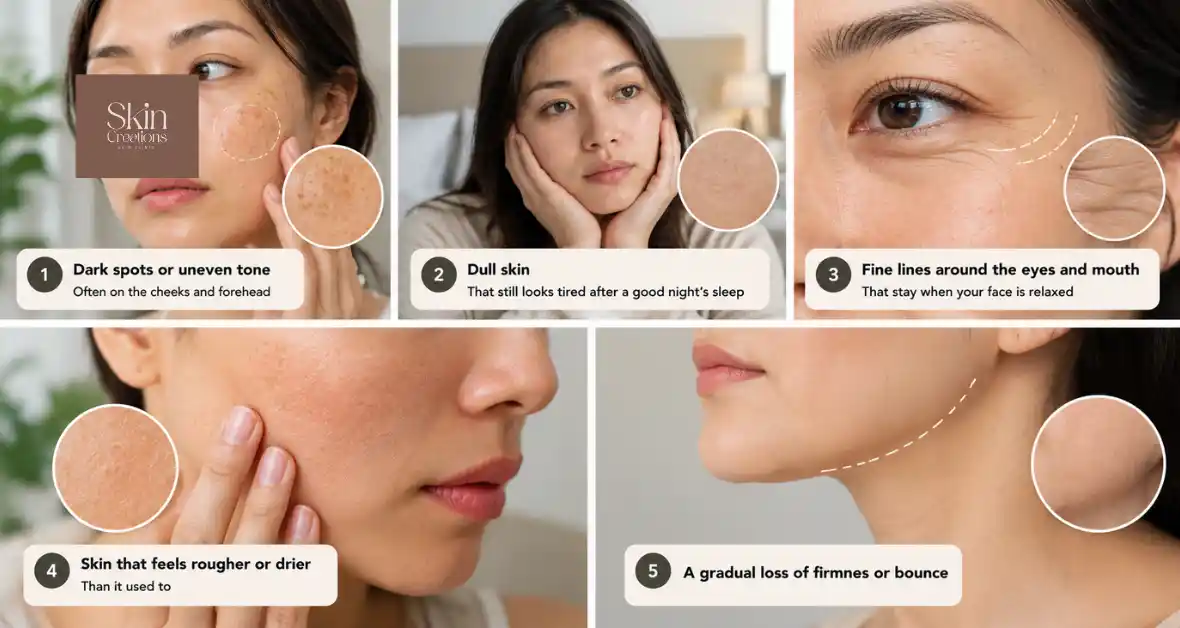
These signs of ageing skin often show up before deep wrinkles do.

  • Dark spots or uneven tone, often on the cheeks and forehead
  • Dull skin that still looks tired after a good night’s sleep
  • Fine lines around the eyes and mouth that stay when your face is relaxed
  • Skin that feels rougher or drier than it used to
  • A gradual loss of firmness or bounce

One or two of these doesn’t mean something has gone wrong. It’s a cue to tighten up your habits. If loose skin along the jaw or cheeks bothers you most, see when skin tightening makes sense for your skin. The next section covers a non-surgical option.
When Habits Aren't Enough: Non-Surgical Options

Good habits slow premature ageing, but they can’t undo changes that are already there, like early loss of firmness along the jawline or cheeks.

If that’s what bothers you, non-surgical skin tightening is one option. Some non-invasive treatments use energy, such as radiofrequency (heat that can encourage skin to make new collagen), to improve the look of firmness and texture without surgery. Downtime and results vary by treatment, device, and person. The right option depends on your skin and how much laxity (looseness) you have.

As a professional aesthetic clinic in Singapore, Skin Creations provides the Diamonte Anti-Aging Facial for those noticing early signs of ageing, such as mild loss of firmness along the jawline or cheeks. This treatment combines three technologies in one session: microcurrent therapy, LED light therapy, and radiofrequency, alongside serums containing antioxidants, peptides, and hyaluronic acid. It aims to improve the appearance of skin firmness and overall texture, complementing healthy skincare habits rather than replacing them.

A typical session includes:

  • Deep cleansing and gentle exfoliation
  • Microcurrent, LED light, and radiofrequency therapies
  • Serums for hydration and plumpness
  • A firming massage that supports circulation and lymphatic drainage

Diamonte has no downtime, so it fits easily into a busy day.

Conclusion

The most effective way to prevent premature skin ageing is daily sun protection, backed by a few steady habits. Most early ageing comes from things you can change, so small steps add up over the years.

If you do one thing this week, put on sunscreen before you leave the house each morning. Add the other habits at your own pace.

Not sure where your skin stands today? Our team at Skin Creations can take a look and suggest what to focus on first. Book a skin consultation at our aesthetic clinic on Orchard Road, Singapore.

FAQs

Do collagen supplements prevent skin ageing?
The evidence is mixed. Some reviews suggest collagen supplements may improve skin hydration and elasticity, but dermatologists say there's no strong evidence that oral or topical collagen works for anti-ageing. Oral supplements likely do little harm. Sunscreen, not smoking, and limiting alcohol protect your collagen more reliably.
Does blue light from phones and screens age your skin?
Probably far less than the sun. Most blue light exposure comes from sunlight, and the evidence for screens is still inconclusive. Some dermatologists say visible light can trigger pigmentation, especially in darker skin tones. Late-night screen use can also disrupt sleep, so daily sun protection and a regular bedtime still come first.
Does Asian skin age differently?
It can. Patterns differ between ethnic groups. In a study of German, Japanese, and Chinese women, pigment spots on the cheeks were a typical sign in both East Asian groups at every age, and wrinkles varied by age and area of the face. That's why dark spots and uneven tone deserve as much attention as fine lines.
Do facials help prevent skin ageing?
A facial can leave skin smoother, brighter, and better hydrated, but the glow tends to fade within days or weeks. Some dermatologists also caution that people expect too much from facials alone. They work best alongside daily sunscreen and a steady routine, and they vary widely, so ask what yours includes.
Can premature ageing skin be reversed?
Some signs can improve, but not all. Sun protection helps prevent further damage, and regular retinoid use has been shown to improve visible sun damage, including discolouration and sun spots. Bigger changes, like loose skin along the jaw, often need more than skincare, which is where non-surgical treatments come in.

Recent Posts

Contact Details

Contact Details

Leave a Reply

Your email address will not be published. Required fields are marked *