Expert Skin Care in Singapore
Personalised Skin & Beauty Solutions
Beauty Treatments for Radiant Results
- Home
- Treatments
- RevitaGrow Hair Regrowth Treatment Singapore
- Hair Rejuvenation Treatment Singapore
- PurifyScalp Detox Treatment Singapore
- Tone & Body Sculpting Treatment Singapore
- All-Inclusive Glow-Up Treatment in Singapore
- Non-Surgical Body Contouring Treatment Singapore
- CurveLift Sculpting Treatment Singapore
- Rejuve-Eye Lifting Treatment Singapore
- Precision Pore Tightening Treatment Singapore
- Neck & Jaw Lifting Singapore
- Korean Facial Treatment in Singapore – Baby Face Therapy
- Diamonte Anti-Aging Facial Treatment in Singapore
- Brightening Facial Treatment in Singapore
- Cryo Lifting Facial & Cryotherapy Skin Repair Treatment in Singapore
- Products
- Gallery
- Our Story
- Blog
- Contact Us

- Home
- Our Story
- Aesthetic Treatments in Singapore
- RevitaGrow Hair Regrowth Treatment Singapore
- Hair Rejuvenation Treatment Singapore
- PurifyScalp Detox Treatment Singapore
- Tone & Body Sculpting Treatment Singapore
- All-Inclusive Glow-Up Treatment in Singapore
- Non-Surgical Body Contouring Treatment Singapore
- CurveLift Sculpting Treatment Singapore
- Rejuve-Eye Lifting Treatment Singapore
- Precision Pore Tightening Treatment Singapore
- Neck & Jaw Lifting Singapore
- Korean Facial Treatment in Singapore – Baby Face Therapy
- Diamonte Anti-Aging Facial Treatment in Singapore
- Brightening Facial Treatment in Singapore
- Cryo Lifting Facial & Cryotherapy Skin Repair Treatment in Singapore
- Treatment Booking
- Products
- Blog
- Gallery
- Contact Us
- Call Us
- Home
- Our Story
- Aesthetic Treatments in Singapore
- RevitaGrow Hair Regrowth Treatment Singapore
- Hair Rejuvenation Treatment Singapore
- PurifyScalp Detox Treatment Singapore
- Tone & Body Sculpting Treatment Singapore
- All-Inclusive Glow-Up Treatment in Singapore
- Non-Surgical Body Contouring Treatment Singapore
- CurveLift Sculpting Treatment Singapore
- Rejuve-Eye Lifting Treatment Singapore
- Precision Pore Tightening Treatment Singapore
- Neck & Jaw Lifting Singapore
- Korean Facial Treatment in Singapore – Baby Face Therapy
- Diamonte Anti-Aging Facial Treatment in Singapore
- Brightening Facial Treatment in Singapore
- Cryo Lifting Facial & Cryotherapy Skin Repair Treatment in Singapore
- Treatment Booking
- Products
- Blog
- Gallery
- Contact Us
- Call Us
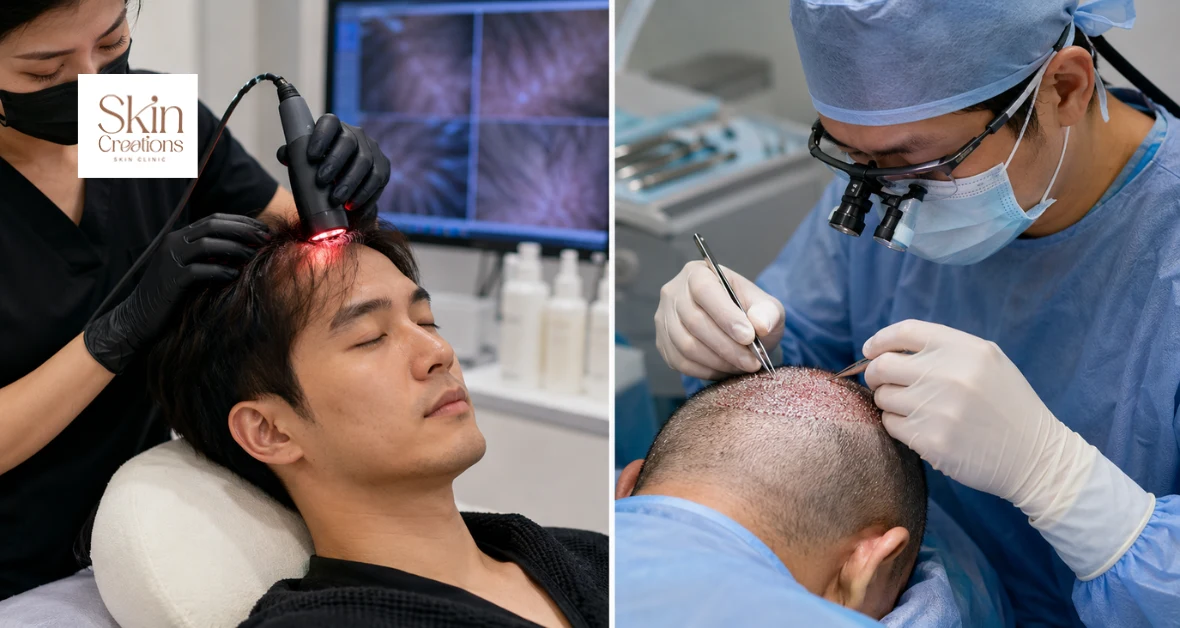
Noticed more hair in the shower drain lately? Or caught a wider parting in the mirror and done a double take? If so, you’re not the only one. It happens to far more people than you’d think, and it can knock your confidence more than anyone likes to admit.
Singapore’s heat and humidity can make things feel worse day to day, an oilier scalp, more sweating, general discomfort, and stress can add to shedding on top of that. But hair thinning usually comes down to a mix of causes, and figuring out yours is the real starting point.
So if you’ve started looking into Hair Rejuvenation vs Hair Transplant, trying to work out which non-invasive hair treatment or surgical option actually fits you, you’re already asking the right question. There’s no need to decide today, and certainly no need to panic. Let’s walk through both, plainly and simply, so you can choose what suits your hair and your life.
Hair Rejuvenation Treatment: What You Should Know
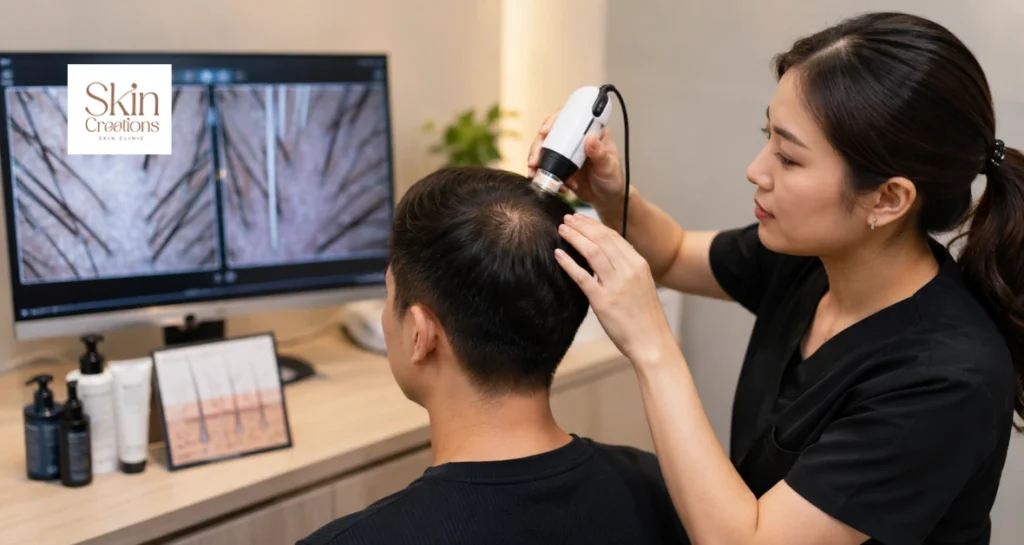
Let’s start simple. Every strand of hair on your head grows out of a tiny pocket in your skin called a hair follicle. In common types of thinning, like the gradual pattern hair loss many people experience with age or genetics, follicles don’t just switch off. They tend to shrink over time, a process called miniaturisation, producing finer, shorter hairs with each growth cycle instead of stopping altogether. Other types of hair loss, caused by stress, hormones, or health conditions, work differently again.
This matters because it means there isn’t one single switch to “wake up.” What actually helps depends on what’s causing the thinning in the first place, which is exactly what a proper scalp consultation is for.
How Does Hair Rejuvenation Work? (Step by Step)
Here’s how a typical Hair Rejuvenation Treatment session actually goes.
- Deep scalp cleanse: Clears away oil, sweat, and product buildup, which can help keep the scalp comfortable and in better condition, especially in Singapore’s humidity.
- Nutrient-rich serums: These contain vitamins, peptides, and plant extracts applied directly to the scalp. How much they help depends on the specific formulation, so this works best alongside professional guidance rather than as a stand-alone fix.
- Low-level laser therapy (LLLT): LLLT has real clinical research behind it. A systematic review and meta-analysis of randomised controlled trials has found it can improve hair density in people with pattern hair loss specifically, though results vary from person to person, and it isn’t a fit for every type of hair loss. The exact way it works isn’t fully settled, but it’s thought to influence cell activity involved in hair growth.
- Hydration and repair: A nourishing finish that calms the scalp and leaves hair feeling stronger by the end of the session.
Getting your hair rejuvenation done properly comes down to one thing: who’s actually behind the treatment. At Skin Creations, we provide personalised Hair Rejuvenation Treatment in Singapore, handled by trained aestheticians who specialise in non-invasive scalp and hair care. Every session starts with a proper scalp analysis first, so nothing is guessed, and nothing is rushed.
Hair Rejuvenation Benefits: What to Expect
- No needles, no cuts: Just a relaxing, hands-on treatment for your scalp.
- Zero downtime: Walk out and get straight back to your day, no recovery needed.
- Quick sessions: Most visits wrap up in under an hour.
- Results that build over time: Many people notice their scalp feeling healthier within the first few sessions, with results building gradually as treatment continues, though outcomes vary by individual and cause.
Who Should Try Hair Rejuvenation Treatment?
This tends to suit people dealing with early signs of thinning hair, weaker roots, or more shedding than usual, where hair is still present but finer than it used to be. It isn’t the right fit for every kind of hair loss, sudden bald patches, patchy loss, or scalp symptoms are worth getting properly assessed rather than treated with a general approach.
Hair Transplant Surgery: What You Should Know
Now let’s talk about the other option on the table, hair transplant surgery. It works very differently from hair rejuvenation, so it’s worth understanding properly before you decide anything.
What Is a Hair Transplant?
A hair transplant is a surgical procedure. Rather than working with follicles already on the thinning area, it moves healthy grafts from a donor area, usually the back or sides of the scalp, where hair tends to be more resistant to the type of loss affecting the top or front, into the areas being treated.
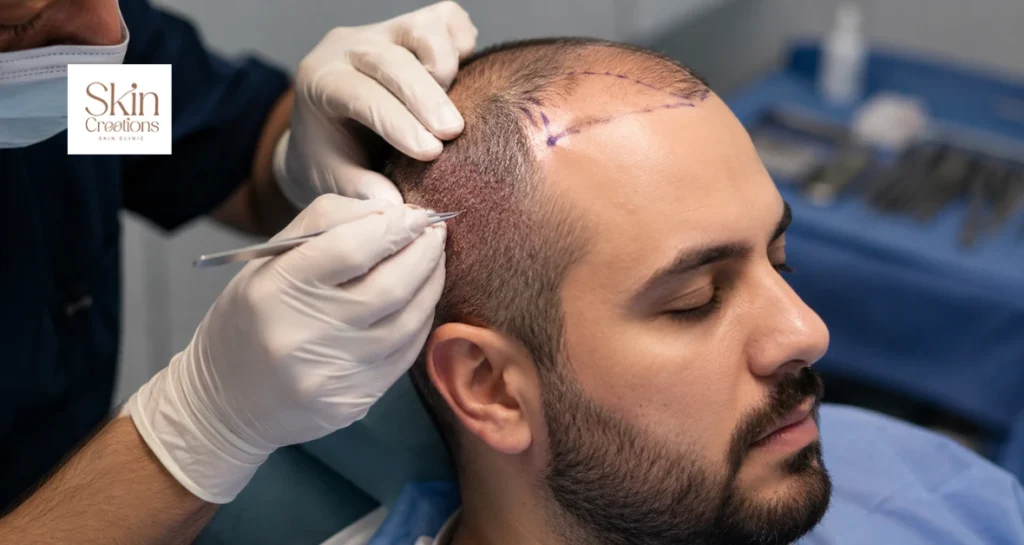
FUE vs FUT: The Two Hair Transplant Methods
- FUE (Follicular Unit Extraction): Individual grafts are removed one at a time and placed into the treatment area. This method typically leaves small, less visible marks rather than a single scar line.
- FUT (Follicular Unit Transplantation): A thin strip of scalp is removed, then separated into individual grafts before being transplanted. This leaves a thin linear scar along the donor area.
Which method is better suited to you depends on factors like your donor hair, how many grafts are needed, and your surgeon’s recommended approach, rather than one method simply being “bigger” or “smaller” by default.
Both methods use local anaesthesia to numb the area so you don’t feel pain, even though you’re awake throughout.
Hair Transplant Recovery Time: What to Expect
- Some swelling, redness, and tenderness are common in the days after surgery
- Small scabs typically form around each graft and settle within one to two weeks
- It’s normal for transplanted hair to shed a few weeks after the procedure before new growth begins, this is a known part of the process, not a sign anything’s gone wrong
- New growth usually starts appearing around three to four months, with fuller results typically visible between six and twelve months
- Time off work varies by person and procedure, some need a week or two, others feel ready sooner
- Costs are typically higher than non-surgical options, given it’s a specialist surgical procedure
Who Is a Good Candidate for a Hair Transplant?
This isn’t just a question of how bald an area looks. It depends on the cause and stage of your hair loss, how much viable hair remains, and, if considering a transplant, the strength and stability of your donor hair. It’s generally considered for stable, longer-term hair loss rather than active or rapidly changing hair loss, and some conditions, including certain scarring types of alopecia, aren’t suitable for transplantation at all. This is exactly why a proper assessment matters more than a quick visual check.
Hair Rejuvenation vs Hair Transplant: Full Comparison
Here’s how hair rejuvenation and a hair transplant stack up: cost, recovery time, comfort, and results.
Hair Rejuvenation | Hair Transplant | |
Downtime | None, back to your day right away | Days to weeks, varies by person |
Pain level | Minimal, mostly a relaxing experience | Some post-op discomfort, procedure itself is numbed |
Sessions needed | Usually several, spaced over weeks | Typically one main procedure |
Best for | Early-stage thinning where hair is still present | Stable, longer-term hair loss with suitable donor hair |
Results | Gradual, builds up over sessions | Gradual regrowth over several months, often 6 to 12 months for full results |
Natural look | Very natural, since it’s your own hair thickening | Natural when done well, hairline design and surgeon skill matter |
Maintenance | Ongoing top-up sessions recommended | Minimal to the graft itself, though surrounding native hair can keep thinning |
Cost | Lower, ongoing sessions | Higher, mostly one-time |
Hair Transplant vs Hair Rejuvenation: Which One Should You Choose
So now that you’ve seen both side by side, how do you actually decide? It’s not simply about how much hair you have left, it depends on the cause and stage of your hair loss, how much viable hair remains, and your overall goals.
If Your Hair Is Thinning but Still Present
Hair rejuvenation is often worth exploring here, since it works with the follicles that are still active. Non-surgical approaches, including LLLT, have the most supporting evidence for early to moderate pattern hair loss specifically, so getting the right diagnosis first makes a real difference to what will actually help.
If Certain Areas Have Lost Hair Long-Term
Once hair loss in an area has been stable for a long period and donor hair is healthy, a transplant may be the more effective route, since it physically redistributes hair rather than relying on existing follicles to regrow on their own.
They're Not Always Either-Or
It’s worth knowing these two approaches aren’t always competing options. Some people use non-invasive hair treatments to help manage thinning in areas surrounding a transplant, since a transplant doesn’t stop the rest of your hair from continuing to thin naturally over time. A proper consultation can map out whether one, or a combination, makes sense for you.
Hair thinning can come from several different causes, genetics, hormones, stress, nutrition, and sometimes underlying health conditions. Not every type responds to the same treatment, which is exactly why the two paths above are starting points, not a final answer.
Not Sure Where You Stand?
Totally fair, most people aren’t sure either. A proper scalp consultation looks at your specific pattern of hair loss, not something you can work out from an online checklist.
You don’t need to have this all figured out today. You just need to take the first step.
Conclusion
Hair loss can feel like a lot to figure out, but the decision itself doesn’t have to be complicated. Whether a non-surgical approach or surgery makes more sense depends on the cause and stage of your hair loss, not just how it looks, and that’s exactly what a proper assessment is for.
That’s what a consultation at Skin Creations gives you. Visit our Orchard Road or City Gate outlet for a personalised scalp analysis, and we’ll build a plan around your hair specifically, not a generic routine.
FAQs
Is a hair transplant permanent, or can hair fall out again after it?
Transplanted hair is generally intended to provide long-lasting growth, since it's usually taken from areas naturally more resistant to pattern hair loss. That said, it doesn't stop your remaining natural hair from continuing to thin around it over time, which is why some people combine it with ongoing non-surgical care.
Can I switch from hair rejuvenation to a hair transplant later if it doesn't work?
Yes, and the two aren't necessarily either-or. Some people start with non-surgical treatment, and if hair loss progresses to a stage where a transplant becomes more suitable, that's still an option, sometimes even alongside continued non-surgical care for surrounding hair.
Does hair rejuvenation work for female hair loss too?
It can help some women with pattern hair loss specifically, but female hair loss has several possible causes, hormonal changes, telogen effluvium, and other conditions among them. A proper assessment is especially important if hair loss is sudden, patchy, or comes with scalp symptoms, since the right treatment depends entirely on the actual cause.
How long do the results from hair rejuvenation actually last?
This depends on the underlying cause and the specific treatment used. Non-surgical approaches generally require ongoing sessions to maintain results, rather than offering a one-time, permanent fix.
Is it painful to get a hair transplant?
The procedure itself is done under local anaesthesia, so you shouldn't feel pain during it, though mild to moderate discomfort in the days afterwards is common as the scalp heals.
Recent Posts
Contact Details
Contact Details