Expert Skin Care in Singapore
Personalised Skin & Beauty Solutions
Beauty Treatments for Radiant Results
- Home
- Treatments
- CurveLift Sculpting Treatment Singapore
- Non-Surgical Body Contouring Treatment Singapore
- PurifyScalp Detox Treatment Singapore
- All-Inclusive Glow-Up Treatment in Singapore
- Tone & Body Sculpting Treatment Singapore
- Brightening Face Treatment Singapore
- Cryotherapy Skin Repair Treatment Singapore
- Diamonte Anti-Aging Treatment Singapore
- Hair Rejuvenation Treatment Singapore
- Korean Baby Face Therapy Singapore
- Neck & Jaw Lifting Singapore
- Precision Pore Tightening Treatment Singapore
- Rejuve-Lift Eye Treatment Singapore
- RevitaGrow Hair Regrowth Treatment Singapore
- Products
- Gallery
- Our Story
- Blog
- Contact Us

- Aesthetic Clinic in Singapore
- Our Story
- Aesthetic Treatments in Singapore
- PurifyScalp Detox Treatment Singapore
- Non-Surgical Body Contouring Treatment Singapore
- All-Inclusive Glow-Up Treatment in Singapore
- Tone & Body Sculpting Treatment
- Brightening Face Treatment Singapore
- Cryotherapy Skin Repair Treatment Singapore
- Diamonte Anti-Aging Treatment Singapore
- Hair Rejuvenation Treatment Singapore
- Korean Baby Face Therapy Singapore
- Neck & Jaw Lifting Singapore
- Precision Pore Tightening Treatment Singapore
- Rejuve-Lift Eye Treatment Singapore
- CurveLift Sculpting Treatment Singapore
- RevitaGrow Hair Regrowth Treatment Singapore
- Products
- Treatment Booking
- Gallery
- Blog
- Contact Us
- Call Us
- Aesthetic Clinic in Singapore
- Our Story
- Aesthetic Treatments in Singapore
- PurifyScalp Detox Treatment Singapore
- Non-Surgical Body Contouring Treatment Singapore
- All-Inclusive Glow-Up Treatment in Singapore
- Tone & Body Sculpting Treatment
- Brightening Face Treatment Singapore
- Cryotherapy Skin Repair Treatment Singapore
- Diamonte Anti-Aging Treatment Singapore
- Hair Rejuvenation Treatment Singapore
- Korean Baby Face Therapy Singapore
- Neck & Jaw Lifting Singapore
- Precision Pore Tightening Treatment Singapore
- Rejuve-Lift Eye Treatment Singapore
- CurveLift Sculpting Treatment Singapore
- RevitaGrow Hair Regrowth Treatment Singapore
- Products
- Treatment Booking
- Gallery
- Blog
- Contact Us
- Call Us
BlogSkin Brightening TreatmentHow to Get Rid of Pigmentation on Face in Singapore: Treatments, Costs & What to Expect
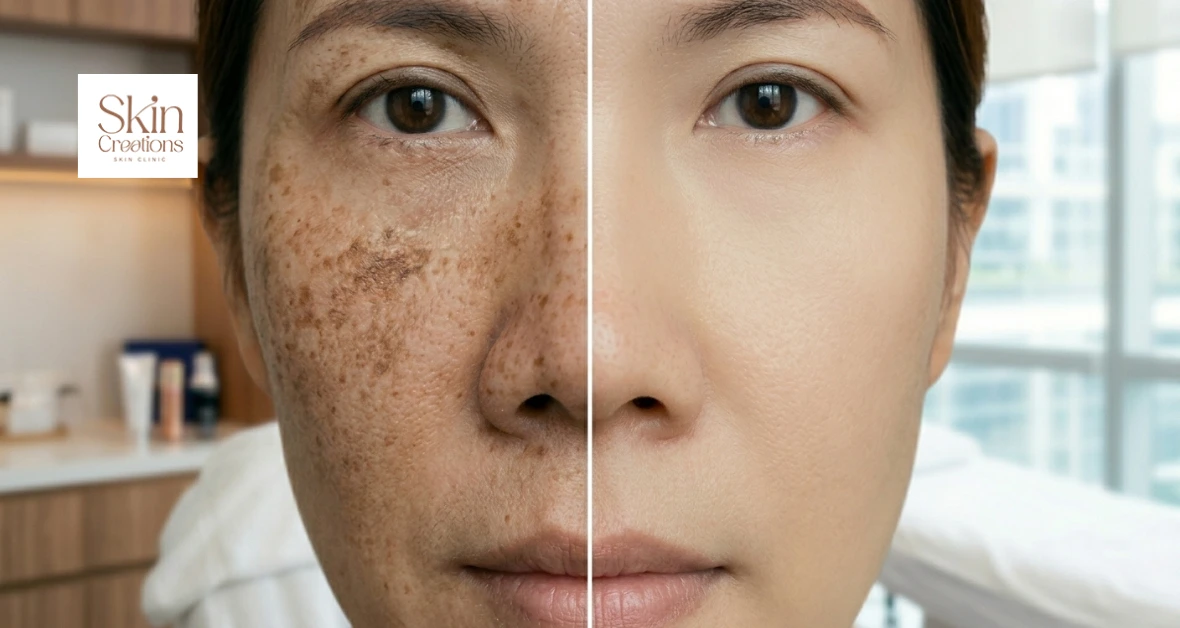
Some mornings, you just want to wash your face and walk out the door. No colour-correcting, no heavy coverage, no staring at the mirror wondering if that dark patch got worse overnight. But somehow that never quite works out. The spots after a breakout, the uneven patches that slowly appeared and just stayed, the melasma that every serum promised to fix but never did.
Living in Singapore makes it harder too. The sun here does not take a day off, and year-round UV exposure is one of the biggest reasons pigmentation develops faster and proves more stubborn to treat than in cooler climates. It is incredibly common here and honestly, it is not your fault.
If you have been searching for how to get rid of pigmentation on face and keep hitting the same generic advice that never quite works, this guide is different. It covers the actual causes, which non-invasive treatments work, what they cost, and what to expect from your very first visit.
Dark Spots, Uneven Tone, Melasma: Which One Are You Actually Dealing With?
Pigmentation on the face is not one single thing. That matters because what is sitting on your skin right now determines which treatment will actually work for you. Jumping straight into any treatment without identifying the type first is how people end up spending money and seeing no results.
Here are the most common types seen:
- Sun spots: Flat brown patches that build up gradually from years of sun exposure and tend to sit on the surface of the skin.
- Post-inflammatory hyperpigmentation (PIH): The dark spots on the face left behind after a pimple or skin irritation heal. Tends to be darker and longer-lasting on deeper skin tones.
- Melasma: Larger, cloudy patches that usually appear across the cheeks and forehead. Heavily linked to hormones, which is why it is so common during pregnancy or with certain contraceptives.
- Hori’s naevus: Greyish-blue patches that sit deeper in the skin. More common in Asian skin tones and often mistaken for melasma.
If you are unsure which one you have, you are not alone. They can look very similar on the surface, but behave completely differently underneath. A proper skin assessment at a good skin aesthetic clinic in Singapore can help identify exactly what you are working with, and that is honestly the most important first step.
The Non-Invasive Treatments That Actually Work for Pigmentation in Singapore
Not every treatment for pigmentation on the face works the same way, and you definitely do not need anything aggressive to see real results. Here are the most effective options available, along with what each is best for, and how skin brightening treatments work beneath the surface to actually fade pigmentation over time.
1. Pico Laser
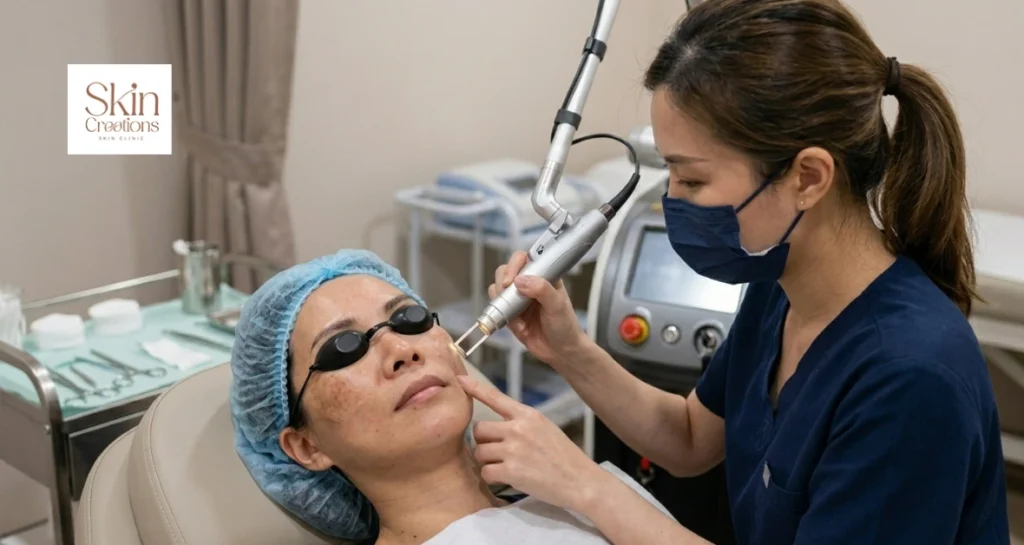
Pico laser is one of the most popular pigmentation treatments in Singapore, and for good reason. It sends ultra-short pulses of energy into the skin that break pigment down into tiny particles, which your body then naturally clears away. It is fast, precise, and works well across a wide range of pigmentation types, including sun spots, PIH, and even some melasma. Most people describe the feeling as a quick snapping sensation, nothing unbearable. You will typically need four to six sessions to see a significant difference.
2. Q-Switch Nd:YAG Laser
This one has been around longer and is still widely trusted, especially for treating pigmentation on Asian skin tones. It targets melanin specifically and breaks it down without damaging the surrounding skin. It works particularly well for Hori’s naevus and uneven skin tone in general. Sessions are quick, usually around twenty to thirty minutes, and downtime is minimal.
3. Intense Pulsed Light (IPL)
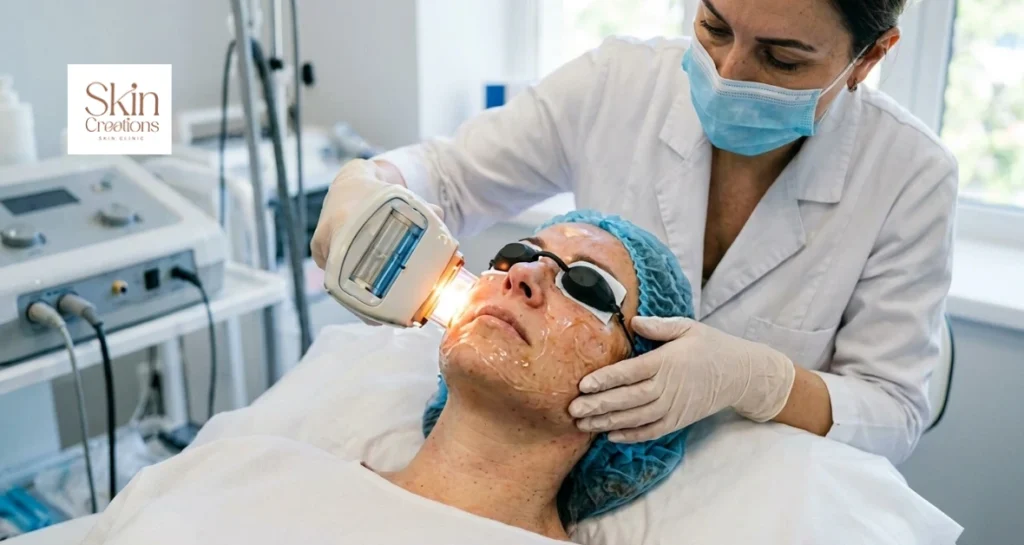
IPL uses broad-spectrum light to target brown pigmentation on the face that sits closer to the skin’s surface. It is a great option for sun spots and general skin brightening. It covers a larger area at once, which makes it efficient, though it works best on lighter pigmentation rather than deeper or more stubborn concerns like melasma.
4. Skin Boosters
Treatments like Rejuran and Profhilo do not target pigmentation directly, but they improve your skin’s overall health and hydration from within. Healthier skin responds better to pigmentation treatments and holds results longer. Think of skin boosters as the foundation that makes everything else work better.
5. Medical-Grade Brightening Facials
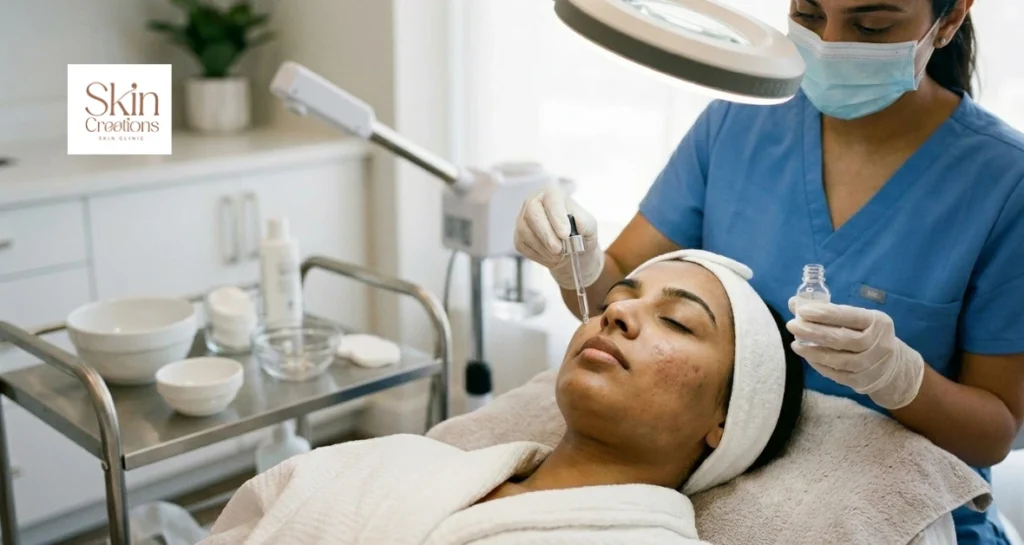
These go further than a regular facial. Using professional-grade actives like tranexamic acid, kojic acid, and vitamin C, these treatments work at the surface to gradually suppress melanin production and reduce facial pigmentation.
If this sounds like the right fit for your skin, Skin Creations offers expert brightening facial treatment delivered by experienced practitioners who build every plan around your specific pigmentation type and skin needs.
Pigmentation Treatments in Singapore: Which One Is Right for You?
Not sure which treatment fits your concern? Here is a side-by-side look to help you decide.
Treatment | Best For | Downtime | Pain Level | Cost Per Session |
Pico Laser | Sun spots, PIH, Melasma | None | Mild snapping sensation | S$200 to S$500 |
Q-Switch Nd:YAG Laser | Hori’s naevus, uneven tone | Minimal | Mild warmth | S$100 to S$300 |
IPL | Sun spots, general brightening | None | Mild warmth | S$150 to S$400 |
Skin Boosters | Overall skin health, dull skin | Minimal | Mild | S$400 to S$800 |
Medical-Grade Brightening Facial | Surface pigmentation, uneven tone | None | Painless | S$100 to S$250 |
Causes of Pigmentation on Face: Why Does It Keep Coming Back?
This is the question most people have after their first round of treatment. The pigmentation cleared up, things looked great, and then slowly it started creeping back. It is frustrating, but there is always a reason behind it.
- Unprotected sun exposure: Every time your skin is hit with UV rays without adequate SPF it triggers melanin production all over again. In Singapore, where the sun is relentless year-round, this is the number one reason results fade faster than expected.
- Hormonal changes: Particularly for melasma, pregnancy, birth control, and hormonal shifts can reactivate pigmentation even on skin that has been successfully treated. Managing melasma is more of an ongoing process than a one-time fix.
- Picking at spots: Squeezing or touching active breakouts leaves fresh pigmentation behind and undoes progress faster than most people realise.
- Using harsh products too soon: Strong actives like retinol and acids applied too early after treatment irritate the skin and trigger melanin overproduction.
- Skipping maintenance sessions: Without occasional top-up sessions, melanin activity slowly accumulates again, particularly in a humid climate.
Understanding your own triggers is what separates people who hold onto their results from people who find themselves starting over every few months.
Aftercare Tips to Make Your Results Last Longer
Getting the treatment done is only half the work. How you look after your skin between sessions and after your final one is what determines how long everything holds.
- Wear sunscreen every single day without exception; it is the single most important thing you can do to protect your skin.
- Keep your skincare simple right after a session. A gentle cleanser and a basic moisturiser are all you need until your skin has settled.
- Avoid retinol, acids, and any strong actives for at least a few days post-treatment.
- Stay away from steam rooms, saunas, and anything that causes intense sweating for forty eight hours after your session.
- Do not pick at your skin or squeeze spots between sessions. It triggers fresh pigmentation and sets your progress back.
- The more consistent you are with your routine, the longer your results will hold.
Keeping Your Results: Why Maintenance Sessions Matter
Clearing your pigmentation is one thing. Keeping it clear is another, and that second part takes a little more intention.
Most practitioners recommend coming back for a maintenance session every two to three months after your initial treatment course is complete. These sessions are lighter and shorter but they keep melanin activity in check before it has a chance to accumulate again.
Staying ahead of it is always easier than letting it build back to where you started. A consistent maintenance schedule means you spend less overall in the long run.
Conclusion
Pigmentation feels permanent until you understand what is causing it and what can actually be done about it. Whether you are figuring out how to reduce pigmentation on face or dealing with something more stubborn like melasma, there is a treatment path that works for your specific skin.
With the right non-invasive approach and a plan tailored to your skin, lasting results are completely within reach regardless of Singapore’s climate.
The most important thing is knowing where to start. If you are ready to stop covering up and start clearing up, Skin Creations is a great place to begin. Book a consultation today and leave with a clear plan built entirely around your skin.
FAQs
1. Does pigmentation treatment work on body pigmentation, too?
Yes, most treatments are not limited to the face. Dark patches on the neck, arms, underarms, and other areas can be treated using the same technology. The approach and number of sessions may differ depending on the area and skin thickness involved.
2. Will pigmentation get darker before it gets better?
With certain laser treatments, yes. This is called oxidation, and it is completely normal. The pigmentation may appear slightly darker or form a light crust in the days immediately after treatment, before it starts to fade. Your practitioner will let you know what to expect beforehand, so nothing catches you off guard.
3. Is there any downtime after pigmentation treatment?
Most treatments have little to no downtime. You may experience some mild redness or slight sensitivity immediately after a session, but this typically settles within a few hours. Most people head straight back to their daily routine the same day.
4. Can skincare products alone get rid of pigmentation?
Skincare products can help manage and prevent pigmentation from worsening, but they rarely eliminate it completely on their own. Ingredients like tranexamic acid, niacinamide, and vitamin C can gradually brighten the skin over time, but for stubborn or deep pigmentation, professional treatments deliver results that no serum realistically can.
5. At what age does pigmentation usually start appearing?
Pigmentation can start showing up as early as the mid twenties, particularly post-inflammatory hyperpigmentation from acne. Sun spots and melasma tend to become more noticeable in the thirties and forties. The earlier you address it, the easier it is to treat, which is why starting sooner rather than later always makes more sense.
Recent Posts
Contact Details
Contact Details