Expert Skin Care in Singapore
Personalised Skin & Beauty Solutions
Beauty Treatments for Radiant Results
- Home
- Treatments
- RevitaGrow Hair Regrowth Treatment Singapore
- Hair Rejuvenation Treatment Singapore
- PurifyScalp Detox Treatment Singapore
- Tone & Body Sculpting Treatment Singapore
- All-Inclusive Glow-Up Treatment in Singapore
- Non-Surgical Body Contouring Treatment Singapore
- CurveLift Sculpting Treatment Singapore
- Rejuve-Eye Lifting Treatment Singapore
- Precision Pore Tightening Treatment Singapore
- Neck & Jaw Lifting Singapore
- Korean Facial Treatment in Singapore – Baby Face Therapy
- Diamonte Anti-Aging Facial Treatment in Singapore
- Brightening Facial Treatment in Singapore
- Cryo Lifting Facial & Cryotherapy Skin Repair Treatment in Singapore
- Products
- Gallery
- Our Story
- Blog
- Contact Us

- Home
- Our Story
- Aesthetic Treatments in Singapore
- RevitaGrow Hair Regrowth Treatment Singapore
- Hair Rejuvenation Treatment Singapore
- PurifyScalp Detox Treatment Singapore
- Tone & Body Sculpting Treatment Singapore
- All-Inclusive Glow-Up Treatment in Singapore
- Non-Surgical Body Contouring Treatment Singapore
- CurveLift Sculpting Treatment Singapore
- Rejuve-Eye Lifting Treatment Singapore
- Precision Pore Tightening Treatment Singapore
- Neck & Jaw Lifting Singapore
- Korean Facial Treatment in Singapore – Baby Face Therapy
- Diamonte Anti-Aging Facial Treatment in Singapore
- Brightening Facial Treatment in Singapore
- Cryo Lifting Facial & Cryotherapy Skin Repair Treatment in Singapore
- Treatment Booking
- Products
- Blog
- Gallery
- Contact Us
- Call Us
- Home
- Our Story
- Aesthetic Treatments in Singapore
- RevitaGrow Hair Regrowth Treatment Singapore
- Hair Rejuvenation Treatment Singapore
- PurifyScalp Detox Treatment Singapore
- Tone & Body Sculpting Treatment Singapore
- All-Inclusive Glow-Up Treatment in Singapore
- Non-Surgical Body Contouring Treatment Singapore
- CurveLift Sculpting Treatment Singapore
- Rejuve-Eye Lifting Treatment Singapore
- Precision Pore Tightening Treatment Singapore
- Neck & Jaw Lifting Singapore
- Korean Facial Treatment in Singapore – Baby Face Therapy
- Diamonte Anti-Aging Facial Treatment in Singapore
- Brightening Facial Treatment in Singapore
- Cryo Lifting Facial & Cryotherapy Skin Repair Treatment in Singapore
- Treatment Booking
- Products
- Blog
- Gallery
- Contact Us
- Call Us
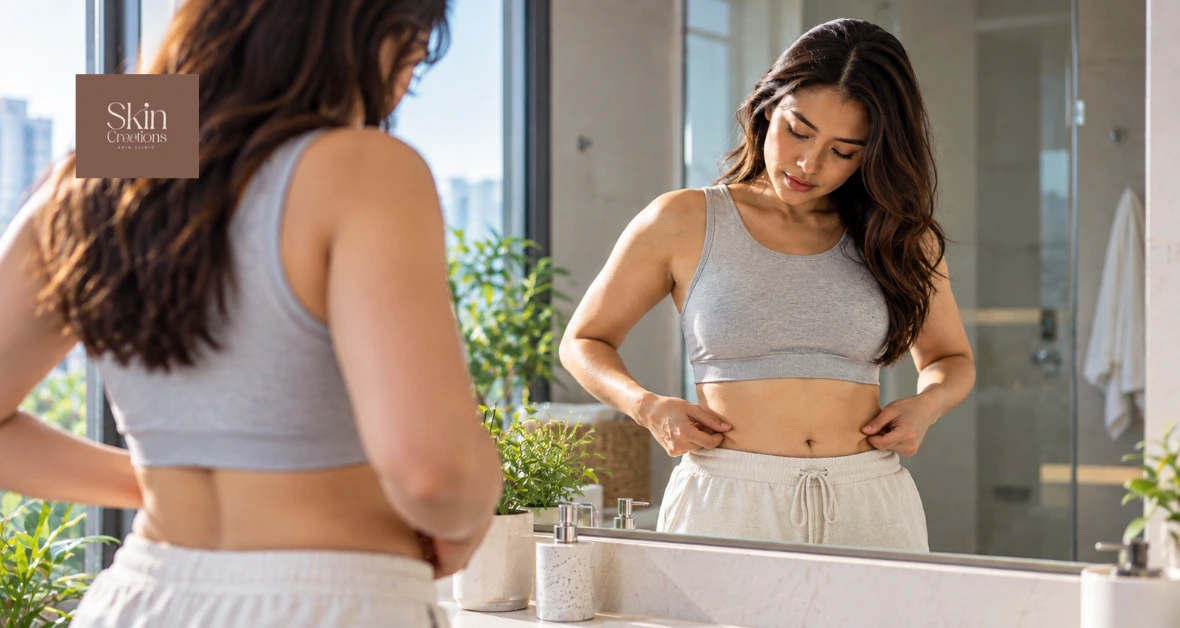
You check the mirror a few days after your session and… nothing. That’s the most common reason people end up searching for what to expect after body sculpting in the first place. So let’s just walk through it plainly. A few days of mild swelling or numbness, then a couple of quiet weeks where, honestly, not much looks different. After that, for most people, contour changes start showing up and keep building over the weeks that follow, though the exact pace varies from person to person.
That gap between treatment day and seeing something is where most of the worry lives. Your body is quietly clearing out the fat cells that broke down during your session, and that runs on its own timeline, not yours.
If you’re wondering when you’ll actually see it, you’re asking the same thing most people do.
Body Sculpting Aftercare: What Happens in the First 24 to 48 Hours
Right after your session, a few things are completely normal. Here’s what you might notice and why; some of these depend on which combination of treatments was part of your session.
Redness or warmth
The treated area may look a little flushed or feel warm to the touch. This is a normal short-term response to treatment. For most people, it fades within a few hours, sometimes by the time they’re home.
Mild swelling
A bit of swelling can show up as the treated area responds to the session, and it usually settles down on its own. It’s a known, expected effect, so there’s no need to read too much into it. Most people just notice a slight puffiness, mild enough that clothes still fit the same way.
Numbness or tingling
This is common if cryolipolysis, or fat freezing, was part of your session. The area may feel dull, tingly, or less sensitive for a while. For most people, this improves gradually, though some notice altered sensation for a few weeks rather than just a day or two. If it feels severe or keeps getting worse instead of better, that’s worth mentioning to your provider.
Warmth or tightness
If your treatment included radiofrequency skin tightening, you might notice some warmth or subtle tightness in the area for the rest of the day. That’s generally your skin’s collagen response kicking in, though exactly how it feels can depend on the specific device and settings your provider used.
None of this should stop your day. Skin Creations‘ Tone & Body Sculpting Treatment is built specifically around this: cryolipolysis, ultrasonic cavitation, and radiofrequency skin tightening working together, not one device doing all the work, with no incisions, needles, or anaesthesia involved. So there’s no compression garment, no bed rest, and nothing to schedule your week around for most people. Your provider may still give you a few specific instructions depending on exactly which treatments were part of your session, so treat the guidance below as a starting point.
First 48 hours, in short:
- Stay a little more hydrated than usual, especially given Singapore’s heat and humidity
- Keep the area away from direct heat (hot showers, saunas), unless your provider says otherwise
- Avoid anything that rubs directly on the treated skin
When to actually call your provider: if discomfort feels like more than mild, or symptoms are getting worse instead of better after the first day or so.
Weeks 1 to 3: The Quiet Stretch of Your Body Sculpting Recovery Time
This is the part nobody warns you about. Your skin looks the same. Your clothes fit the same. You start wondering if the session even worked. A lack of visible change this early doesn’t mean it didn’t; most of what’s happening right now is happening where you can’t see it.
What's actually going on under the skin
The fat cells disrupted during your session don’t disappear overnight. Your body gradually clears them out over the following weeks, and most of the early symptoms have usually faded by now too. What’s left is just quiet: no visible change, nothing to track. That’s expected at this stage of body-sculpting recovery, not a stall.
What starts shifting for some people
Some people begin noticing subtle signs a few weeks in, like a photo looking marginally different side by side. Others need longer before anything’s noticeable, and that’s normal too.
A quick gut-check if you're anxious
If you catch yourself checking the mirror daily, try switching to a weekly photo instead, with the same lighting and the same angle. Day to day, your eyes won’t catch anything. Week to week, small differences tend to be easier to spot. It also helps to resist comparing yourself to “after” photos online, since those are usually taken much further along.
Weeks 4 to 8: What to Expect After Body Sculpting Starts Showing
This is where the waiting often starts to pay off. Somewhere in this window, changes tend to become more noticeable, gradually at first, then more so as you get further along, though the exact pace still varies from person to person.
Why this phase often moves faster than the last one
By this point, your body’s had more time to clear a meaningful share of the disrupted fat cells. Contour change builds as that clearing continues, so the shift from “barely visible” to “clearly visible” tends to happen in this window rather than all at once.
What a body sculpting results timeline typically looks like at this stage
Some people notice a difference in how clothes fit before they notice it in the mirror, like a waistband sitting looser or sleeves feeling roomier. That’s partly because volume loss is easier to feel through how fabric sits against you than to catch with your eyes, which are naturally slow to register gradual change in something you look at every day. The treated area often looks smoother and more defined rather than dramatically smaller, since this is contouring, not major weight loss.
If you don't see much yet
Individual timelines vary based on the area treated and your starting point. Because this treatment combines more than one method, results often keep building through about weeks 8 to 12. If you’re at week six with little change, that’s not automatically a red flag, just a reasonable moment to check in with your provider and plan your follow-up.
Weeks 9 to 12: Final Refinements and Evaluation
Once you reach week 9, the more noticeable visual changes tend to level off and settle into a subtle finishing phase.
The final internal clean-up
Even if you look fully contoured by week 9, your body is often still working in the background. Your lymphatic system, the drainage network that carries waste away from your tissues, may still be clearing the last of the cellular debris, which is just the tiny leftover fragments from the disrupted fat cells. This varies from person to person, and for some people, subtle refinements can continue well beyond week 12.
The follow-up check-in
Week 12 is a common point to evaluate your results. Many providers schedule a follow-up around now, which simply means comparing how you look today with where you started. It’s a good time to take your final “after” photos and talk through whether you’ve reached your goals.
Living With Body Sculpting Recovery in Singapore's Heat and Humidity
Singapore’s weather adds a layer most generic body sculpting guides don’t mention. Heat and humidity don’t change what’s happening under the skin, but they can affect how comfortable you feel during the procedure.
Why sweat matters more here than in a cooler climate
Mild swelling or tenderness in the treated area can feel more noticeable under Singapore’s humidity, since sweat sitting against sensitive skin tends to increase irritation faster than it would in drier conditions. This isn’t a treatment-specific risk; it’s just how skin behaves in constant heat, treated or not.
What to wear on the treated area
Fabric choice matters more than usual while your skin is a little more reactive than normal.
- Loose, breathable fabric over anything tight or synthetic
- Cotton or moisture-wicking materials, even if it’s not your usual gym go-to
- Skip clingy activewear on the treated area specifically for the first couple of weeks
Hydration works double duty here
You’re already being told to drink more water to support your recovery. In Singapore’s climate, you’re also losing fluid faster through sweat than you would somewhere cooler, so what feels like “enough” water day to day may need to be more than you’re used to.
Staying active without overheating
Movement still helps, but Singapore’s climate means the same activity can cost you more than it would somewhere cooler.
- Light activity is fine; just judge effort by heat, not habit
- A noon walk here isn’t the same effort as a walk somewhere temperate
- Shift outdoor activity to cooler hours, or move it indoors, where possible
What's Normal vs. What Needs a Check-In With Your Provider
Most of what you’ll feel after body sculpting falls into the “expected” pile covered earlier. But it’s worth knowing where the line actually sits, so you’re not second-guessing every sensation, and you also don’t brush off something that genuinely needs attention.
Still normal, even if it surprises you
A few things can stick around longer than you’d expect without meaning anything’s wrong.
- Swelling or tenderness that lingers a bit longer than expected, as long as it’s easing rather than worsening
- Skin that feels slightly different to the touch, firmer or a little less sensitive, for a few weeks
- Uneven timing between areas if you treated more than one spot in the same session
Worth a call to your provider
A smaller set of signs are worth flagging rather than waiting it out.
- Swelling, redness, or pain that’s getting worse instead of better after the first few days
- Any firm, painless lump that shows up months after treatment rather than fading with everything else
- Anything that just feels off compared to what you were told to expect at your consultation
About that rare complication you might have read about
If you’ve searched around this topic, you may have come across paradoxical adipose hyperplasia, a rare condition linked specifically to cryolipolysis (fat freezing) where treated fat cells grow instead of shrink. It’s worth knowing about, but worth keeping in proportion to. Reported rates vary by source; the manufacturer’s estimate is roughly 1 in 3,000 treatment cycles, while a 2025 systematic review and meta-analysis in the Aesthetic Surgery Journal Open Forum puts the pooled rate closer to 1 in 455, though the researchers rated that evidence as low certainty. Even on the higher end, it’s still a small fraction of cases, and it typically shows up as a firm, painless area appearing two to five months after treatment, not something you’d mistake for ordinary swelling. This is exactly what a proper consultation should cover upfront, including how your specific treatment plan manages that risk.
The general rule of thumb
If a symptom is mild and easing over time, that’s exactly what healing looks like. If it’s staying the same, getting worse, or just feels off compared to what you expected, that’s your cue to reach out rather than wait it out. When in doubt, a quick message to your provider costs you nothing and saves you the guesswork.
How to Help Your Results Along
Body sculpting does real work, but it doesn’t work alone. What you do in the weeks around it makes a genuine difference to your comfort and recovery. And if you haven’t fully decided this is the right treatment for you, our guide on who makes a good candidate for body sculpting is a good next read before you book.
Give your body what it needs
Staying consistently hydrated, not just on treatment day but through the following weeks, is a good habit to lean on during recovery, especially in Singapore’s climate.
Keep moving, even if it’s just walking
Light activity is fine and generally supports how you feel during this period. You don’t need to change your workout routine or push harder than usual; just don’t go completely sedentary.
Don’t expect it to replace diet and exercise
This is worth saying plainly: body sculpting reshapes and contours; it doesn’t substitute for a healthy diet or an active lifestyle. If your day-to-day habits shift significantly after treatment, your results can shift too, in either direction.
More than one session might be part of the plan
Some people benefit from more than one session, depending on the technology, treatment area, and goals. Needing a second or third session isn’t your body failing to respond; it’s often just how the plan was designed.
Conclusion
The honest truth about what to expect after body sculpting is that the biggest work happens where you can’t see it, quietly, over weeks, long before it shows up in the mirror. The waiting isn’t a flaw in the process. It’s part of it.
If you’re still weighing whether it’s right for you, or want a plan built around your specific goals rather than a generic timeline, Skin Creations, an aesthetic clinic in Singapore with locations at Orchard Road and City Gate, offers personalised consultations to walk you through what to realistically expect for your own body.
Book a consultation to get a plan that’s actually built around you, not an average.
FAQs
Is body sculpting safe?
Non-invasive body sculpting generally has a good safety track record when it's performed by a properly qualified provider. Watch for the mild, temporary effects covered earlier, plus swelling, redness, numbness, and a rare complication worth discussing at your consultation rather than worrying about on your own. Before booking, confirm your provider is properly licensed under Singapore's healthcare regulations and that their equipment meets local requirements.
Does body sculpting hurt?
Most people describe it as uncomfortable in moments rather than painful overall, a pulling sensation during cryolipolysis, or mild warmth during radiofrequency, but nothing that typically requires numbing or downtime. Sensitivity varies from person to person and area to area. If something feels like genuine pain rather than discomfort, flag it to your practitioner mid-session.
How much does body sculpting cost in Singapore?
Pricing in Singapore varies widely by technology, area, and number of sessions. As of 2026, entry-level fat-freezing packages start from around S$38 to S$68 per session, while treatments combining multiple technologies, like the approach covered in this article, run from roughly S$400 upward per session. These figures shift over time, so a consultation is really the best way to get an accurate, current quote. Be cautious of prices that seem unusually low without a clear explanation.
Can body sculpting results come back after they've shown up?
The fat cells cleared during treatment don't come back on their own, but the fat cells that remain in your body can still expand if you gain significant weight afterwards. Long-term results come down to keeping a fairly stable weight and consistent habits, not the treatment quietly wearing off.
How many sessions will I actually need?
It depends on the area, your goals, and the technology used, but plans commonly involve anywhere from one to a few sessions, spaced a few weeks apart. Your provider can usually give you a realistic number after assessing your treated area directly.
Recent Posts
Contact Details
Contact Details