Expert Skin Care in Singapore
Personalised Skin & Beauty Solutions
Beauty Treatments for Radiant Results
- Home
- Treatments
- CurveLift Sculpting Treatment Singapore
- Non-Surgical Body Contouring Treatment Singapore
- PurifyScalp Detox Treatment Singapore
- All-Inclusive Glow-Up Treatment in Singapore
- Tone & Body Sculpting Treatment Singapore
- Brightening Face Treatment Singapore
- Cryotherapy Skin Repair Treatment Singapore
- Diamonte Anti-Aging Treatment Singapore
- Hair Rejuvenation Treatment Singapore
- Korean Baby Face Therapy Singapore
- Neck & Jaw Lifting Singapore
- Precision Pore Tightening Treatment Singapore
- Rejuve-Lift Eye Treatment Singapore
- RevitaGrow Hair Regrowth Treatment Singapore
- Products
- Gallery
- Our Story
- Blog
- Contact Us

- Aesthetic Clinic in Singapore
- Our Story
- Aesthetic Treatments in Singapore
- PurifyScalp Detox Treatment Singapore
- Non-Surgical Body Contouring Treatment Singapore
- All-Inclusive Glow-Up Treatment in Singapore
- Tone & Body Sculpting Treatment
- Brightening Face Treatment Singapore
- Cryotherapy Skin Repair Treatment Singapore
- Diamonte Anti-Aging Treatment Singapore
- Hair Rejuvenation Treatment Singapore
- Korean Baby Face Therapy Singapore
- Neck & Jaw Lifting Singapore
- Precision Pore Tightening Treatment Singapore
- Rejuve-Lift Eye Treatment Singapore
- CurveLift Sculpting Treatment Singapore
- RevitaGrow Hair Regrowth Treatment Singapore
- Products
- Treatment Booking
- Gallery
- Blog
- Contact Us
- Call Us
- Aesthetic Clinic in Singapore
- Our Story
- Aesthetic Treatments in Singapore
- PurifyScalp Detox Treatment Singapore
- Non-Surgical Body Contouring Treatment Singapore
- All-Inclusive Glow-Up Treatment in Singapore
- Tone & Body Sculpting Treatment
- Brightening Face Treatment Singapore
- Cryotherapy Skin Repair Treatment Singapore
- Diamonte Anti-Aging Treatment Singapore
- Hair Rejuvenation Treatment Singapore
- Korean Baby Face Therapy Singapore
- Neck & Jaw Lifting Singapore
- Precision Pore Tightening Treatment Singapore
- Rejuve-Lift Eye Treatment Singapore
- CurveLift Sculpting Treatment Singapore
- RevitaGrow Hair Regrowth Treatment Singapore
- Products
- Treatment Booking
- Gallery
- Blog
- Contact Us
- Call Us
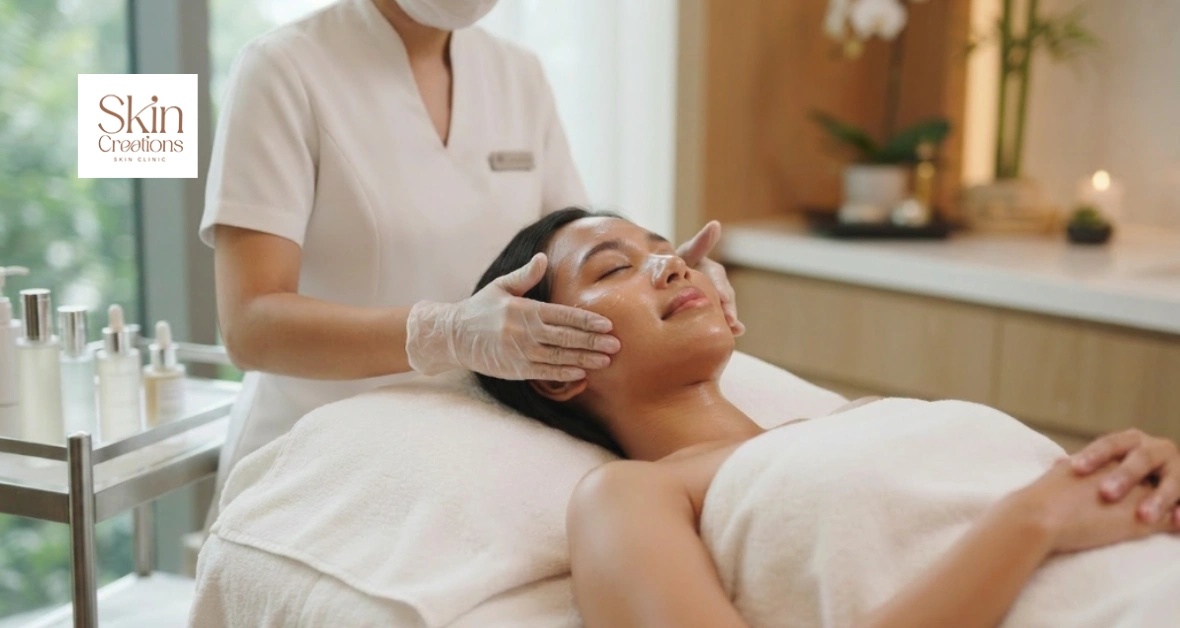
Your skin looks fine when you leave the house. By the time you’re back, dodging haze, sweating through the MRT, sitting under aircon all day, it’s oily in some spots, dry in others, and somehow tired and breaking out. Sound familiar?
If you’ve ever wondered how often you should really get a facial, you’re not alone. Skip it too long, and dirt and dead skin pile up faster than your skin can handle on its own. Go too often, and you end up irritating skin that just needed a break.
There’s a simple answer, and it’s based on how skin actually renews itself, not a guess. In this guide, we’ll walk through how often a facial makes sense for your skin in Singapore’s climate, so you’re never left wondering if you’re doing too much or too little.
The 28-Day Cycle Behind How Often You Should Get a Facial
Your skin isn’t sitting still, even when it looks calm. It’s constantly making new cells, moving them up to the surface, and shedding the old ones. This whole process takes about 28 days from start to finish, happening quietly under your skin whether you notice it or not.
Your skin moves through four stages to get there.
- Week 1: Your new cells form deep under the surface, in a layer called the basal layer.
- Week 2: Your cells slowly rise, moving closer to the top.
- Week 3: Your cells flatten out and mature, just under the surface.
- Week 4: Your oldest cells shed away, making room for the next batch. Then it starts over.
A facial works best when it’s timed with this cycle, not against it. Book one too soon after your last visit, and you’re disturbing skin that hasn’t finished renewing itself yet. Wait too long, and dirt, oil, and dead cells get ahead of what your skin can clear on its own, and Singapore’s heat and pollution only add to that load.
A facial isn’t just a nice treat. It’s timed to support something your skin is already doing on its own, every single day.
How Often to Do a Facial: The 4 to 6 Week Rule
For most people, once every 4 to 6 weeks is the sweet spot. That timing lines up almost perfectly with your skin’s own 28-day cycle, so each facial catches your skin right as it’s ready for a refresh, not too early, not too late.
But the real value isn’t in any single visit. It’s in what happens when you keep going.
Your first facial clears away buildup your skin has been carrying for a while. Your second one refines what’s underneath. By your third or fourth, you start seeing the kind of change that sticks, brighter tone, fewer breakouts, skin that just looks calmer overall. Skip around and start over every few months, and you’re always stuck redoing that first step instead of building on it.
If you want that glow to come through faster, try a Korean-style facial — it’s built around exactly this kind of gradual, cumulative brightening.
Facial Frequency by Skin Type: Oily, Dry, Combination, Mature
The 4 to 6 week range is a solid starting point, but your skin type is what really decides your ideal schedule.
Oily or acne-prone skin

Aim for every 3 to 4 weeks. Singapore’s high humidity can increase sweat and excess oil on the skin, making clogged pores and breakouts more likely. Shorter gaps help keep buildup under control before it leads to congestion.
If clogged pores keep showing up no matter what you try, it might be time for something more targeted. Our Precision Pore Tightening Treatment, here at Skin Creations, is designed to actually clear them, not just manage them.
Dry or sensitive skin
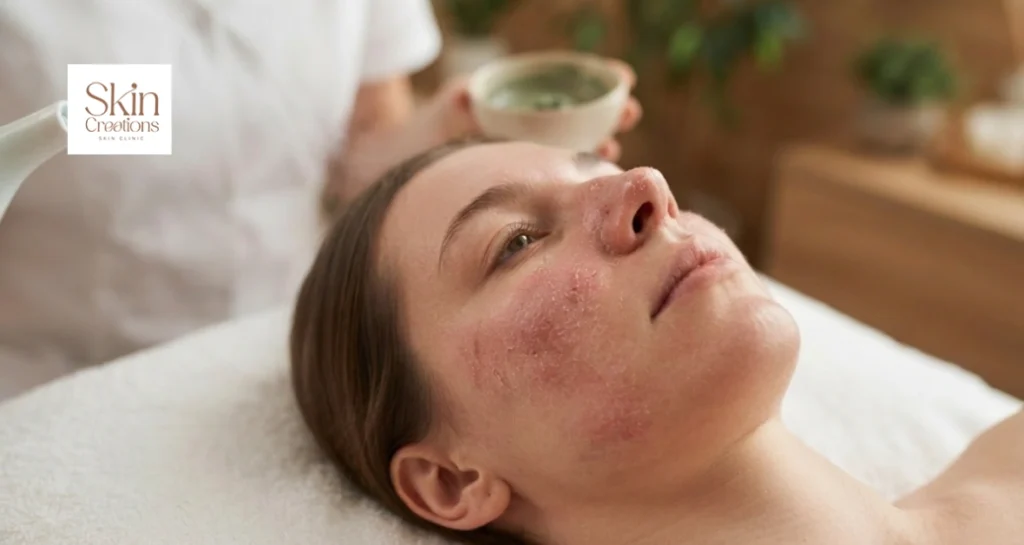
Every 5 to 6 weeks works better. Spending long hours in air-conditioned environments can leave dry or sensitive skin feeling dehydrated and more reactive. Your skin needs more time to settle and recover between visits, and rushing it can leave you more irritated than when you started.
Combination skin
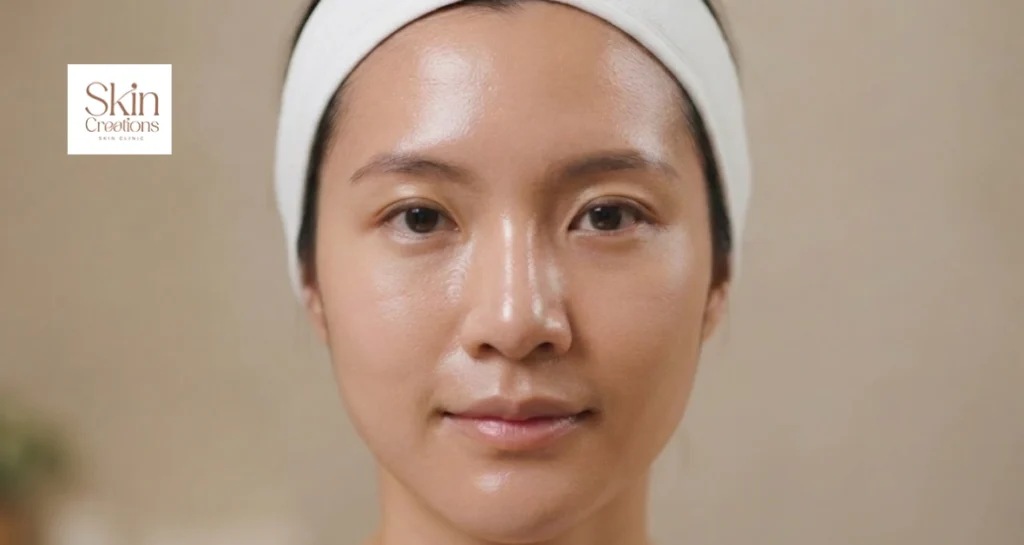
The standard 4 weeks usually fits well. In Singapore, outdoor humidity can make the T-zone feel oilier, while long hours in air-conditioned environments may leave the cheeks feeling drier. This schedule helps manage both concerns, with more attention on oilier areas like your forehead and nose, alongside gentler care where your skin is drier.
Mature skin
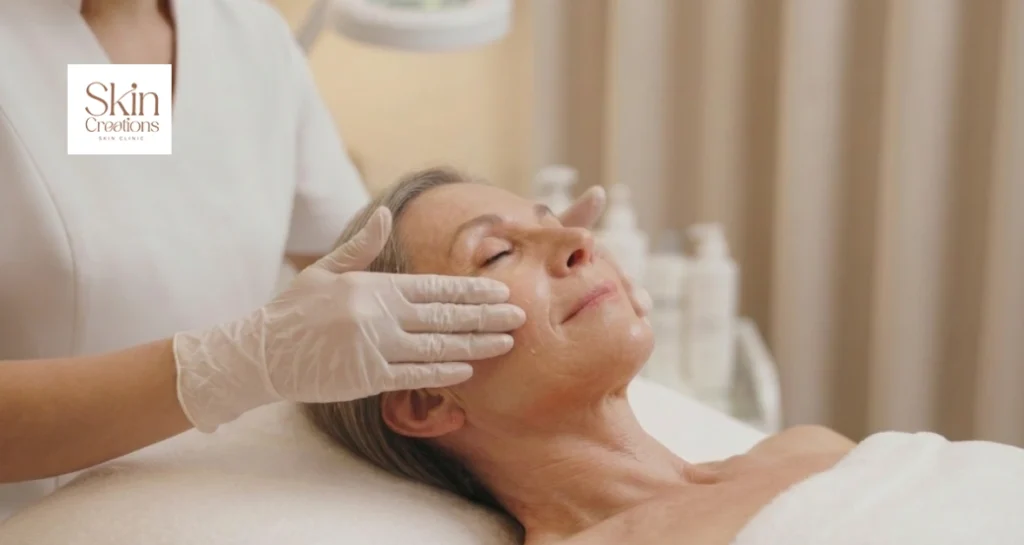
Stick to every 4 to 5 weeks. Your skin renews itself a little slower with age, so it needs extra time between sessions, especially with treatments that skip peels and lasers altogether.
Age plays a role too, but it doesn’t overrule your skin type. Someone in their 20s with oily skin still needs more frequent facials than someone in their 40s with dry skin. What your skin actually needs matters more than how old you are.
Signs It's Time for a Facial, or Time to Slow Down
Sometimes the schedule isn’t the whole story. Your skin has its own way of telling you what it needs.
You’re probably due for a facial if:
- Your skin looks dull no matter how much you sleep, and that’s frustrating when you know you’re doing everything right. Usually it’s just dead cells sitting on the surface too long, not anything deeper.
A facial clears that away, but if you want to speed things up, our Brightening Face Treatment gives your skin an extra push in the right direction.
- Your pores feel clogged or bumpy to the touch, usually from oil and debris that’s collected over time
- Your skin feels tight, rough, or dehydrated even after moisturising, meaning it needs support products alone can’t give
- Your makeup sits oddly instead of blending in, often because of leftover texture underneath
- You keep breaking out right before something important, which means your pores need real attention, not just a good skincare week
You might need a break instead if:
- Your skin stays red or irritated long after a facial, meaning it hasn’t fully recovered yet
- It feels thinner or more sensitive than usual, meaning it needs rest, not more treatment
- You’re breaking out more than before, not less, usually because your skin is overwhelmed, not undertreated
- It reacts to products that never used to bother you, often a sign your skin’s barrier needs time to settle
Either way, your skin is telling you something real. Facials work best when they support your skin, not push past what it can handle. Non-invasive treatments are built for exactly this, gentle enough to work with these signals instead of ignoring them.
Common Facial Mistakes Singaporeans Make
Even with the best intentions, a few habits quietly get in the way of good skin.
- Waiting until skin “looks bad” to book a facial. By the time dullness or breakouts show up, your skin’s already been struggling for a while. A regular routine catches problems early, before they reach the surface.
- Mixing too many active treatments at once. Piling on strong products or treatments in the same week can leave your skin more irritated than helped, especially right before or after a facial.
- Never getting your frequency properly assessed. Following a generic “once a month” rule without checking if it fits your skin type often means you’re doing too much, or not enough.
- Sticking to the same plan even after your skin or life changes. A new job, more sun exposure, or a stressful season can shift what your skin needs. What worked six months ago might not fit anymore.
Not sure what to do between appointments? Our guide on how to give yourself a perfect facial at home walks you through it.
Conclusion
If there’s one thing to take away from all this, it’s that your skin decides the schedule, not a generic rule. Most people do well with a facial every 4 to 6 weeks, oilier skin leans closer to every 3 to 4, drier skin can stretch to 5 or 6, and your skin will usually tell you which end of that range it needs through how it looks and feels day to day.
What matters more than hitting an exact number is staying consistent, and paying attention when your skin asks for more care or less. In Singapore’s climate especially, that attention goes a long way.
If you’re still not sure where you fall, a proper skin consultation makes it simple. At Skin Creations, every new client starts with a detailed skin analysis, so your schedule is built around your actual skin, not a guess.
Book your consultation and we’ll help you find a facial rhythm that actually fits your skin, using treatments that are gentle and completely non-invasive.
FAQs
1. What if I've never had a facial before?
Start with two sessions spaced 3 to 4 weeks apart. This gives your skin a proper reset and clears out whatever it's been holding onto for a while. After that, you can ease into a regular schedule based on your skin type.
2. Should I change my skincare routine around facial appointments?
A little, yes. It helps to pause strong actives like retinol for a day or two before your facial, and keep your routine gentle for a day or two after. Right after a facial is actually when your skin absorbs moisturisers and serums best.
3. What age should you start getting facials?
There's no fixed age. Most people start in their late teens or twenties, once oil production and breakouts become more noticeable, but facials are safe and useful at any age, adjusted to what your skin needs at the time.
4. How long does a facial appointment usually take?
Most facials run about 45 minutes to an hour, enough time for cleansing, gentle exfoliation, extractions if needed, and a mask suited to your skin.
5. Can I wear makeup right after a facial?
It's best to wait a few hours if you can. Your skin is more open and absorbent right after a facial, so giving it time to settle helps you get the full benefit before layering anything on top.
6. Are facials worth it, or can I just stick to my skincare routine?
A good skincare routine matters, and it's not a waste of time. But it works from the outside, while a facial goes deeper, reaching what your daily products physically can't. That's the real difference, not one replacing the other, but each doing a job the other can't finish alone.
Recent Posts
Contact Details
Contact Details