Expert Skin Care in Singapore
Personalised Skin & Beauty Solutions
Beauty Treatments for Radiant Results
- Home
- Treatments
- RevitaGrow Hair Regrowth Treatment Singapore
- Hair Rejuvenation Treatment Singapore
- PurifyScalp Detox Treatment Singapore
- Tone & Body Sculpting Treatment Singapore
- All-Inclusive Glow-Up Treatment in Singapore
- Non-Surgical Body Contouring Treatment Singapore
- CurveLift Sculpting Treatment Singapore
- Rejuve-Eye Lifting Treatment Singapore
- Precision Pore Tightening Treatment Singapore
- Neck & Jaw Lifting Singapore
- Korean Facial Treatment in Singapore – Baby Face Therapy
- Diamonte Anti-Aging Facial Treatment in Singapore
- Brightening Facial Treatment in Singapore
- Cryo Lifting Facial & Cryotherapy Skin Repair Treatment in Singapore
- Products
- Gallery
- Our Story
- Blog
- Contact Us

- Home
- Our Story
- Aesthetic Treatments in Singapore
- RevitaGrow Hair Regrowth Treatment Singapore
- Hair Rejuvenation Treatment Singapore
- PurifyScalp Detox Treatment Singapore
- Tone & Body Sculpting Treatment Singapore
- All-Inclusive Glow-Up Treatment in Singapore
- Non-Surgical Body Contouring Treatment Singapore
- CurveLift Sculpting Treatment Singapore
- Rejuve-Eye Lifting Treatment Singapore
- Precision Pore Tightening Treatment Singapore
- Neck & Jaw Lifting Singapore
- Korean Facial Treatment in Singapore – Baby Face Therapy
- Diamonte Anti-Aging Facial Treatment in Singapore
- Brightening Facial Treatment in Singapore
- Cryo Lifting Facial & Cryotherapy Skin Repair Treatment in Singapore
- Treatment Booking
- Products
- Blog
- Gallery
- Contact Us
- Call Us
- Home
- Our Story
- Aesthetic Treatments in Singapore
- RevitaGrow Hair Regrowth Treatment Singapore
- Hair Rejuvenation Treatment Singapore
- PurifyScalp Detox Treatment Singapore
- Tone & Body Sculpting Treatment Singapore
- All-Inclusive Glow-Up Treatment in Singapore
- Non-Surgical Body Contouring Treatment Singapore
- CurveLift Sculpting Treatment Singapore
- Rejuve-Eye Lifting Treatment Singapore
- Precision Pore Tightening Treatment Singapore
- Neck & Jaw Lifting Singapore
- Korean Facial Treatment in Singapore – Baby Face Therapy
- Diamonte Anti-Aging Facial Treatment in Singapore
- Brightening Facial Treatment in Singapore
- Cryo Lifting Facial & Cryotherapy Skin Repair Treatment in Singapore
- Treatment Booking
- Products
- Blog
- Gallery
- Contact Us
- Call Us
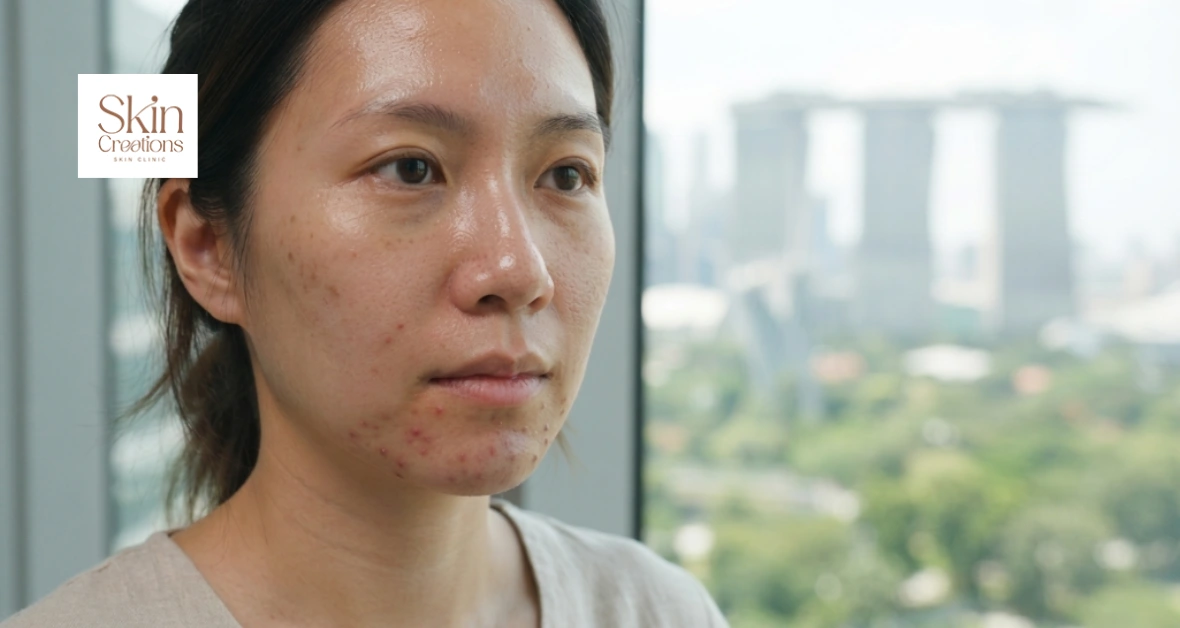
Singapore’s weather does not go easy on the skin. Between constant humidity, sharp UV levels and hours spent moving between air-conditioned offices and the outdoors, breakouts, dullness and premature ageing tend to show up sooner here than in cooler climates.
Some of these issues are purely cosmetic and settle with a change in routine, while others point to an underlying medical condition that needs a doctor’s attention. Understanding common skin problems in Singapore, and what specifically triggers them, makes it far easier to know which route to take.
The sections below cover the causes behind each condition, the symptoms that matter most, and the treatment options available, from simple home care to non-invasive clinic treatments.
Why Skin Problems Are Common in Singapore
- Hot and humid climate. Skin produces more oil to compensate for constant moisture in the air, and sweat that cannot evaporate properly sits on the surface, clogging pores and encouraging bacteria and fungi to multiply.
- Strong UV exposure. Singapore’s UV index rarely dips low, even on cloudy days. Repeated sun exposure breaks down collagen and triggers excess melanin production, showing up as pigmentation and fine lines earlier than expected.
- Air pollution and environmental irritants. Traffic fumes and general urban pollution settle on the skin throughout the day, contributing to congestion and dullness if left uncleansed.
- Stress, diet and lifestyle. Long working hours, irregular sleep and processed food all influence hormone levels tied to oil production, while chronic stress weakens the skin’s natural barrier.
12 Common Skin Problems in Singapore and How to Treat Them
1. Acne
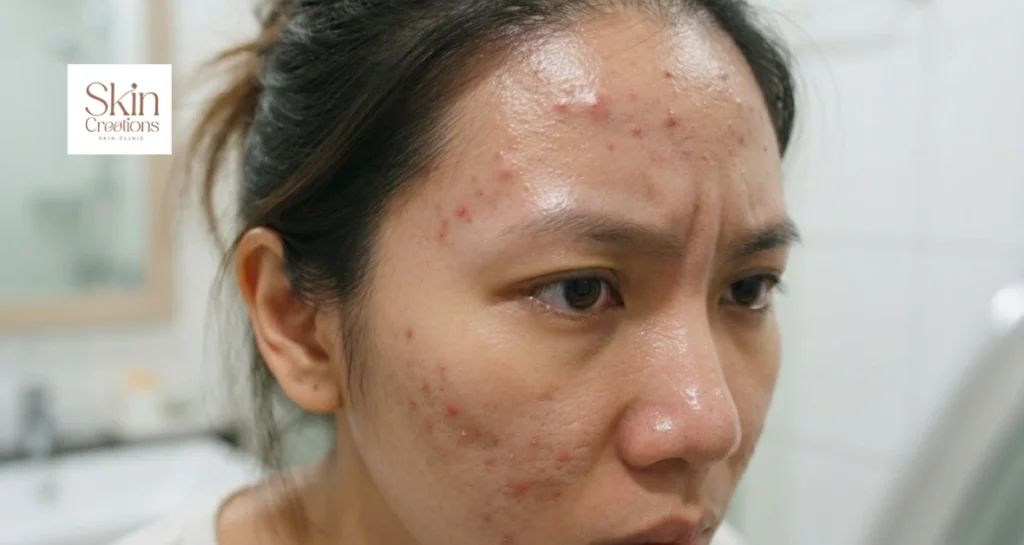
Acne develops when pores become blocked with oil, dead skin cells and bacteria, and Singapore’s humidity makes this process happen faster than in drier climates. It shows up as blackheads, whiteheads and inflamed spots, most often across the forehead, nose, chin and sometimes the back or chest. Teenagers experience it during hormonal development, though many adults deal with recurring breakouts well into their 30s and 40s, often linked to stress or humid weather. Mild, occasional breakouts usually respond to a consistent cleansing routine and non-comedogenic products. Congestion that keeps returning, however, often needs more targeted intervention. A professional pore tightening treatment that deeply cleans congested pores and refines skin texture can help when home care alone is no longer enough.
2. Acne Scars
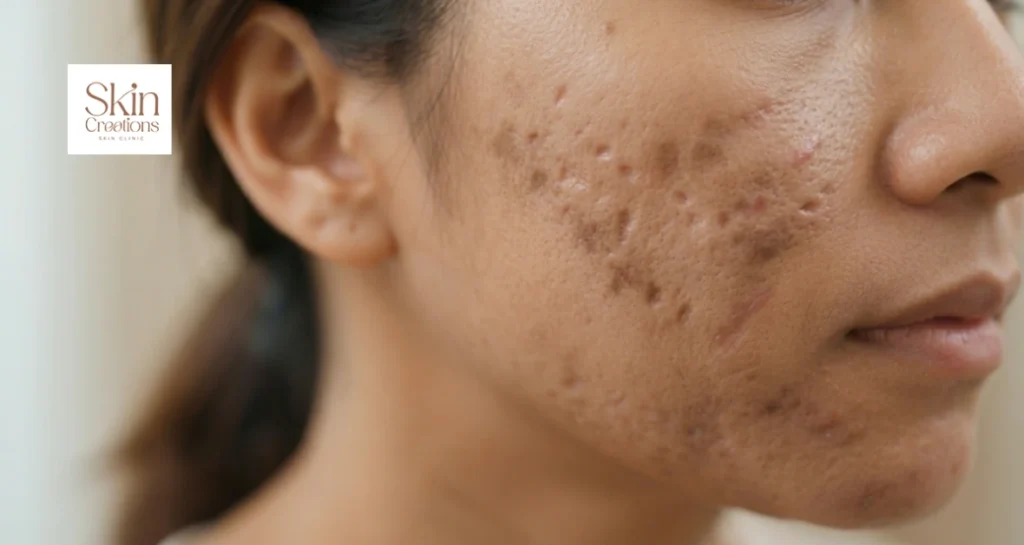
Once inflammation from a breakout settles, it can leave behind pitted marks, raised tissue or patches of discolouration that linger for months or longer. These scars form when the skin’s natural repair process is disrupted during healing, and the depth of scarring usually reflects how severe the original breakout was. Anyone with a history of cystic or repeatedly inflamed acne is more likely to notice lasting marks. Early, gentle care limits scarring, but once marks have formed, options range from topical treatments to targeted facials that support smoother texture and more even tone with regular sessions.
3. Hyperpigmentation
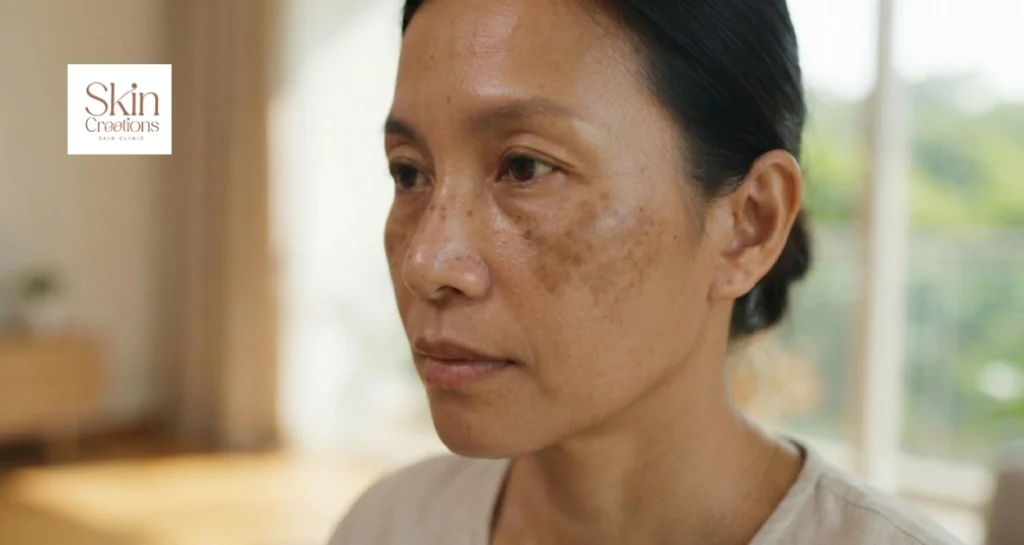
Dark patches, spots or general unevenness appear when the skin produces excess melanin, usually triggered by sun exposure, old acne marks or minor skin injuries. It tends to concentrate on the cheeks, forehead and other areas that see the most daily sun, and can appear at almost any age once triggered. Left unmanaged, pigmentation typically deepens with continued UV exposure rather than fading on its own. When pigmentation becomes difficult to manage with home care alone, a brightening face treatment for pigmentation and uneven skin tone may help improve overall skin tone, although daily sunscreen remains essential for preventing new patches from forming.
4. Melasma
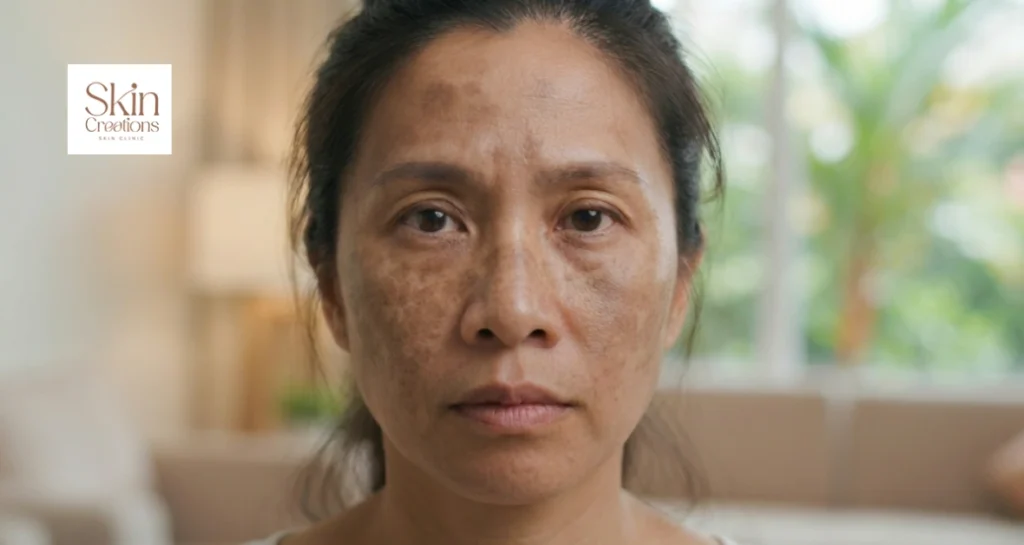
Melasma causes symmetrical brown or greyish patches, most often across the cheeks, forehead and upper lip, and is closely tied to hormonal changes such as pregnancy, contraceptive use or thyroid activity. Women are affected far more often than men, and flare-ups tend to worsen with unprotected sun exposure. Because melasma can be stubborn and prone to recurrence even after visible improvement, a dermatologist should confirm the diagnosis and guide any treatment plan before it begins.
5. Enlarged Pores
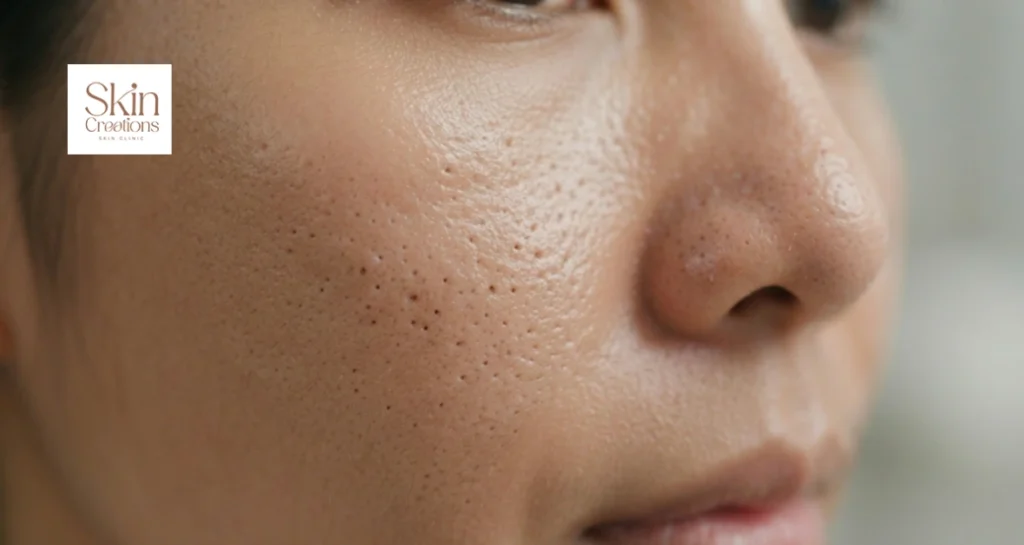
Oil build-up combined with humidity gradually stretches pores, making them more visible, particularly around the nose, cheeks and chin. This is more common in oilier skin types and tends to become more noticeable with age as skin loses some of its natural elasticity. Regular deep cleansing and gentle exfoliation help keep pores clearer, while clinic-based pore-refining treatments target the issue more directly by improving overall skin texture.
6. Rosacea
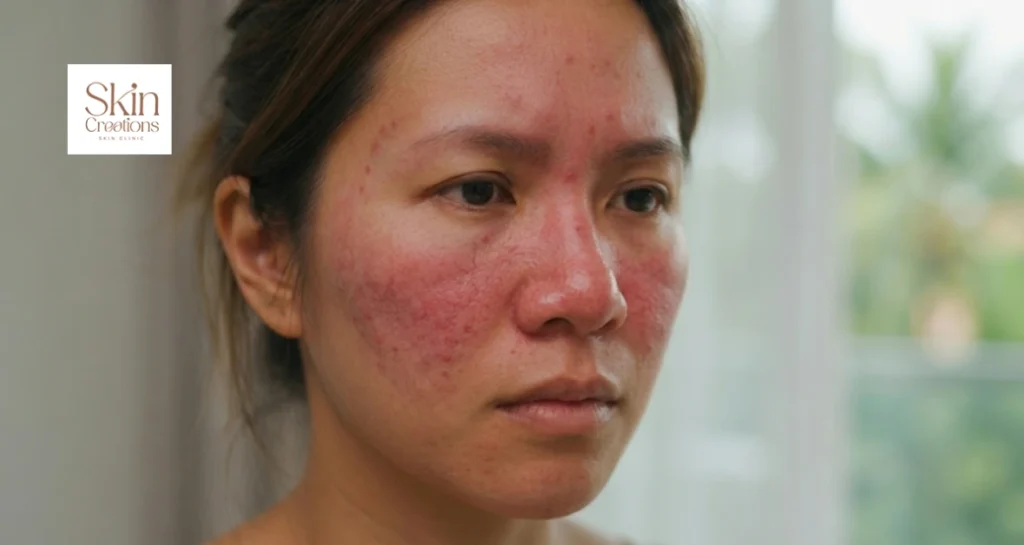
Rosacea causes persistent facial redness, visible small blood vessels and sometimes bumps that can resemble acne, usually across the cheeks, nose and forehead. Heat, spicy food, alcohol and sun exposure are common triggers, all of which are difficult to avoid entirely in Singapore’s climate. Because rosacea is a chronic medical condition rather than a temporary irritation, it needs proper diagnosis and, in many cases, prescription treatment from a dermatologist to keep flare-ups under control.
7. Sensitive Skin
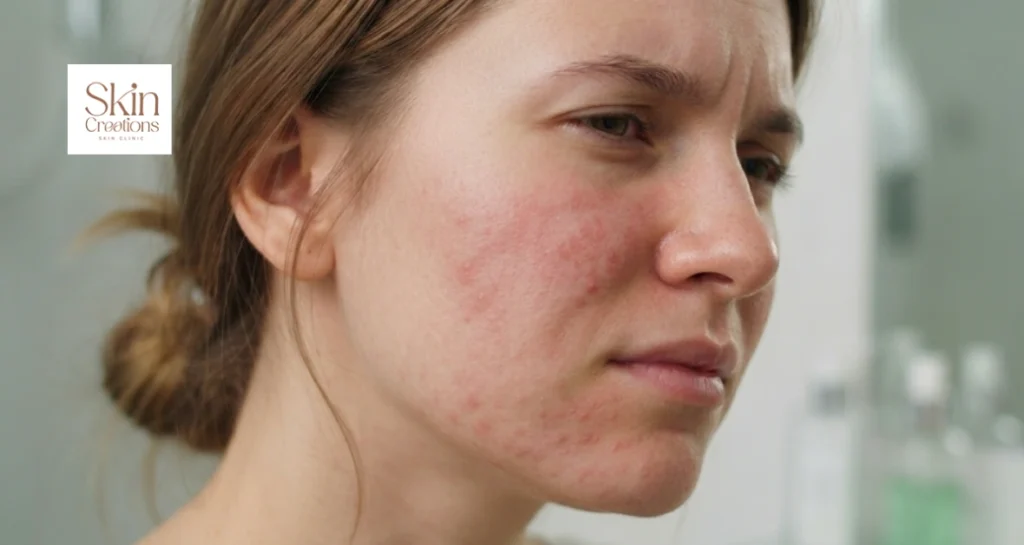
Skin that reacts easily to new products, sudden weather changes or friction from fabric or masks falls under this category. Redness, stinging, tightness and occasional small bumps are typical signs, and reactions can vary significantly from one person to another. A simplified routine built around fragrance-free, non-comedogenic products, introduced one at a time, usually brings the most noticeable relief.
8. Eczema
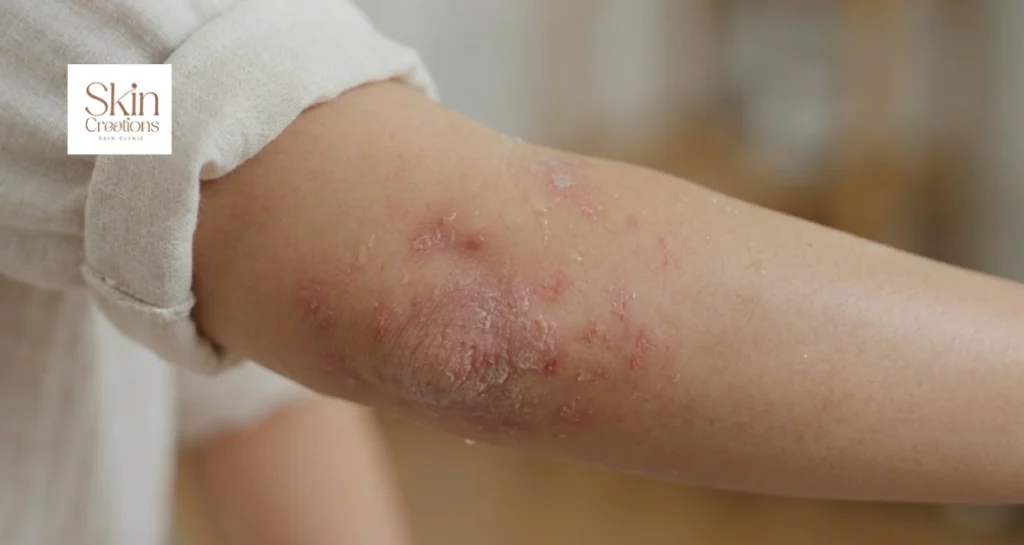
Eczema, or atopic dermatitis, leads to dry, itchy and sometimes cracked or weeping patches, often appearing in the folds of the elbows, knees and neck. Sweat trapped in these areas during humid weather is a well-known trigger for flare-ups, as is exposure to chlorinated pool water or harsh soaps. Management typically involves medicated creams, gentle moisturising and identifying personal triggers, all of which are best guided by a doctor given how easily eczema can worsen with the wrong products.
9. Fungal Skin Infections
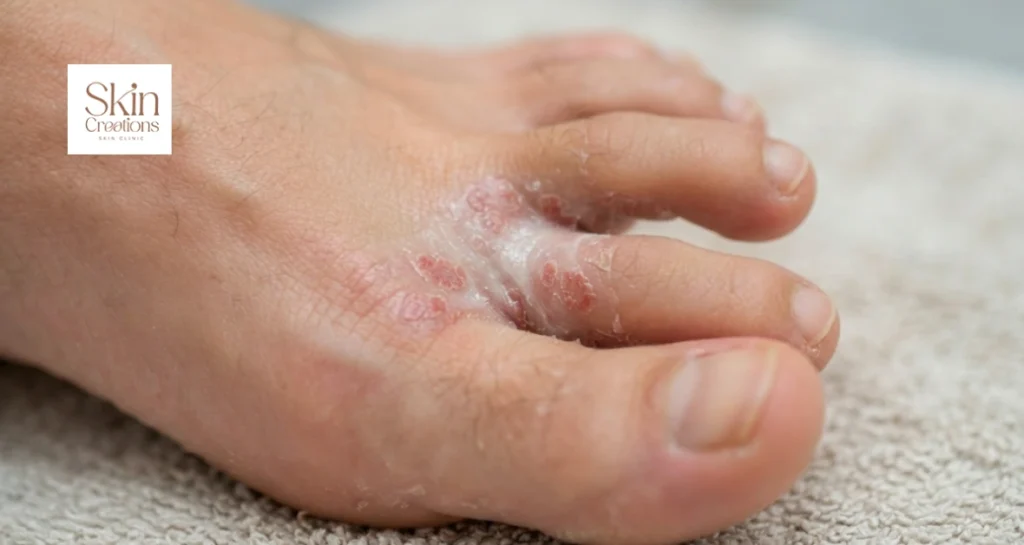
Warm, damp conditions allow fungal infections to take hold quickly, especially in areas prone to sweating, such as the underarms, groin or between the toes. These typically present as itchy, sometimes scaly or ring-shaped patches that can spread if left untreated. Loose, breathable clothing and prompt drying after sweating reduce risk considerably, though established infections usually require antifungal treatment prescribed by a doctor or pharmacist.
10. Age Spots
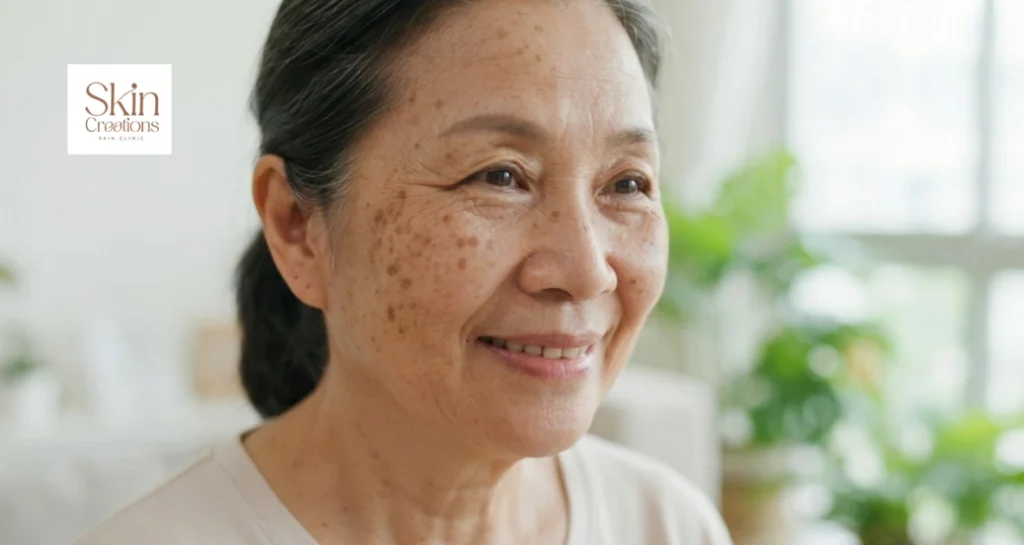
Sun spots or liver spots, as they are sometimes called, are flat brown marks that develop from years of cumulative UV exposure and tend to appear on the face, hands and other frequently exposed areas. They are harmless from a medical standpoint, though many people find them ageing in appearance. Consistent sunscreen use slows the formation of new spots, while existing marks can often be lightened gradually with professional skin treatments carried out over a course of sessions.
11. Wrinkles and Fine Lines
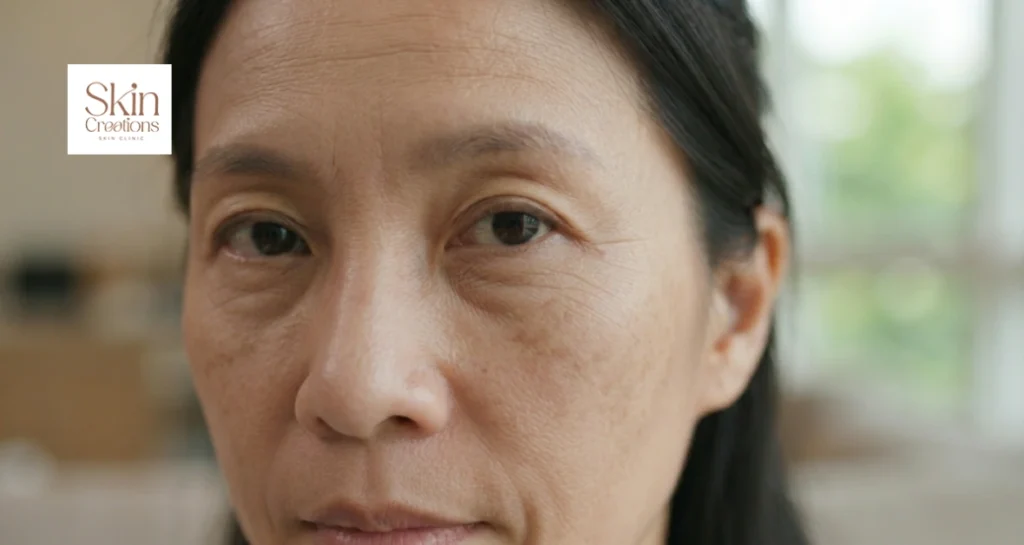
Collagen naturally declines with age, and Singapore’s high UV exposure speeds up this process considerably compared with less sun-intense climates. Fine lines typically appear first around the eyes and mouth, gradually deepening if sun protection and hydration are neglected. For those looking to improve early signs of ageing, a non-invasive anti-ageing treatment that supports skin firmness and elasticity may help achieve a smoother, more refreshed appearance without surgery or downtime.
12. Dull and Dehydrated Skin
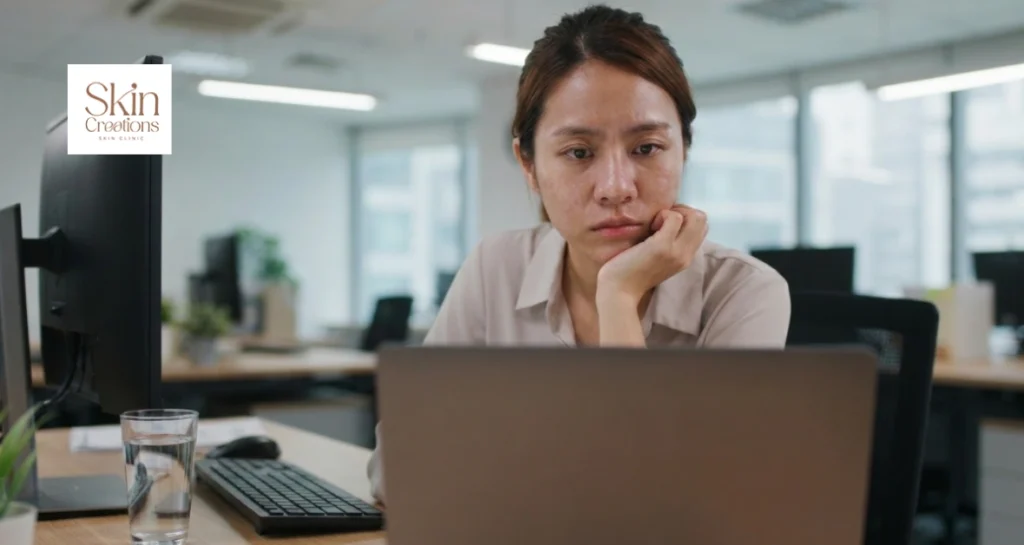
Even with humid air outside, constant air conditioning strips moisture from the skin indoors, leaving it looking tired, uneven and lacklustre, even when there is no obvious breakout or irritation. This pattern is especially common among people who spend most of the day in offices or shopping centres. When dehydration leaves the skin looking dull and tired, a Korean facial treatment for dull and dehydrated skin may help restore moisture and improve radiance.
Common Symptoms That May Indicate a Skin Problem
These signs are worth paying attention to, even if they seem minor at first:
- Redness that does not fade: This often points to irritation or an underlying inflammatory condition. It becomes more concerning if it spreads or lasts beyond a few days.
- Persistent itching: Itching that does not settle can signal dryness, an allergic reaction or eczema. Scratching repeatedly can also damage the skin barrier further.
- Dry or flaking patches: These usually reflect a weakened skin barrier struggling to retain moisture. Humidity and air-conditioning can make this worse rather than better.
- Sudden breakouts: Unexpected breakouts are often triggered by hormonal shifts, heat and humidity or a new product. Identifying the trigger helps prevent repeat flare-ups.
- Changing pigmentation: Pigmentation that darkens, spreads or changes shape is worth monitoring closely. This is one of the signs that should not be ignored.
- Rough texture: Uneven or rough texture is often tied to clogged pores or product buildup on the skin’s surface. Regular gentle exfoliation can sometimes help.
- Pain or swelling: These symptoms can indicate an infection or a more serious skin reaction. They generally warrant a professional opinion rather than home treatment.
- Unfamiliar bumps: New or unusual bumps are best checked by a professional rather than left alone. Early assessment makes treatment simpler in most cases.
What Increases Your Risk of Skin Problems?
- Hormonal changes: Shifts during teenage years, pregnancy or menopause alter oil production. This often triggers breakouts or pigmentation that would not otherwise appear.
- Genetics: Family history plays a role in conditions like eczema and rosacea. It also influences how quickly skin shows visible signs of ageing.
- Poor skincare routine: Skipping cleansing, over-exfoliating or using the wrong products weakens the skin’s natural barrier. Over time, this makes skin more reactive and prone to breakouts.
- Allergic reactions: Certain skincare products, fabrics or environmental allergens can bring on sudden flare-ups. These reactions vary widely from person to person.
- Ageing: Collagen renewal slows down naturally with age. This makes skin more prone to sagging, dryness and fine lines.
Medical vs Aesthetic Treatment: Which Do You Need?
Eczema, rosacea, melasma and fungal infections fall under medical care, since they usually need a proper diagnosis and, in many cases, prescription treatment to manage safely.
Cosmetic concerns work differently. Dullness, mild pigmentation, enlarged pores and early signs of ageing tend to respond well to non-invasive aesthetic treatments, without the need for a medical prescription.
The line between the two is not always obvious, especially when a condition looks purely cosmetic but has a medical trigger underneath. When in doubt, a consultation is the safest way to figure out which route actually fits.
How to Prevent Common Skin Problems
A few consistent habits go a long way, and none of them requires special products.
- Apply sunscreen daily, even on cloudy days or when staying mostly indoors
- Use a gentle cleanser that does not strip the skin’s natural moisture
- Moisturise regularly, even if the skin feels oily rather than dry
- Avoid picking at breakouts, since this often leads to scarring
- Eat a balanced diet, cutting back on processed and sugary food where possible
- Stay hydrated throughout the day, especially in air-conditioned environments
- Prioritise sleep, since skin repairs itself most actively during rest
- Book periodic skin assessments to catch early changes before they progress
Conclusion
Breakouts, pigmentation and early ageing rarely have a single cause, and that’s exactly why two people can follow the same routine and see different results. Singapore’s climate plays a part, but so does individual skin type, stress levels and daily habits, which is why the same concern can need a completely different fix from one person to the next.
Home care handles a good portion of this, but not all of it. If acne keeps returning, pigmentation is spreading rather than fading, or something on the skin simply does not look right, that’s usually the point to stop self-treating and get an actual assessment. Catching the cause early tends to make the rest of the process a lot simpler.
If you are unsure whether your concern is suited to aesthetic treatment, a consultation with Skin Creations can help identify the right approach based on your skin condition and goals.
FAQs
Why does my skin break out more often in Singapore?
Singapore's hot and humid climate can make breakouts more noticeable for some people. Sweat, excess oil and dead skin cells can build up on the skin's surface, which may clog pores and contribute to acne. Lifestyle factors such as stress, lack of sleep and changes in skincare products can also trigger recurring breakouts.
Why do my skin problems keep coming back after treatment?
Skin concerns often return when the underlying trigger has not been addressed. Hormonal changes, daily habits, climate, skincare routine and genetics can all influence how the skin behaves over time. Long-term improvement usually depends on understanding the cause of the problem and maintaining a suitable skincare approach.
Why do I still get pigmentation despite using sun protection?
Sunscreen helps reduce UV-related pigmentation, but it cannot always prevent every cause of uneven skin tone. Hormonal changes, acne marks, heat exposure and genetics can also contribute to pigmentation. Using sunscreen consistently, along with the right skincare or professional treatments when needed, can help manage ongoing concerns.
Are aesthetic treatments suitable for all skin concerns?
Not every skin concern is suitable for aesthetic treatment alone. Non-invasive treatments can be helpful for cosmetic concerns such as uneven skin tone, dullness, enlarged pores and early signs of ageing. However, conditions such as eczema, rosacea, fungal infections or other medical skin issues may require assessment and treatment from a medical professional.
Why does my skin feel oily outside but dry indoors?
This is a common experience in Singapore because the skin is exposed to two very different environments. Humid outdoor conditions can increase the feeling of oiliness, while prolonged exposure to air conditioning can reduce moisture levels and leave the skin feeling dry or tight. A balanced routine with gentle cleansing and proper hydration can help maintain a healthier skin barrier.
Can acne scars be improved with treatment?
Yes, acne scars can often be improved with suitable treatments, although results depend on the type and severity of scarring. Mild discolouration may improve with skincare and brightening approaches, while deeper scars may require more targeted professional treatments. A proper skin assessment helps determine the most suitable option for each individual.
Recent Posts
Contact Details
Contact Details