Expert Skin Care in Singapore
Personalised Skin & Beauty Solutions
Beauty Treatments for Radiant Results
- Home
- Treatments
- RevitaGrow Hair Regrowth Treatment Singapore
- Hair Rejuvenation Treatment Singapore
- PurifyScalp Detox Treatment Singapore
- Tone & Body Sculpting Treatment Singapore
- All-Inclusive Glow-Up Treatment in Singapore
- Non-Surgical Body Contouring Treatment Singapore
- CurveLift Sculpting Treatment Singapore
- Rejuve-Eye Lifting Treatment Singapore
- Precision Pore Tightening Treatment Singapore
- Neck & Jaw Lifting Singapore
- Korean Facial Treatment in Singapore – Baby Face Therapy
- Diamonte Anti-Aging Facial Treatment in Singapore
- Brightening Facial Treatment in Singapore
- Cryo Lifting Facial & Cryotherapy Skin Repair Treatment in Singapore
- Products
- Gallery
- Our Story
- Blog
- Contact Us

- Home
- Our Story
- Aesthetic Treatments in Singapore
- RevitaGrow Hair Regrowth Treatment Singapore
- Hair Rejuvenation Treatment Singapore
- PurifyScalp Detox Treatment Singapore
- Tone & Body Sculpting Treatment Singapore
- All-Inclusive Glow-Up Treatment in Singapore
- Non-Surgical Body Contouring Treatment Singapore
- CurveLift Sculpting Treatment Singapore
- Rejuve-Eye Lifting Treatment Singapore
- Precision Pore Tightening Treatment Singapore
- Neck & Jaw Lifting Singapore
- Korean Facial Treatment in Singapore – Baby Face Therapy
- Diamonte Anti-Aging Facial Treatment in Singapore
- Brightening Facial Treatment in Singapore
- Cryo Lifting Facial & Cryotherapy Skin Repair Treatment in Singapore
- Treatment Booking
- Products
- Blog
- Gallery
- Contact Us
- Call Us
- Home
- Our Story
- Aesthetic Treatments in Singapore
- RevitaGrow Hair Regrowth Treatment Singapore
- Hair Rejuvenation Treatment Singapore
- PurifyScalp Detox Treatment Singapore
- Tone & Body Sculpting Treatment Singapore
- All-Inclusive Glow-Up Treatment in Singapore
- Non-Surgical Body Contouring Treatment Singapore
- CurveLift Sculpting Treatment Singapore
- Rejuve-Eye Lifting Treatment Singapore
- Precision Pore Tightening Treatment Singapore
- Neck & Jaw Lifting Singapore
- Korean Facial Treatment in Singapore – Baby Face Therapy
- Diamonte Anti-Aging Facial Treatment in Singapore
- Brightening Facial Treatment in Singapore
- Cryo Lifting Facial & Cryotherapy Skin Repair Treatment in Singapore
- Treatment Booking
- Products
- Blog
- Gallery
- Contact Us
- Call Us
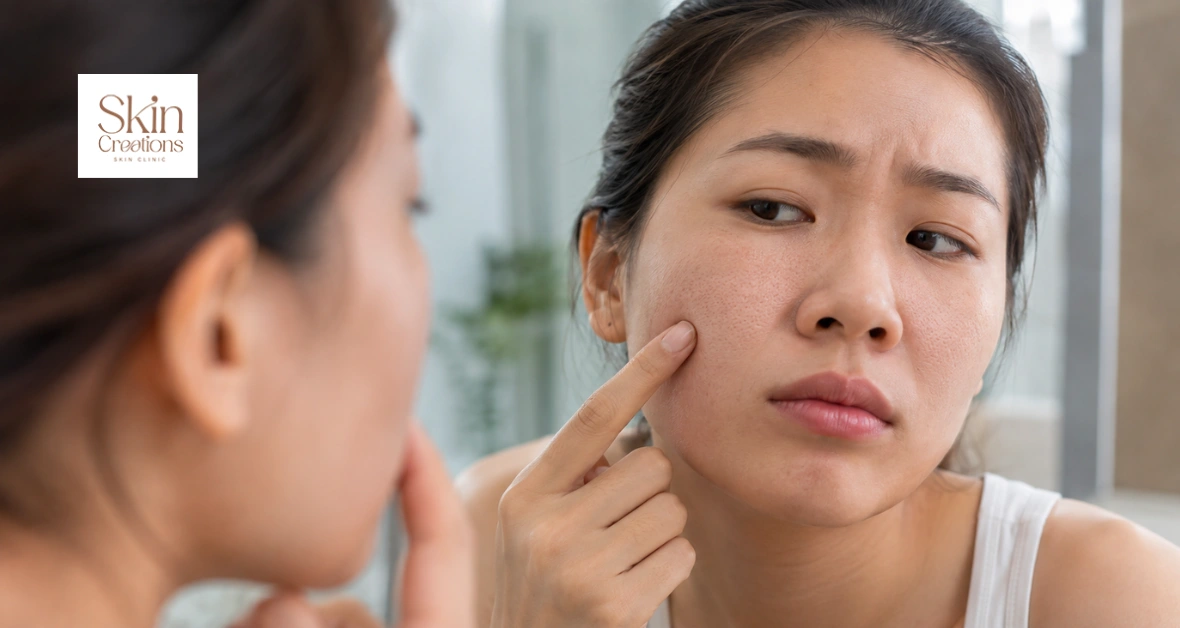
Step outside in Singapore’s heat for just a few minutes, and you’ll feel it: that instant shine, sticky humidity, and skin that just won’t stay matte. If your pores have been looking bigger lately, you’re not imagining it, and you’re definitely not alone.
So, what causes enlarged pores? It usually comes down to a mix of your skin type, daily habits, and Singapore’s hot, humid weather, not something you’re doing wrong. And it’s something you can absolutely take control of.
In this guide, we’ll break down the real reasons behind visible, open pores on your face, and show you exactly how to minimise pores, from simple daily habits to effective, non-surgical treatments that give real, lasting results.
What Causes Enlarged Pores?
Let’s start with the “why.” Once you understand what’s actually causing your pores to look bigger, the fixes make a lot more sense.
Genetics & Skin Type
Some of this really does come down to your DNA. If your parents have oily skin or visible pores, chances are you inherited that same skin type. Pores are natural openings for hair follicles and sebaceous glands (a fancy term for your skin’s oil glands), and their size is partly set from birth. You can’t change your natural pore size, but you can absolutely change how visible they look.
Excess Oil (Sebum) Production
Your skin makes a natural oil called sebum to stay moisturised. When your glands produce more oil than your skin needs, pores can become more noticeable, particularly when oil combines with dead skin cells and other debris. This build-up is part of why some people refer to these as “open pores.”
Singapore's Hot & Humid Weather
Living here means your skin is constantly dealing with heat and humidity. The heat pushes your oil glands to work harder, while humidity traps sweat, oil, and daily grime on your skin’s surface. Heat, sweat, and increased oiliness can make pores and congestion more noticeable, particularly if your skin is already prone to excess sebum.
Sun Damage & UV Exposure
Everyday sun exposure does more than tan your skin, it damages it from the inside. Over time, UV exposure contributes to collagen and elastin damage and can reduce skin elasticity, which may make pores appear more prominent.
Ageing & Collagen Loss
As you get older, your skin naturally produces less collagen. Since collagen is the scaffolding that keeps your skin firm, this gradual loss causes your skin to lose structure over time. Without that support, pores can appear larger, longer, and more textured, and this is where collagen treatments for the face can help restore some of that lost firmness.
Clogged Pores & Skin Debris
Dead skin cells, leftover makeup, sunscreen, and daily pollution settle into your pores throughout the day. This includes tiny particles known as PM2.5, which are common in city air. When this buildup isn’t cleared away properly, it hardens into a plug. That plug physically stretches the pore opening, leaving skin looking rougher and more uneven.
Hormonal Changes
Stress, your monthly cycle, or other hormonal shifts can trigger a spike in androgens, hormones that signal your oil glands to produce more sebum. This is why your pores might suddenly look bigger, oilier, or more congested during certain times of the month or high-stress periods.
How to Reduce Enlarged Pores at Home
Now that you know what triggers enlarged pores, here are the steps you can take to manage them. This kind of skin care to reduce pores doesn’t need to be complicated, these simple daily habits can make a real difference to your skin’s texture over time.
Smart Cleansing (Without Overdoing It)
In Singapore’s heat, your skin battles a daily layer of sweat, oil, and water-resistant sunscreen. To clear this properly, try double cleansing in your evening routine. Start with an oil-based cleanser or micellar water to break down sebum (your skin’s natural oil) and sunscreen. Follow with a gentle, water-based foaming cleanser to wash away any leftover residue.
Just be careful not to over-cleanse. Washing your face too often or using harsh, stripping scrubs can damage your skin’s natural barrier, the protective layer that keeps moisture in and irritants out. When this barrier is compromised, your skin often produces even more oil to compensate, which can make your pores look worse, not better.
Choose Non-Comedogenic Products
When shopping for skincare, look for the label “non-comedogenic.” This simply means the product is formulated not to clog your pores. In a tropical climate, opt for lightweight, gel-based, or fluid formulas, especially for your moisturisers and sunscreens. Heavy, thick creams often sit on top of the skin, trapping oil, sweat, and daily debris inside your pores.
Use Targeted Active Ingredients
Certain ingredients are especially good at controlling oil and keeping pores clear:
- Salicylic Acid (BHA): BHA stands for Beta-Hydroxy Acid. Unlike some other acids, it’s oil-soluble, meaning it can dissolve in oil and travel deep into your pores to break down hardened oil and trapped dead skin. This makes it especially effective for congested, oily skin.
- Niacinamide (Vitamin B3): This ingredient helps regulate how much oil your skin produces, smooths out skin texture, and calms down the redness that can make pores look more noticeable.
- Retinoids (Retinol or Vitamin A derivatives): Used at night, retinoids speed up how quickly your skin renews itself. By helping old, dead skin cells shed properly instead of piling up, they prevent the buildup that stretches pores open.
You don’t need to use all three at once. Start by introducing one active ingredient into your routine, and see how your skin responds before adding another.
Never Skip Daily Sunscreen
Wearing sunscreen in humid weather can feel heavy, but daily sun protection is one of the most important steps for protecting your skin from long-term UV damage. Unprotected UV exposure speeds up the breakdown of collagen and elastin that support skin firmness, which can make pores appear more noticeable over time. In Singapore’s climate, a lightweight, broad-spectrum formula such as Collagen UV Sunscreen can be a practical option if you prefer a sunscreen that feels comfortable on the skin.
Advanced Non-Surgical Clinic Treatments for Pores
If home care isn’t giving the results you want, or a more targeted large-pore treatment is needed, professional options can offer a deeper, longer-lasting solution. Here’s a breakdown of the most effective non-surgical options for refining skin texture:
- Medical-Grade Chemical Peels: A precise mix of AHA and BHA exfoliates deep beneath the skin’s surface, clearing hardened oil and dead skin cells for smoother, more refined pores over a series of sessions. Some redness or sensitivity is common afterwards, depending on strength.
- Laser & Light Therapies (Pico Laser & Fractional Laser): Fractional lasers create controlled microscopic treatment zones that stimulate collagen rebuilding, tightening skin around the pores. Pico laser results vary depending on the device, wavelength, and settings used. Both are clinically supported for reducing the appearance of enlarged pores, though multiple sessions and some downtime are typically needed.
- Radiofrequency (RF) Microneedling: Ultra-fine needles paired with radiofrequency energy remodel and rebuild collagen at deeper skin layers, resulting in firmer skin and smaller-looking pores over time. Temporary redness, swelling, or mild discomfort is common post-treatment.
- Deep-Cleansing & Hydrating Medical Facials: Professional-grade extraction and gentle suction technology clear deeply lodged dirt, oil, and dead skin without irritating the skin, followed by hydrating treatments to restore moisture balance.
- Precision Pore Tightening Treatment: A multi-step treatment combining deep-cleansing extraction, oil-balancing serums, and a hydrating, firming mask to target excess oiliness, blackheads, and uneven texture in one session, with little to no downtime for most clients.
Each of these treatments works differently depending on factors such as your skin’s oiliness, texture, congestion and firmness. Our guide to how to minimise pores on the face explores these treatment approaches in more detail.
When Should You See a Skin Professional?
Home care can go a long way, but sometimes it’s simply not enough on its own. Knowing when to move from a home routine to professional care can save you both time and frustration.
Recognising the Limits of Home Care
If you’ve been consistent with double cleansing, using the right active ingredients, and wearing sunscreen daily, but your pores still look just as visible after a few months, it’s a clear sign your skin needs deeper help. Home care mainly works on the surface of your skin, it can’t rebuild deep collagen or meaningfully change skin structure, the kind of changes that need professional tools to achieve.
It’s time to seek professional guidance if you’re experiencing:
- Ongoing oiliness: Heavy shine and oil that blotting papers or mattifying products just can’t keep up with
- Deep congestion: Stubborn blackheads, whiteheads, or breakouts that keep coming back, even with regular exfoliation at home
- Sagging or stretched pores: Skin that feels less firm than before, with pores that look elongated or droopy
- Uneven texture: Rough or bumpy skin that makeup can’t smooth over or hide
None of this means your routine is wrong. It simply means the root causes, like ongoing collagen loss or excess oil production, may need more targeted, professional-grade care to properly address.
Consulting a Skin Professional
This is where clinical treatments come in. Unlike standard skincare products, professional treatments are tailored specifically to your skin type and concerns. Instead of a one-size-fits-all approach, a professional plan works to address the actual root cause of what you’re seeing.
If you’ve been managing your pores on your own without real improvement, a professional skin assessment is the most effective next step, since understanding the different types of pore tightening treatments available makes it easier to see how each approach targets different skin concerns.
Conclusion
Enlarged pores are something almost everyone deals with, especially living in Singapore’s heat and humidity. They’re usually caused by a mix of genetics, excess oil, sun damage, ageing, clogged pores, and hormonal changes.
Daily habits like proper cleansing, non-comedogenic products, the right active ingredients, and daily sunscreen can help reduce the appearance of enlarged pores over time. When that’s not enough, treatments like chemical peels, laser therapy, RF microneedling, and our Precision pore tightening treatment can help refine your skin further, with downtime varying depending on the treatment and intensity.
Pores can’t be erased completely, but smoother, more refined skin is possible with the right care. If you’re ready to understand exactly what’s causing your pores and find out which treatment suits your skin best, our team at Skin Creations is here to help. Book a skin assessment with us today, and take the first real step toward clearer, more confident skin.
FAQs
Can you permanently shrink your pores?
Not exactly, pore size is something you're mostly born with, so the opening itself can't be physically shrunk. What you can do is make them look noticeably smaller through consistent skincare and treatments that firm up the skin around them, so while you can't erase pores, you can absolutely make them far less visible.
What's the difference between clogged pores and enlarged pores?
They're related, but not the same thing. Enlarged pores are about the size of the opening itself, while clogged pores happen when oil, dirt, or dead skin get trapped inside. A blackhead, for example, is a clogged pore, but you can have visibly large pores with nothing trapped inside at all. The two often show up together, but one doesn't always mean the other.
Do pore strips actually work?
Pore strips can pull out surface blackheads and debris, giving a quick, satisfying result. But they only treat what's on the surface and don't address the oil production or lost elasticity that causes pores to look big in the first place. They're fine as an occasional extra step, but not a long-term fix.
Does drinking more water help reduce pore size?
Staying hydrated supports healthy skin overall, but drinking water alone won't shrink your pores or control oiliness. Pore size comes down to genetics, oil levels, and skin elasticity, so water helps your skin function well, but it's a supporting habit, not a fix on its own.
At what age do pores start looking more noticeable?
Pores often become more visible during puberty, when hormones ramp up oil production. Many people notice them standing out again in their late 20s and 30s, as skin gradually starts to lose some of its natural firmness.
Recent Posts
Contact Details
Contact Details