Expert Skin Care in Singapore
Personalised Skin & Beauty Solutions
Beauty Treatments for Radiant Results
- Home
- Treatments
- CurveLift Sculpting Treatment Singapore
- Non-Surgical Body Contouring Treatment Singapore
- PurifyScalp Detox Treatment Singapore
- All-Inclusive Glow-Up Treatment in Singapore
- Tone & Body Sculpting Treatment Singapore
- Brightening Face Treatment Singapore
- Cryotherapy Skin Repair Treatment Singapore
- Diamonte Anti-Aging Treatment Singapore
- Hair Rejuvenation Treatment Singapore
- Korean Baby Face Therapy Singapore
- Neck & Jaw Lifting Singapore
- Precision Pore Tightening Treatment Singapore
- Rejuve-Lift Eye Treatment Singapore
- RevitaGrow Hair Regrowth Treatment Singapore
- Products
- Gallery
- Our Story
- Blog
- Contact Us

- Aesthetic Clinic in Singapore
- Our Story
- Aesthetic Treatments in Singapore
- PurifyScalp Detox Treatment Singapore
- Non-Surgical Body Contouring Treatment Singapore
- All-Inclusive Glow-Up Treatment in Singapore
- Tone & Body Sculpting Treatment
- Brightening Face Treatment Singapore
- Cryotherapy Skin Repair Treatment Singapore
- Diamonte Anti-Aging Treatment Singapore
- Hair Rejuvenation Treatment Singapore
- Korean Baby Face Therapy Singapore
- Neck & Jaw Lifting Singapore
- Precision Pore Tightening Treatment Singapore
- Rejuve-Lift Eye Treatment Singapore
- CurveLift Sculpting Treatment Singapore
- RevitaGrow Hair Regrowth Treatment Singapore
- Products
- Treatment Booking
- Gallery
- Blog
- Contact Us
- Call Us
- Aesthetic Clinic in Singapore
- Our Story
- Aesthetic Treatments in Singapore
- PurifyScalp Detox Treatment Singapore
- Non-Surgical Body Contouring Treatment Singapore
- All-Inclusive Glow-Up Treatment in Singapore
- Tone & Body Sculpting Treatment
- Brightening Face Treatment Singapore
- Cryotherapy Skin Repair Treatment Singapore
- Diamonte Anti-Aging Treatment Singapore
- Hair Rejuvenation Treatment Singapore
- Korean Baby Face Therapy Singapore
- Neck & Jaw Lifting Singapore
- Precision Pore Tightening Treatment Singapore
- Rejuve-Lift Eye Treatment Singapore
- CurveLift Sculpting Treatment Singapore
- RevitaGrow Hair Regrowth Treatment Singapore
- Products
- Treatment Booking
- Gallery
- Blog
- Contact Us
- Call Us
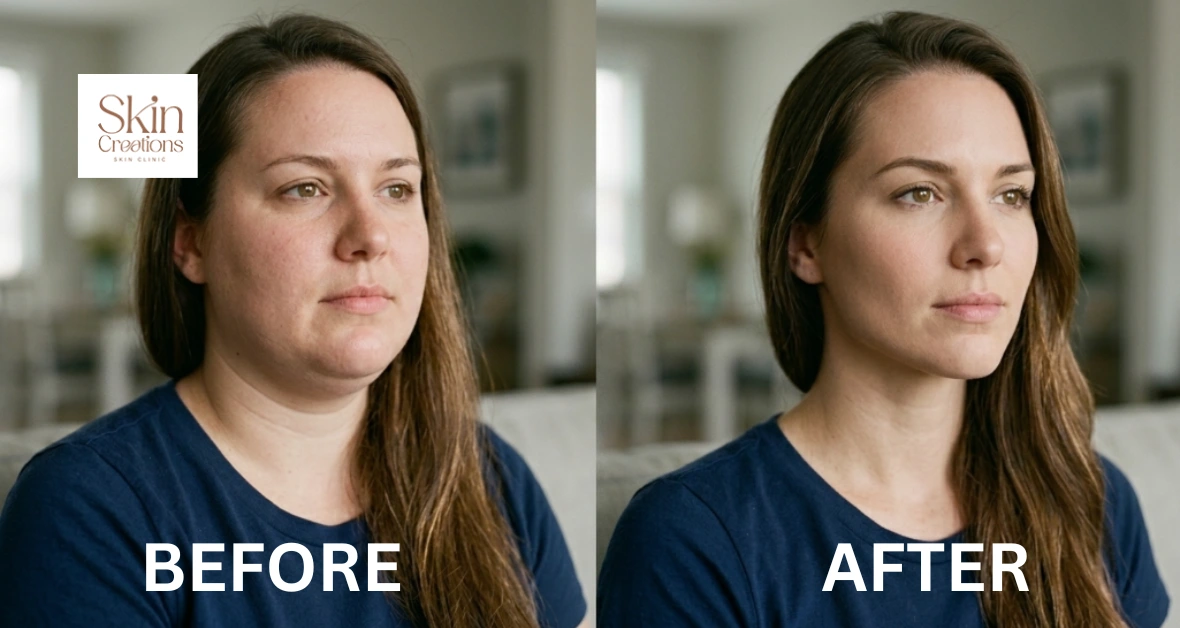
Do you avoid certain camera angles because your cheeks look fuller than you’d like? Does a double chin suddenly become the focus of every video call? For many people, these small everyday moments chip away at confidence far more than any number on a weighing scale.
In Singapore, this concern has become increasingly common. The humid climate, salty hawker favourites, and demanding work culture can all contribute to a fuller, puffier face even when overall body weight stays the same. It’s no surprise that more people here are actively searching for how to lose face fat than ever before.
This guide cuts through the guesswork. From the real causes of face fat to proven diet changes, targeted exercises, and the non-surgical treatments available at aesthetic clinics, every section below is built to help you achieve a slimmer, more defined face the right way.
What Causes Face Fat in the First Place?
Before exploring a slimmer face, it helps to understand why it builds up. Face fat isn’t always about being overweight. Several factors influence how full or defined your face looks, including:
- Genetics – Some people naturally store more fat in their cheeks, jawline, and chin area, regardless of their overall body composition.
- Water retention – Research shows that high sodium intake can increase fluid retention and contribute to temporary facial puffiness. According to the World Health Organisation (WHO), adults should limit sodium intake to less than 2,000 mg per day.
- Poor sleep – Inconsistent or insufficient sleep disrupts hormones that regulate fluid balance, leading to a swollen or “tired” looking face.
- Alcohol consumption – Alcohol dehydrates the body and triggers inflammation, which frequently settles in the face overnight.
- Ageing – As collagen and skin elasticity decline with age, the lower face can appear heavier or saggier, even without added fat.
- Stress and cortisol – Chronically high stress levels, very common among the working population, raise cortisol, which is linked to fat storage in the face and midsection.
- Overall body weight – If your total body fat percentage rises, the face is often one of the first places it becomes visible.
Understanding these causes is the real starting point for anyone serious about learning facial contouring in a way that actually lasts.
How to Lose Face Fat: Proven Tips That Actually Work
A common myth is that you can “spot reduce” fat from just the face. Real results come from lowering overall body fat, reducing water retention, and strengthening facial muscles, the same approach professional experts recommend. Here’s a complete, practical breakdown of losing fat through diet, exercise, and daily habits.
1. Eat a Face-Fat-Friendly Diet
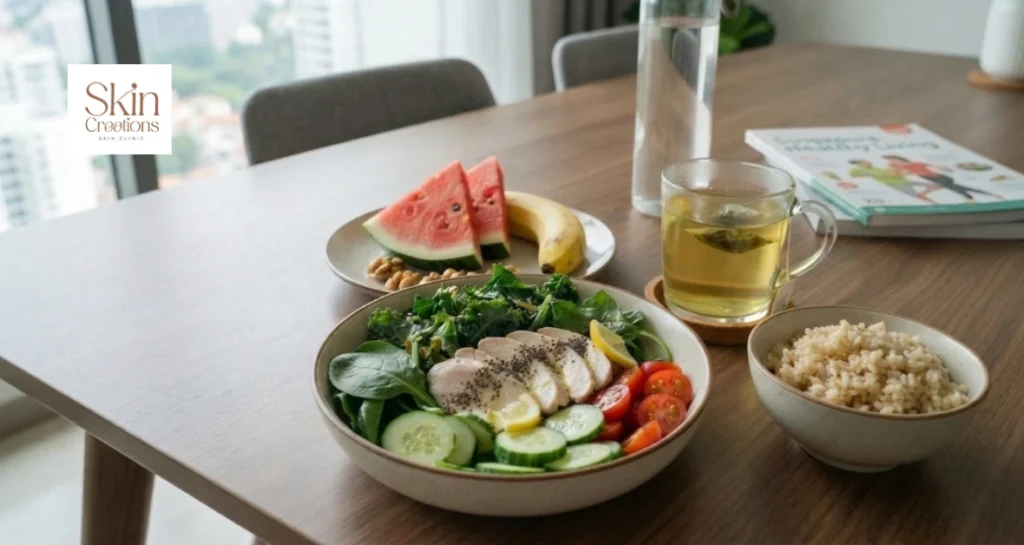
Your diet is the single biggest lever when it comes to learning how to reduce facial fullness. Start with these changes:
- Cut back on sodium: Singaporean cuisine is delicious but often loaded with salt and MSG. Try requesting “less salt” at hawker stalls, rinsing canned foods, and reducing instant noodle consumption. Lower sodium means less water retention and a less puffy face within days.
- Reduce refined sugar and processed carbs: Bubble tea, kopi with extra sugar, and pastries spike insulin levels, which promotes fat storage, including in the face. Swap sugary drinks for kopi-O kosong or unsweetened green tea.
- Increase fibre and lean protein: Foods like vegetables, lean chicken, fish, tofu, and eggs keep you fuller for longer, reducing overall calorie intake without leaving you hungry.
- Watch portion sizes, not just food choices: Even healthy dishes like fish soup or chicken rice can be calorie-dense depending on portions and oil used.
- Add water-rich foods: Watermelon, cucumber, and celery. Their high water content helps flush out excess sodium and supports natural de-puffing.
- Include bananas and leafy greens: Both are rich in potassium, which helps balance sodium levels and reduce water retention.
- Try green tea: Some people find green tea helpful for reducing feelings of bloating due to its mild diuretic effects.
Choose whole grains over refined carbs. Brown rice or wholemeal bread instead of white rice or white bread helps stabilise blood sugar and insulin spikes.
2. Stay Hydrated to Reduce Puffiness
It sounds counterintuitive, but drinking more water, not less, is one of the fastest ways to reduce facial bloating. When you’re dehydrated, your body holds onto excess water as a defence mechanism, and this often shows up as a swollen face. Aim for at least 2 to 2.5 litres of water daily, especially important in Singapore’s hot and humid climate, where fluid loss through sweat is high. Many people notice reduced facial puffiness within the first week after improving hydration.
3. Combine Cardio with Targeted Facial Exercises

To genuinely lose face fat, you need to reduce overall body fat through regular cardiovascular activity such as brisk walking along East Coast Park, swimming, cycling, or HIIT workouts three to five times a week. Alongside this, facial exercises (sometimes called face yoga) can help tone the muscles underneath the skin:
- Cheek puffing and holding – Puff air into your cheeks, hold for 10 seconds, then release. Repeat 10 times.
- Jaw release exercise – Tilt your head back slightly and move your lower jaw as if chewing, which engages the muscles beneath the chin. This exercise may help engage and strengthen muscles around the jaw and neck.
- Fish face pose – Suck in your cheeks to mimic a fish face, hold for 5 to 10 seconds, repeat 10–15 times.
- Neck stretches – Tilt your head back and look at the ceiling, which gently tightens the skin under the jaw and chin.
While facial exercises alone won’t dramatically reshape your face, when combined with fat loss elsewhere in the body, they noticeably improve facial muscle tone and definition.
4. Prioritise Quality Sleep
Aim for 7 to 9 hours of consistent sleep. Poor sleep elevates cortisol and disrupts the lymphatic drainage system, both of which contribute to a swollen-looking face the next morning. Sleeping with your head slightly elevated can also reduce overnight fluid pooling in the face.
5. Manage Stress Levels
Chronic stress raises cortisol, a hormone directly linked to fat storage, including around the face and neck. Simple daily habits like a 10-minute walk, journaling, or even short breathing exercises can meaningfully lower stress hormones over time.
6. Limit Alcohol and Avoid Smoking
Alcohol is dehydrating and inflammatory, often leaving the face visibly puffier the morning after. Smoking, on the other hand, breaks down collagen and elastin, accelerating sagging in the lower face and jawline. Cutting back on both is one of the most underrated steps in any plan to lose face fat.
How to Get Rid of Double Chin: Targeted Solutions
A double chin is one of the most common concerns people raise alongside general face fat, and learning how to get rid of a double chin often requires a slightly more targeted approach than general weight loss alone. If your main goal is to lose face fat specifically around the jaw and chin area, the steps below are worth prioritising:
- Posture correction – Slouching and excessive screen time (a common issue with constant phone and laptop use) weaken neck muscles and worsen the appearance of a double chin. Keep your screen at eye level and avoid looking down for long periods.
- Chin-specific exercises – The “chin lift” (tilting your head back and puckering your lips toward the ceiling) and “neck curl-ups” both target the platysma muscle beneath the chin.
- Non-invasive fat-reduction treatments – Many clinics now offer injectable treatments designed specifically to dissolve small, stubborn pockets of submental (under-chin) fat for patients who haven’t seen results from lifestyle changes alone.
- Overall weight management – Since a double chin is often linked to total body fat, sustainable weight loss through diet and exercise remains the most reliable long-term solution.
If a stubborn double chin is holding you back, read our guide on V-shaped Face Without Surgery to know what you can do about it.
Non-Surgical Face Fat Removal Treatments Available in Singapore
For those who have tried diet and exercise consistently but still want extra results, Singapore has become a regional hub for non-surgical face fat removal treatments. These options are usually considered only after lifestyle methods to lose face fat have been given a fair chance over several weeks. Some of the most commonly offered options at local aesthetic clinics include:
- HIFU (High-Intensity Focused Ultrasound) – Uses focused ultrasound energy to tighten skin and stimulate collagen, often used for jawline and lower-face contouring.
- Ultherapy – A more advanced ultrasound-based skin-tightening treatment, popular for its lifting effect on sagging cheeks and jowls.
- Fat-dissolving injections – Targeted injectables that break down small, localised fat deposits, frequently used for double chin reduction.
- Thread lifts – Dissolvable medical threads are inserted to lift and redefine the jawline and cheek area without surgery.
- V-line / facial slimming treatments – Botulinum toxin injections into the masseter (jaw) muscles can reduce a square or wide-looking jaw, a popular face fat removal option among youngers seeking a softer “V-shaped” face.
Always consult a licensed aesthetic expert registered with the Singapore Medical Council (SMC) before undergoing any of these procedures, and treat them as a complement to, not a replacement for, healthy lifestyle habits.
Not sure where to start? At Skin Creations, a trusted skin aesthetic clinic in Singapore, our experienced aestheticians will assess your concerns and guide you toward the right treatment for your facial goals.
Common Mistakes That Slow Down Face Fat Loss
Even with the best intentions, many people unknowingly sabotage their own progress. Watch out for these common mistakes:
- Relying only on facial exercises without addressing diet or overall body fat.
- Crash dieting, which can cause sagging skin rather than a toned, slimmer face.
- Ignoring sleep and stress, two of the biggest hidden contributors to facial puffiness.
- Expecting overnight results, meaningful, lasting change in facial fat typically takes weeks, not days.
- Skipping hydration in an attempt to “reduce water weight,” which usually backfires and worsens puffiness.
Conclusion
Learning how to lose face fat isn’t about chasing a single trick or a quick fix, it’s about understanding the real causes and addressing them from multiple angles. Whether it’s cutting back on sodium-heavy hawker favourites, staying hydrated, prioritising sleep, or exploring professional aesthetic treatments, lasting results come from consistency.
At Skin Creations, our team is here to support every step of that journey, from your first consultation to visible, confident results. Book your session today and take the first step toward a slimmer, more sculpted face.
FAQs
1. Can an underlying medical condition, like a thyroid issue, cause a puffier or fuller-looking face?
Yes, in some cases. Conditions such as hypothyroidism or fluid retention linked to hormonal or kidney issues can cause facial swelling or fullness that has nothing to do with diet or lifestyle. If facial puffiness appears suddenly, doesn't improve despite healthy habits, or comes with symptoms like fatigue or swelling elsewhere in the body, it's worth checking in with experts to rule out a medical cause.
2. How long does it take to lose face fat?
It varies depending on your body composition, lifestyle, and genetics. Reduced puffiness can appear within days after cutting back on sodium and improving hydration, while visible fat loss from the face typically takes 6 to 12 weeks or longer, since it follows overall body fat reduction. Results tend to be faster and more noticeable when lifestyle changes are combined with non-surgical treatments.
3. Can chewing gum regularly help define the jawline?
Chewing gum does engage the jaw muscles, and some people notice slightly more muscle tone over time. However, it won't significantly reduce fat, and overdoing it can occasionally cause jaw tension or discomfort, so it should be treated as a minor supporting habit at most.
4. Why does my face look fuller than the rest of my body even though I'm not overweight?
This is usually due to genetics, fat distribution patterns, or water retention rather than overall weight. Some people are simply predisposed to store more fat or fluid in the face regardless of their body composition elsewhere.
5. Does the position I sleep in affect how puffy my face looks in the morning?
Yes. Sleeping flat on your stomach or with your face pressed into a pillow can encourage fluid to pool in the face overnight. Sleeping on your back with your head slightly elevated tends to reduce morning puffiness.
6. If I lose weight overall, will my face automatically become slimmer too?
In most cases, yes, although the face is sometimes one of the last areas to show visible change, or in some people, one of the first — it depends heavily on individual genetics and fat distribution. Combining overall weight loss with the facial-specific habits outlined in this guide tends to produce the most noticeable and even results.
Recent Posts
Contact Details
Contact Details