Expert Skin Care in Singapore
Personalised Skin & Beauty Solutions
Beauty Treatments for Radiant Results
- Home
- Treatments
- CurveLift Sculpting Treatment Singapore
- Non-Surgical Body Contouring Treatment Singapore
- PurifyScalp Detox Treatment Singapore
- All-Inclusive Glow-Up Treatment in Singapore
- Tone & Body Sculpting Treatment Singapore
- Brightening Face Treatment Singapore
- Cryotherapy Skin Repair Treatment Singapore
- Diamonte Anti-Aging Treatment Singapore
- Hair Rejuvenation Treatment Singapore
- Korean Baby Face Therapy Singapore
- Neck & Jaw Lifting Singapore
- Precision Pore Tightening Treatment Singapore
- Rejuve-Lift Eye Treatment Singapore
- RevitaGrow Hair Regrowth Treatment Singapore
- Products
- Gallery
- Our Story
- Blog
- Contact Us

- Aesthetic Clinic in Singapore
- Our Story
- Aesthetic Treatments in Singapore
- PurifyScalp Detox Treatment Singapore
- Non-Surgical Body Contouring Treatment Singapore
- All-Inclusive Glow-Up Treatment in Singapore
- Tone & Body Sculpting Treatment
- Brightening Face Treatment Singapore
- Cryotherapy Skin Repair Treatment Singapore
- Diamonte Anti-Aging Treatment Singapore
- Hair Rejuvenation Treatment Singapore
- Korean Baby Face Therapy Singapore
- Neck & Jaw Lifting Singapore
- Precision Pore Tightening Treatment Singapore
- Rejuve-Lift Eye Treatment Singapore
- CurveLift Sculpting Treatment Singapore
- RevitaGrow Hair Regrowth Treatment Singapore
- Products
- Treatment Booking
- Gallery
- Blog
- Contact Us
- Call Us
- Aesthetic Clinic in Singapore
- Our Story
- Aesthetic Treatments in Singapore
- PurifyScalp Detox Treatment Singapore
- Non-Surgical Body Contouring Treatment Singapore
- All-Inclusive Glow-Up Treatment in Singapore
- Tone & Body Sculpting Treatment
- Brightening Face Treatment Singapore
- Cryotherapy Skin Repair Treatment Singapore
- Diamonte Anti-Aging Treatment Singapore
- Hair Rejuvenation Treatment Singapore
- Korean Baby Face Therapy Singapore
- Neck & Jaw Lifting Singapore
- Precision Pore Tightening Treatment Singapore
- Rejuve-Lift Eye Treatment Singapore
- CurveLift Sculpting Treatment Singapore
- RevitaGrow Hair Regrowth Treatment Singapore
- Products
- Treatment Booking
- Gallery
- Blog
- Contact Us
- Call Us
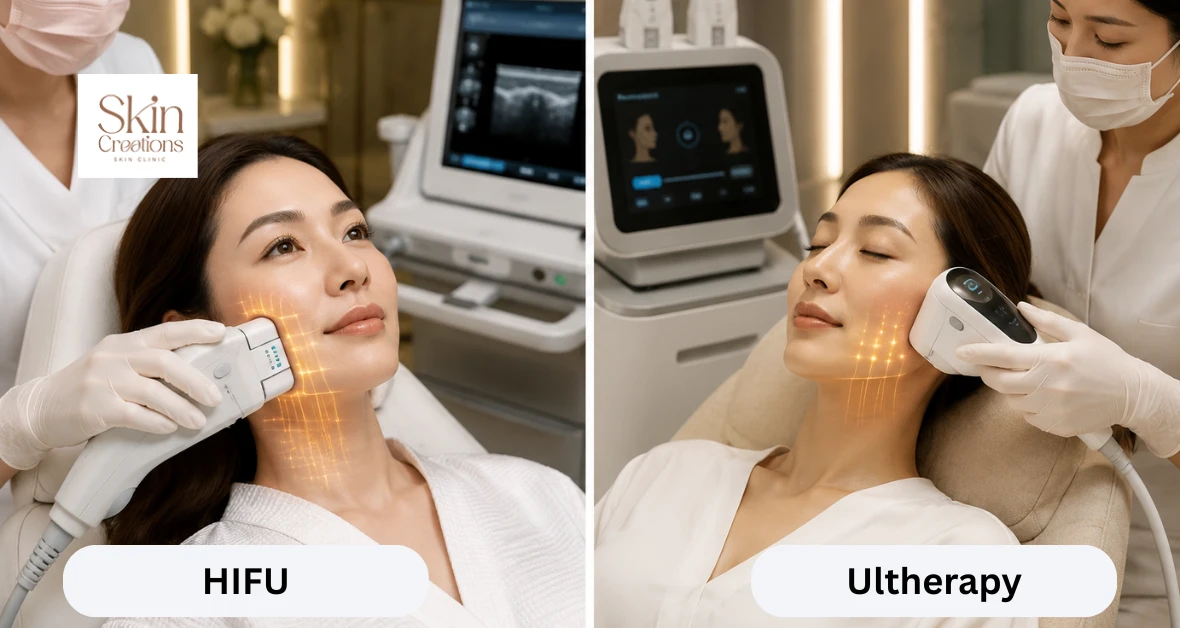
You look in the mirror, and something feels off. Not dramatically different. Just a little less defined along the jaw, a little softer under the chin, a little more tired than you actually feel. Sound familiar?
Singapore’s intense UV exposure and year-round climate can contribute to premature skin ageing over time. A good skincare routine helps, but when your skin needs something that works deeper than any serum can reach, that’s when people start looking for real solutions.
That’s why so many people are comparing Ultherapy vs HIFU at aesthetic clinics in Singapore. Both lift and tighten without surgery or needles, but they are not the same thing. This guide provides a clear, honest breakdown so you can make the right call for your skin.
What Is Ultherapy And How Does It Work?
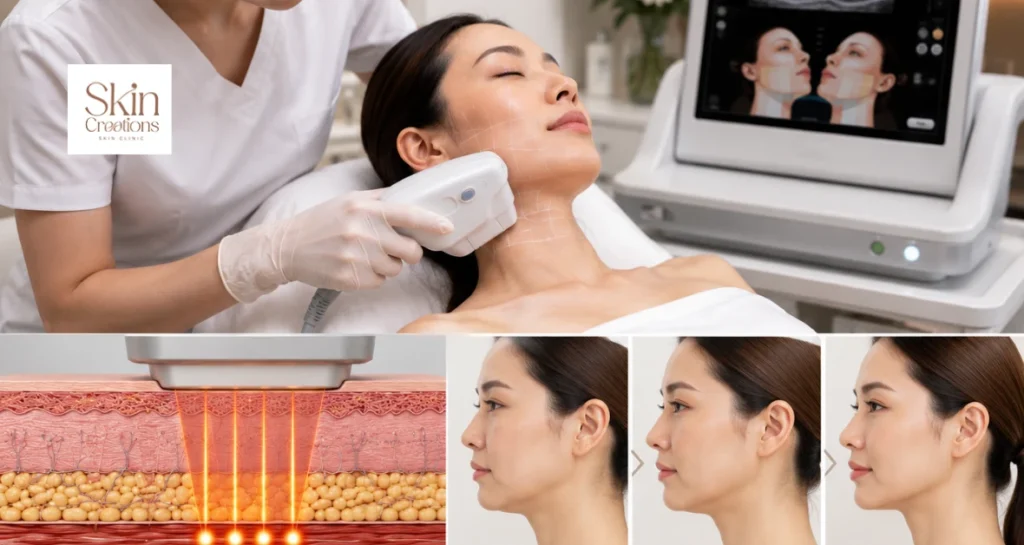
Ultherapy is an FDA-cleared, non-invasive aesthetic treatment that uses micro-focused ultrasound technology to lift and tighten sagging skin. It targets the same foundational layer that surgeons work on during a facelift, except there are no cuts, no needles, and no recovery time needed. It is the only FDA-cleared lifting device with real-time imaging for the neck, chin, and brow, allowing practitioners to see beneath the skin before and during treatment. In one session, your skin starts rebuilding collagen on its own over the following months.
What Is HIFU Treatment And How Does It Work?
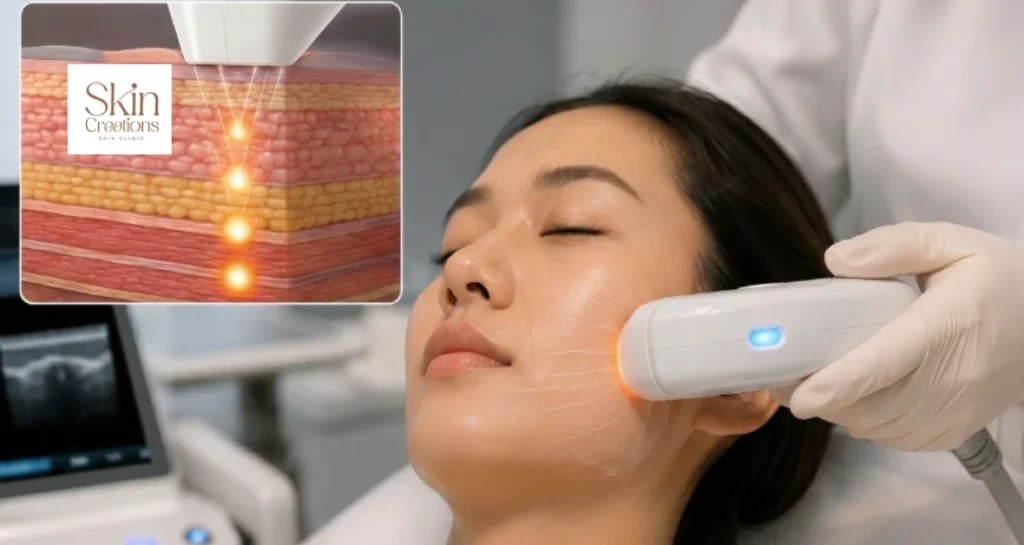
HIFU stands for High Intensity Focused Ultrasound. It works by delivering ultrasound energy into the deeper layers of your skin, prompting your body to produce new collagen over time. No surgery, no downtime, just your skin quietly doing the work after each session. It became one of the most popular non-surgical facelift options because it is effective, widely available, and works for a wide range of skin concerns. Understanding the types of HIFU treatment available can also help you figure out which approach suits your skin goals best.
One thing worth knowing before we compare the two is that Ultherapy uses micro-focused ultrasound technology and is often grouped under the broader category of HIFU-based treatments, although it is a proprietary FDA-cleared system with real-time imaging. So when people ask “HIFU or Ultherapy,” what they are really asking is whether to go with a certified proprietary device or a generic alternative.
Ultherapy Vs HIFU: How Do They Compare?
They both use ultrasound energy, and they both promise tighter, lifted skin. But the way they work, what they deliver, and what they cost are quite different. Let’s break it all down.
1. How Precise And Deep Is The Treatment?
Depth and precision are what separate these two treatments more than anything else, so this is the best place to start.
Ultherapy goes all the way down to the SMAS layer, the deep support layer that surgeons target during a traditional facelift. On top of that, it comes with built-in real-time imaging called DeepSEE, which lets your aesthetician see exactly what lies beneath your skin before placing each pulse of energy. Every shot lands where it needs to; nothing is left to chance.
HIFU devices are generally designed to target similar tissue depths, although treatment depth and precision vary depending on the device used. Most generic HIFU devices lack real-time imaging guidance, so practitioners rely on anatomical knowledge and experience rather than live visualisation. Unlike Ultherapy, HIFU can also treat body areas like the arms, abdomen, and thighs, making it the more versatile option of the two.
2. What Does The Treatment Feel Like?
Neither treatment is completely sensation-free, but they feel quite different from each other.
Ultherapy involves more warmth and intensity during the session because it is working at a deeper level. Most clinics manage this well with numbing options beforehand. Sessions usually run between 60 and 90 minutes, depending on the areas being treated.
HIFU is a more comfortable experience with sessions running between 30 and 60 minutes.
The difference in sensation comes down to how the energy is delivered and the precision of targeting.
3. How Many Sessions Will You Need?
This is where the two treatments start to look quite different from a practical standpoint.
Ultherapy delivers strong results from a single session for most people. A follow-up after 12 months is always there if you want to keep your results going, but many people find one session is enough.
HIFU often needs more than one session to achieve a comparable level of lifting. Some people actually prefer this, since shorter, more frequent sessions fit more easily into a regular skincare routine.
4. How Long Do The Results Last?
This is probably the question most people want answered first, and the difference here is significant.
Ultherapy results typically last between 12 and 18 months. Your skin continues to build collagen in the months after the session, so the improvement continues even after you leave the clinic.
HIFU results tend to sit between 6 and 12 months, which suits people who like adjusting their routine seasonally or prefer not to commit to longer-term changes.
5. How Much Does It Cost, and Is It Worth It?
The price gap between the two is real, but there is a smarter way to look at it than just the upfront number.
Ultherapy in Singapore ranges from SGD 1,500 to SGD 3,500 per session. Although it costs more upfront, the longer duration may reduce how often you need to repeat the treatment.
HIFU treatment price in Singapore ranges from SGD 300 to SGD 1,200 per session. It is a great choice if you are catching things early, want a quicker session, or prefer a lower commitment treatment you can repeat more often.
6. One Thing To Keep In Mind Before You Book
Not all providers are equal, and this is where it pays to do your homework.
Ultherapy uses a certified device and must be performed by a trained professional, so the standard is consistent wherever you go.
HIFU varies much more depending on the provider. If you spot prices that seem unusually low, ask questions. The device, the qualifications of the person performing it, and the settings used all affect how safe and effective your results will be. A quick check on the device and provider beforehand means you can book with confidence either way.
HIFU Vs Ultherapy: Side-by-Side Comparison
Here is everything from this section in one quick view.
Ultherapy | HIFU | |
Technology | Micro-focused ultrasound with real-time imaging | Focused ultrasound without real-time imaging guidance |
Depth | Dermis to SMAS layer | Dermis to SMAS layer(varies by device) |
Sessions needed | Usually one | Often more than one |
Results last | 12 to 18 months | 6 to 12 months |
Cost per session | SGD 1,500 to 3,500 | SGD 300 to 1,200 |
Comfort | More intense, manageable with numbing | Generally more comfortable, good for first-timers |
Downtime | None | None |
Ultherapy Or HIFU: Which One Is Actually Right For Your Skin?
Not sure which one is right for you? That is completely normal; here is a quick way to find out.
Who Is Ultherapy Best For?
Ultherapy works best if you:
- Are in your 30s to 50s with mild to moderate skin laxity
- Want to address visible sagging along the jawline, chin, or neck
- Prefer long-lasting results without coming back every few months
Who Is HIFU Best For?
HIFU works best if you:
- Are in your late 20s to early 30s, catching things early
- Want a quicker session with shorter recovery between appointments
- Prefer a flexible, lower cost option you can repeat as needed
Still exploring your options? Read our Non-Invasive Facelifts Guide to compare popular non-surgical lifting treatments.
A Note On Asian Skin
Asian skin is more prone to pigmentation changes from heat-based treatments. A good aesthetic clinic will always adjust the settings to suit your skin tone and type, so make sure you are booking with someone who has real experience treating Asian skin.
Who Should Hold Off?
Both treatments are not suitable if you are pregnant, have active skin conditions or have metal implants near the face or neck. A proper consultation will catch all of this before anything happens.
Still not sure which one is right for you? Take a look at Skin Creations Neck & Jaw Lifting treatment in Singapore and book a skin assessment when you are ready.
What Results Can You Expect, and How Do You Make Them Last?
This is where a lot of people get caught off guard, so it is worth being upfront about it.
Neither treatment gives you instant results. Your skin rebuilds collagen gradually after each session, and most people start noticing changes around the six to eight week mark, with improvement continuing after that. The lift is real; it just works on your skin’s timeline, not yours.
Ultherapy results peak around three to six months after your session and last between 12 and 18 months.
HIFU results tend to show up around the same time, but need a top-up somewhere between 6 and 12 months.
How Do You Make Your Results Last Longer?
The treatment does the hard work, but your daily habits keep it going:
- Wear SPF every single day, Singapore’s sun breaks down collagen faster than anything else
- Stay hydrated and eat well to support your skin from the inside
- Keep up a consistent skincare routine with actives like vitamin C and retinol
- Avoid smoking, as it speeds up collagen breakdown significantly
Think of the treatment as the foundation. What you do every day is what keeps it standing.
Conclusion
Ultherapy works deeper and lasts longer, while HIFU offers a gentler, more flexible option that fits easily into a regular routine. Both have a place depending on what you’re looking for. Both are non-invasive, both require zero downtime, and both are widely available at aesthetic clinics.
The right choice comes down to your skin, your goals, and where you are in your journey. That is exactly what a consultation is for.
If you want to take that next step, Skin Creations aesthetic clinic in Singapore is here to help you figure out what your skin actually needs. We will thoroughly examine your skin, understand your goals, and provide an honest recommendation based on what we see.
Book a consultation today and let us help you feel good every time you look in the mirror.
FAQs
1. Does Ultherapy hurt?
Ultherapy involves noticeable warmth and intensity during the session, particularly over bony areas like the jaw and cheekbones. It is manageable, and most clinics offer numbing cream beforehand.
2. Does HIFU cause facial fat loss?
No, HIFU does not target fat. It works on the skin's deeper layers to stimulate collagen and tighten loose skin. Any change in facial fullness people notice afterwards is usually due to the skin tightening around existing structures, not fat being removed.
3. Can Ultherapy melt fat?
No, Ultherapy is designed for skin lifting and tightening, not fat reduction. If fat reduction is what you are looking for, that requires a different type of treatment entirely. Ultherapy's job is purely to work on the SMAS layer to lift and firm the skin.
4. Which treatment looks more natural?
Both are designed to look natural since they work gradually with your body's own collagen production rather than creating a sudden change. Ultherapy's results tend to build slowly over a few months, which many people find gives a more subtle, natural-looking lift. HIFU results also build gradually, though they may be less pronounced depending on the device used and the practitioner's experience.
5. At what age should you start?
There is no fixed age; it depends more on your skin than your birthday. Many people start in their late 20s to early 30s as a preventative step, while others begin in their late 30s or 40s once they notice visible sagging. A consultation is the best way to find out what stage your skin is at.
Recent Posts
Contact Details
Contact Details