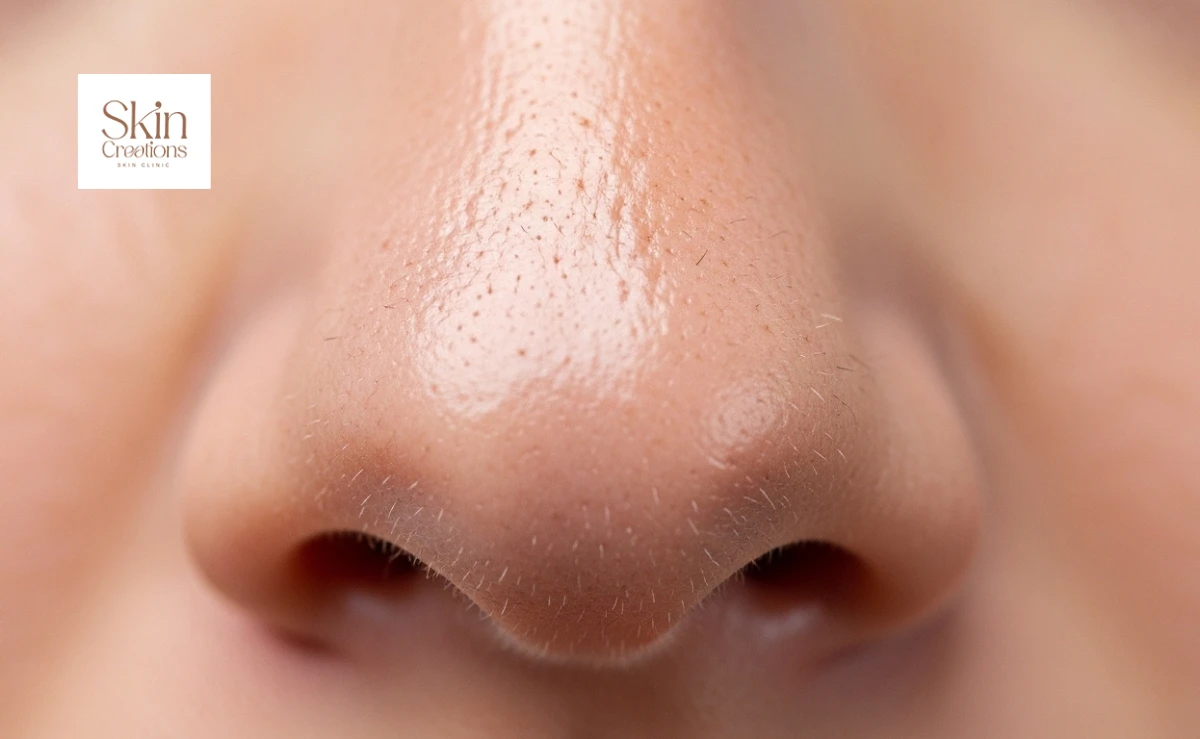
Nobody wakes up thinking about their pores. And then one day, in the wrong lighting or after one too many up-close mirror moments, they’re suddenly all you can see, especially after years in Singapore’s heat, where the humidity and sun do your skin no favours.
Enlarged pores are one of the most common concerns people bring to aesthetic clinics here, and also one of the most mishandled, both by the skincare industry and by well-meaning advice online. Pores don’t close. They’re permanent. But how visible they look is a different matter entirely, and there’s quite a lot you can do about it.
This guide covers what is a pore tightening treatment & why pores enlarge, which pore tightening treatments in Singapore are genuinely worth considering, and what actually helps at home versus what’s just noise.
Why Do Pores Look Enlarged in the First Place?
It’s not just sweat and oil (though those don’t help). As we age, collagen and elastin, the skin’s structural support, break down, and the walls around each pore lose their firmness. Sun damage accelerates this. Clogged pores from dead skin cells or sebum stretch outward, casting shadows that make them look bigger than they are. So effective treatment isn’t just about cleaning the surface; it needs to work on skin structure, oil production, and texture all at once.
What Do These Treatments Actually Do?
If you’re trying to tighten pores on your face, most treatments work across three fronts:
- Collagen stimulation — rebuilding the skin around each pore so it appears naturally firmer and tighter
- Oil regulation — reducing excess sebum that stretches pores and leads to congestion
- Surface refinement — clearing dead skin cells and debris so pores cast fewer shadows and skin looks smoother
The best results come from treatments that address all three, which is why a good consultation at an aesthetic clinic matters more than just picking the most popular procedure.
Types of Pore Tightening Treatment: What’s Available and Who It’s For
1. Laser Pore Tightening
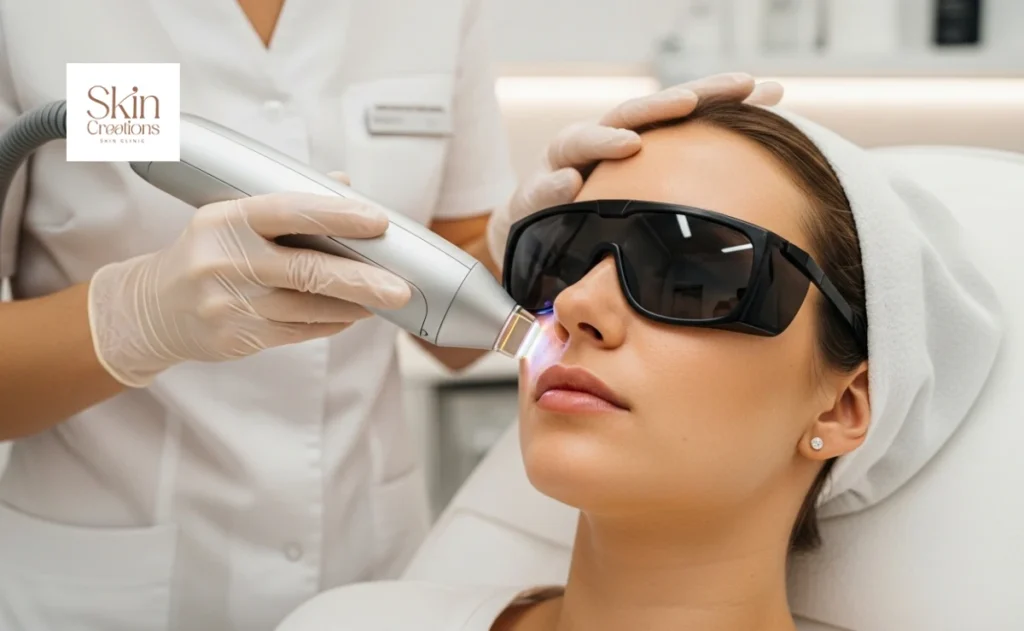
Fractional and non-ablative lasers go beyond the surface, stimulating collagen in the deeper layers of skin. Over several sessions, pores tighten, texture smooths, and, if you’re dealing with acne scars, they improve as well. Expect some redness after each session, anywhere from a few hours to a couple of days, depending on intensity.
Best for: Visible pores alongside acne scarring or uneven texture. Typically 3–6 sessions, 3–4 weeks apart.
2. Radiofrequency (RF) Therapy
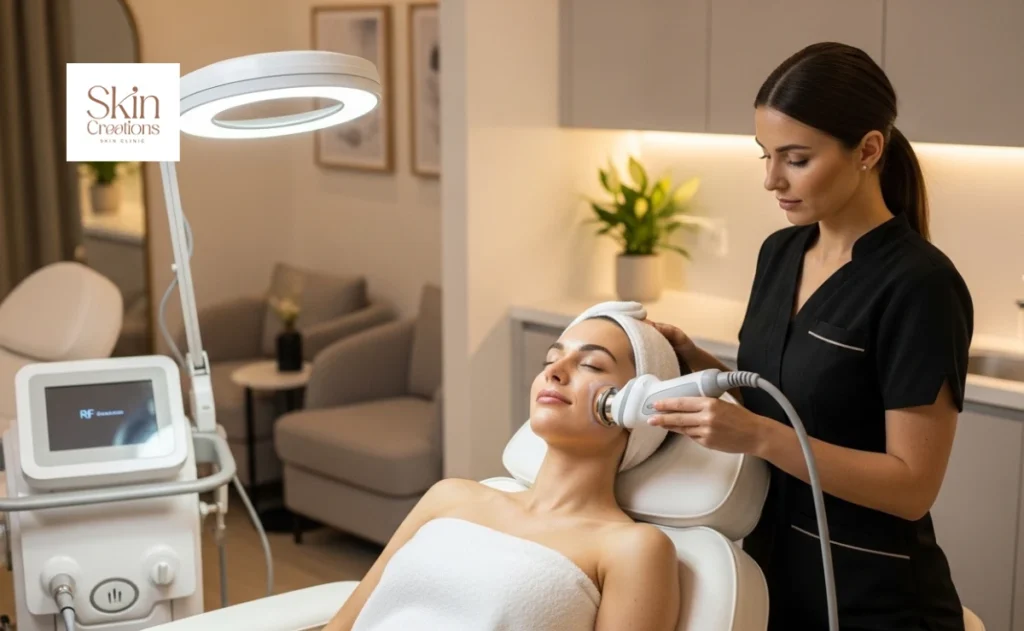
RF uses controlled heat to tighten existing collagen fibres and encourage the skin to produce new ones. It’s gradual; you won’t walk out looking transformed after session one, but it’s a consistent performer for improving skin firmness and reducing pore size. Downtime is minimal: maybe a little warmth or temporary redness.
Best for: Mild to moderate pore enlargement and early skin laxity. Usually 4–6 sessions, 2–4 weeks apart.
3. Microneedling
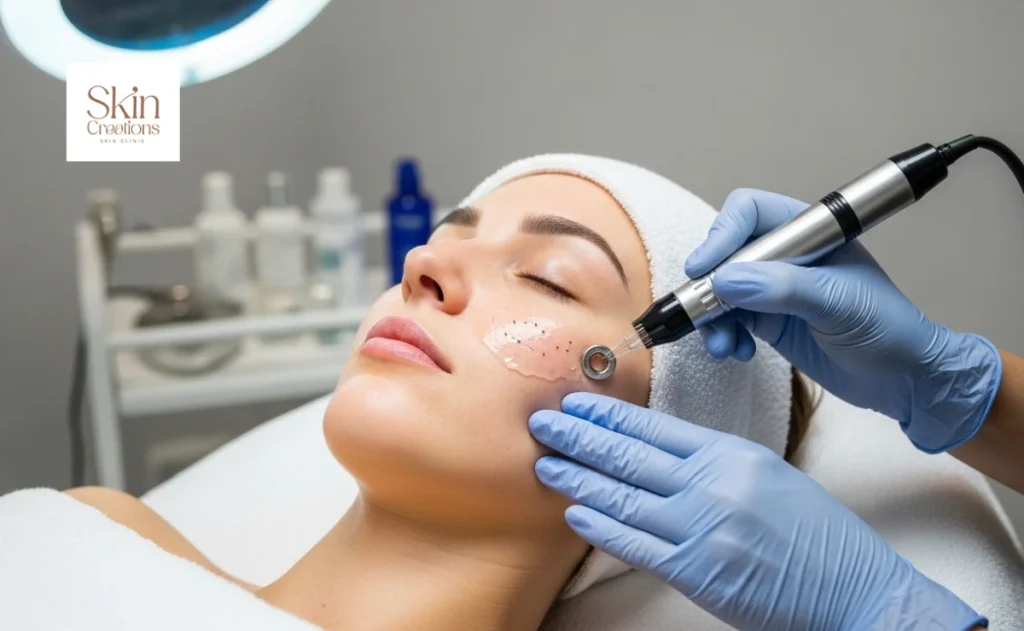
Tiny, controlled punctures trigger the skin’s natural repair response, boosting collagen and elastin production to tighten pore walls and smooth texture. It works well for acne-prone skin types and those with scarring. Plan for 1–3 days of mild redness post-treatment, and occasional light flaking as skin renews itself.
Best for: Enlarged pores with acne scarring. 3–5 sessions, spaced 4–6 weeks apart.
4. Chemical Peels
A professional-grade peel does more than exfoliate; it unclogs pores, regulates oil, and brightens overall skin tone in one go. Lighter peels have minimal downtime; deeper ones may mean a few days of peeling and redness. The right peel strength is something your aesthetician should assess based on your skin type and sensitivity.
Best for: Oily, congested, or dull skin. 3–6 sessions, depending on peel strength.
5. Microdermabrasion
Think of this as a thorough mechanical polish. It buffs away the outermost layer of dead skin to smooth texture and reduce the appearance of minor pore irregularities. It’s one of the gentler options, minimal downtime, slight sensitivity for a day at most, and works well as a monthly maintenance treatment.
Best for: Mild pore visibility, rough or dull skin. Once monthly for upkeep.
6. Hydrafacial
This multi-step treatment cleanses, exfoliates, extracts, and hydrates, all in one session. There’s no downtime, zero redness, and you leave looking noticeably cleaner and more refined. It’s not the most intensive option on this list, but it’s excellent for maintenance or if you need results before a big event. Both oily and sensitive skin types tend to respond well.
Best for: Congested or sensitive skin, ongoing maintenance. 1–2 sessions per month.
For noticeable and long-lasting pore refinement, a Precision Pore Tightening Treatment at a certified clinic can be tailored to your skin type and concerns, complementing your at-home routine for smoother, firmer, and healthier-looking skin.
Home Remedies to Tighten Pores: What Actually Works
Before committing to a full skincare routine or booking a clinic visit, plenty of people try home remedies to tighten pores first, and a few of them are genuinely worth it. They won’t replace professional treatment, but as a quick fix or a complement to your routine, these are the ones that actually hold up:
- Ice — Rubbing an ice cube over clean skin for 30–60 seconds temporarily constricts pores and reduces puffiness. Great before makeup or on days your skin looks more congested than usual.
- Green tea — Brewed, cooled green tea used as a toner contains tannins that help tighten skin and cut down on oiliness. Dab it on with a cotton pad after cleansing and let it sit before moisturising.
- Aloe vera — Fresh aloe vera gel calms inflammation, temporarily tightens the look of pores, and works well as a lightweight overnight treatment, particularly if your skin runs oily or sensitive.
- Pore tightening masks — You’ll find no shortage of these at any pharmacy or beauty store, and they’re fine for a quick refresh. They pull out some oil, skin looks a little smoother for a day or two, and that’s about where it ends. They’re not doing anything about the actual reason your pores look enlarged, so don’t expect much beyond that.
- Apple cider vinegar toner — Diluted with water (one part ACV to three parts water), it helps balance skin pH and clear congestion. A few times a week is plenty, daily use can irritate.
- Egg white mask — A thin layer left on for 10–15 minutes temporarily firms and tightens. It’s one of the oldest tricks in the book and still one of the more noticeable quick fixes.
Just don’t expect these to do the heavy lifting on their own. For results that actually last, a consistent routine and the right professional treatment will always go further.
At-Home Regimens to Support Pore Tightening
Professional treatments are only half the equation. Without consistent at-home care, results fade faster than they should. For anyone wondering how to tighten pores on the face naturally between clinic visits, here’s what actually makes a difference:
- Cleanse twice daily — sweat, oil, and pollution accumulate fast in Singapore. Use a gentle cleanser that removes buildup without stripping the skin, which can trigger more oil production.
- Exfoliate with BHA (salicylic acid) — 2–3 times a week; it penetrates the pore to clear congestion. It’s one of the most effective over-the-counter ingredients for pore refinement.
- Try a pore tightening mask — clay-based formulas work well once or twice a week to draw out excess oil and visibly reduce congestion between treatments.
- Use niacinamide or a retinoid — niacinamide regulates oil and strengthens pore walls; retinoids speed up cell turnover and stimulate collagen. Both are worth the commitment.
- SPF every day, no exceptions — UV damage breaks down collagen faster than almost anything else, making pores appear larger over time. A lightweight, non-comedogenic SPF 30+ is non-negotiable.
- Moisturise, even if you’re oily — dehydrated skin loses elasticity, which means pores stretch more easily. Go for a water-based or gel moisturiser if you’re prone to congestion.
Risks and Safety Considerations in Singapore
Pore tightening treatments are generally low-risk when performed by trained professionals using properly regulated equipment. A few things worth knowing:
- Temporary redness or swelling is normal after microneedling or laser; it settles within days
- A mild skin purge after exfoliation treatments is common as impurities surface
- Post-inflammatory hyperpigmentation is a real risk for darker skin tones if treatments are too aggressive. Always disclose your skin type during consultation
Always choose an aesthetic clinic that follows Ministry of Health guidelines and uses HSA-approved devices. A thorough consultation before any treatment isn’t just best practice, it’s what separates good results from regrettable ones.
Conclusion
Visible pores are manageable, with the right treatment, the right clinic, and a home routine you’ll actually stick to. The key is knowing what your skin specifically needs, rather than guessing or following generic advice. A professional assessment takes the guesswork out of it and gets you to results faster. Ready to get started? Book a consultation at a trusted aesthetic clinic in orchard.
FAQs
1. How long does it take for pores to tighten?
It depends on the treatment. Hydrafacial gives you immediate clarity. Collagen-stimulating treatments like lasers and microneedling work more gradually; the full effect can take a few months as your skin rebuilds. Most people see meaningful improvement after 3–6 sessions.
2. How long do pore tightening results last?
Realistically, 3–6 months, though this varies by treatment and how consistently you follow your skincare routine at home. Periodic maintenance sessions help sustain results over the long term.
3. Is pore tightening treatment painful?
Most treatments are well-tolerated. You might feel mild warmth, tingling, or a pricking sensation. For more intensive procedures, such as microneedling or laser treatments, numbing cream is typically applied beforehand to keep you comfortable.
4. Can pore tightening improve acne scars?
Yes, microneedling and, in particular, fractional lasers stimulate collagen, which helps smooth enlarged pores and acne scarring. It’s one of the reasons these treatments are often recommended together.
5. Is there downtime after pore tightening?
Highly variable. Hydrafacial and RF therapy? Essentially none. Microneedling means a couple of days of redness. Laser procedures can lead to several days of sensitivity and a visible recovery. Your aesthetician will set clear expectations based on the specific treatment and intensity level.