Expert Skin Care in Singapore
Personalised Skin & Beauty Solutions
Beauty Treatments for Radiant Results
- Home
- Treatments
- RevitaGrow Hair Regrowth Treatment Singapore
- Hair Rejuvenation Treatment Singapore
- PurifyScalp Detox Treatment Singapore
- Tone & Body Sculpting Treatment Singapore
- All-Inclusive Glow-Up Treatment in Singapore
- Non-Surgical Body Contouring Treatment Singapore
- CurveLift Sculpting Treatment Singapore
- Rejuve-Eye Lifting Treatment Singapore
- Precision Pore Tightening Treatment Singapore
- Neck & Jaw Lifting Singapore
- Korean Facial Treatment in Singapore – Baby Face Therapy
- Diamonte Anti-Aging Facial Treatment in Singapore
- Brightening Facial Treatment in Singapore
- Cryo Lifting Facial & Cryotherapy Skin Repair Treatment in Singapore
- Products
- Gallery
- Our Story
- Blog
- Contact Us

- Home
- Our Story
- Aesthetic Treatments in Singapore
- RevitaGrow Hair Regrowth Treatment Singapore
- Hair Rejuvenation Treatment Singapore
- PurifyScalp Detox Treatment Singapore
- Tone & Body Sculpting Treatment Singapore
- All-Inclusive Glow-Up Treatment in Singapore
- Non-Surgical Body Contouring Treatment Singapore
- CurveLift Sculpting Treatment Singapore
- Rejuve-Eye Lifting Treatment Singapore
- Precision Pore Tightening Treatment Singapore
- Neck & Jaw Lifting Singapore
- Korean Facial Treatment in Singapore – Baby Face Therapy
- Diamonte Anti-Aging Facial Treatment in Singapore
- Brightening Facial Treatment in Singapore
- Cryo Lifting Facial & Cryotherapy Skin Repair Treatment in Singapore
- Treatment Booking
- Products
- Blog
- Gallery
- Contact Us
- Call Us
- Home
- Our Story
- Aesthetic Treatments in Singapore
- RevitaGrow Hair Regrowth Treatment Singapore
- Hair Rejuvenation Treatment Singapore
- PurifyScalp Detox Treatment Singapore
- Tone & Body Sculpting Treatment Singapore
- All-Inclusive Glow-Up Treatment in Singapore
- Non-Surgical Body Contouring Treatment Singapore
- CurveLift Sculpting Treatment Singapore
- Rejuve-Eye Lifting Treatment Singapore
- Precision Pore Tightening Treatment Singapore
- Neck & Jaw Lifting Singapore
- Korean Facial Treatment in Singapore – Baby Face Therapy
- Diamonte Anti-Aging Facial Treatment in Singapore
- Brightening Facial Treatment in Singapore
- Cryo Lifting Facial & Cryotherapy Skin Repair Treatment in Singapore
- Treatment Booking
- Products
- Blog
- Gallery
- Contact Us
- Call Us
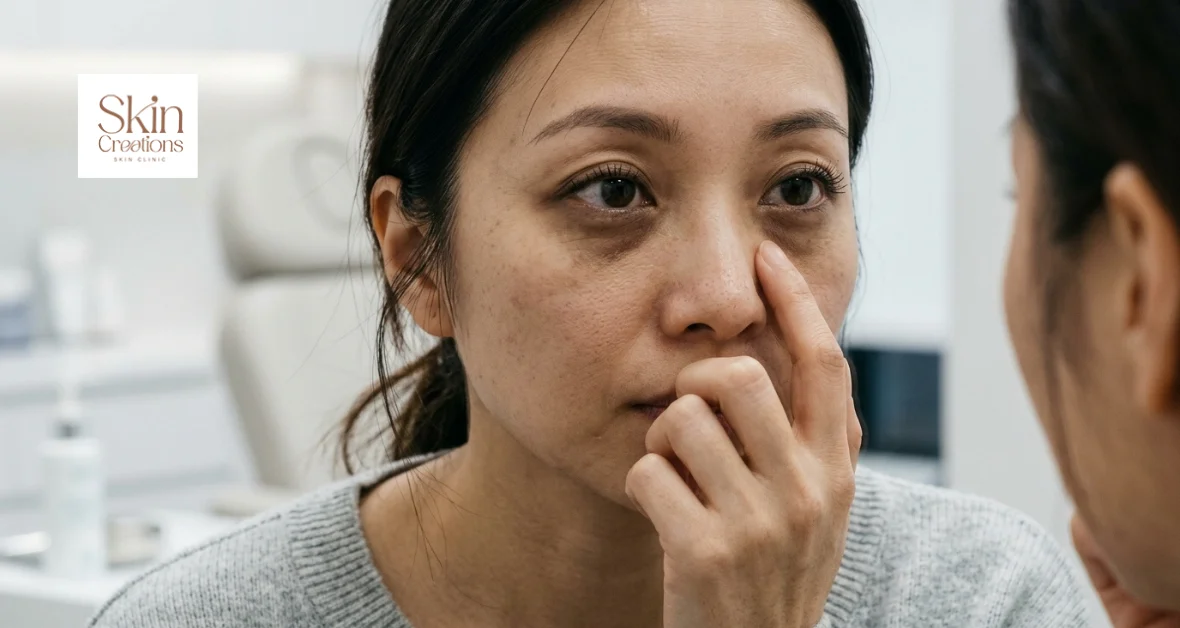
You got a full night’s sleep, eight hours, maybe even nine. But you walk into work, and someone says it anyway. “Are you okay? You look tired.” That stings. Because you’re not tired. You just have dark eye circles, and if you’re in Singapore, you’re definitely not alone.
Most people blame it on bad sleep or not drinking enough water. So they try the expensive eye cream, the cold spoons, the cucumber slices, and nothing really changes. What most people don’t realise is that dark circles aren’t all the same. There are different types, and using the wrong fix for the wrong type is exactly why most remedies fall flat.
At our skin clinic in Singapore, we see this every day, and we are here to help you understand how to get rid of dark eye circles by exploring what is really causing them, how to identify your type, and what non-invasive treatments actually work. No surgery, no downtime, just clear, honest information so you can finally do something that works.
What's Really Causing Your Dark Eye Circles? (It's Not Always Sleep)
The truth is, dark eye circles can come from a whole mix of reasons. In Singapore, especially, your skin is dealing with several factors at once. Here are the most common ones:
- Lack of sleep: When you don’t get enough rest, your skin turns pale and dull, making the area beneath your eyes look darker and more prominent than usual.
- Ageing: As you get older, your skin naturally loses collagen and becomes thinner. This makes everything underneath, including blood vessels and shadows, a lot more visible.
- Genetics: If your parents had dark eye circles, there’s a good chance you inherited the tendency too. Completely out of your control and far more common than most people realise.
- Sun exposure: Singapore’s intense sun triggers your skin to produce more melanin, especially around the eyes, which gradually deepens the darkness over time.
- Screen time and eye strain: Staring at screens for long hours causes blood vessels around the eyes to enlarge, making dark circles under the eyes appear more prominent.
- Allergies and rubbing: Dust mites are extremely common in Singapore homes. Allergies cause itchiness, and constant rubbing breaks tiny blood vessels and darkens the skin underneath.
- Dehydration: Air-conditioned offices quietly pull moisture from your skin all day. When the skin beneath your eyes is dehydrated, it looks sunken and shadowy.
- Stress: Chronic stress disrupts your sleep cycle and slows down skin recovery, both of which make things noticeably worse over time.
Now that you know the cause of dark eye circles, the next step is understanding how these factors actually show up on your skin.
Which Type of Dark Circles Do You Have? (This Changes Everything)
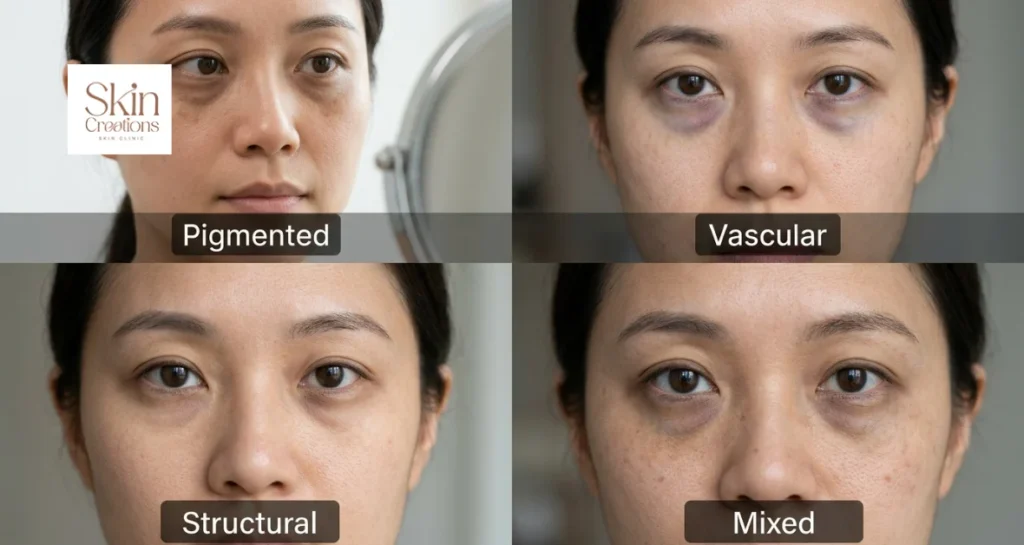
Not all dark eye circles look the same, and they definitely don’t all have the same fix. Understanding the types of dark eye circles before trying any treatment is what makes the difference between something that actually works and something that just sits on your shelf. There are four main types:
1. Pigmented (Brown or Greyish)
This type shows up as a brownish or greyish tint beneath the eyes. If your dark circles look exactly the same whether you slept well or not, and no amount of rest seems to make a difference, this is most likely your type. It’s caused by excess melanin buildup in the skin and is extremely common in Asian skin. Many people in Singapore start noticing this in their twenties, and it tends to deepen gradually with sun exposure over the years.
2. Vascular (Bluish or Purplish)
This one has a cool bluish or purplish hue beneath the eyes. It happens when blood vessels beneath the thin under-eye skin become more visible. If your circles look worse after a late night, a long screen session or during allergy season, this is likely what you’re dealing with. Dust allergies, which are incredibly common in Singapore, are one of the biggest triggers for this type.
3. Structural (Shadow-based)
This type has nothing to do with colour at all. It’s actually a shadow. As the face loses volume with age, a slight hollow forms beneath the eye and that hollow casts a dark shadow that mimics a circle. If things seem to get worse in certain lighting or when you look downward, structure is probably playing a role. This becomes more noticeable from your thirties onwards, which is why anti-ageing treatments targeting volume and skin firmness are often recommended alongside eye-specific care.
4. Mixed
This is honestly the most common type among Singaporeans. A combination of pigmentation, visible vessels and some hollowing all happening at the same time. If you’ve tried multiple products targeting different things and seen only partial results, a mixed type could explain why nothing has fully worked so far.
Here’s a simple test you can do right now. Gently stretch the skin just beneath your eye using your finger. If the darkness shifts or fades, you’re most likely dealing with pigmentation. If it stays exactly the same, it’s probably vascular or structural. Not a perfect diagnosis, but a solid starting point before speaking to a professional.
Do Home Remedies for Dark Eye Circles Actually Work?
Before spending money on any treatment, most people go through the same journey. The cold spoons, the tea bags, the viral TikTok hacks, the eye cream that costs a small fortune. There’s nothing wrong with trying them. Some do help, just not in the way most people expect. If you’re looking at how to reduce dark eye circles at home, here’s an honest look at what actually does something and what doesn’t:
- Cold compress or chilled spoons: Helps reduce puffiness and temporarily shrinks blood vessels, which can make the eyes look a little less tired. It won’t touch pigmentation or hollowing, though, and the effect fades within an hour or two.
- Caffeine eye creams: Caffeine helps constrict blood vessels and drain excess fluid, so it can reduce that puffy, swollen look. Useful for vascular types but won’t make a dent in pigmented or structural circles.
- Vitamin C serums: With consistent daily use over several weeks, Vitamin C can gradually brighten pigmented dark circles by slowing down melanin production. It works, but slowly and only on the pigmentation type.
- Sleep and hydration: Genuinely helpful as a foundation. Better sleep and staying hydrated keep your skin looking its best, but they won’t reverse deep pigmentation, visible vessels or volume loss that has built up over the years.
- Cucumber slices: Mostly soothing and refreshing. The cooling effect helps with puffiness slightly, but there’s no real evidence that they do much beyond that.
The honest truth is that home remedies work best as maintenance, keeping things from getting worse rather than actually fixing them. If your dark circles have been around for years, no cream or kitchen ingredient is going to undo that on its own. That’s simply not what they’re designed to do.
Non-Invasive Dark Eye Circle Treatment Singapore: What Actually Works
This is where things get interesting. Depending on your type and how severe your dark circles are, there are several non-invasive treatments in Singapore that actually go after the root cause. Here’s what’s available and who each one works best for:
1. Pico Laser / Q-Switch Laser
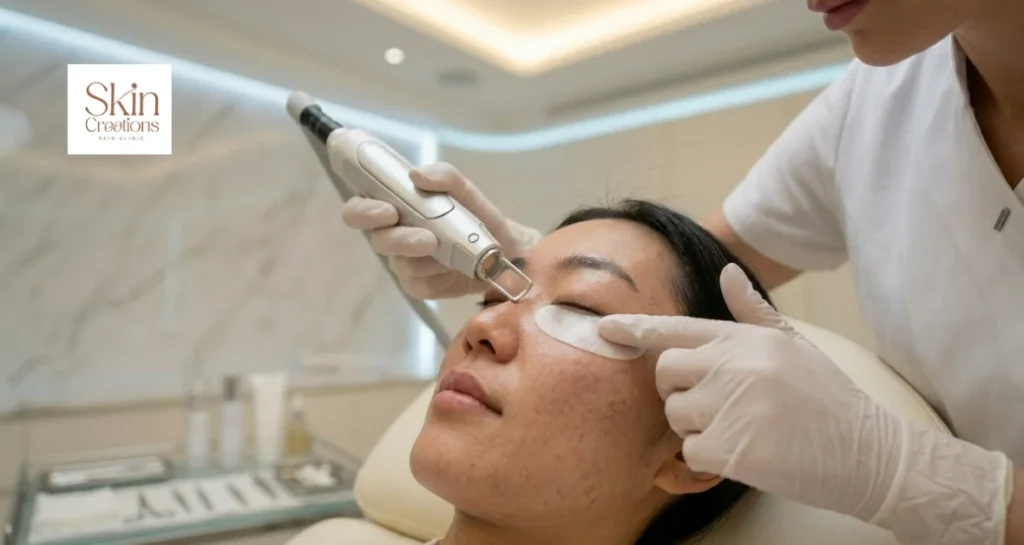
The go-to for pigmented dark circles. The laser breaks down excess melanin beneath the skin without damaging surrounding tissue, and your body flushes it out naturally over the following days. Safe for Asian skin tones, and most people start seeing a visible difference after three to five sessions.
2. Rejuran / PDRN Eye Treatment
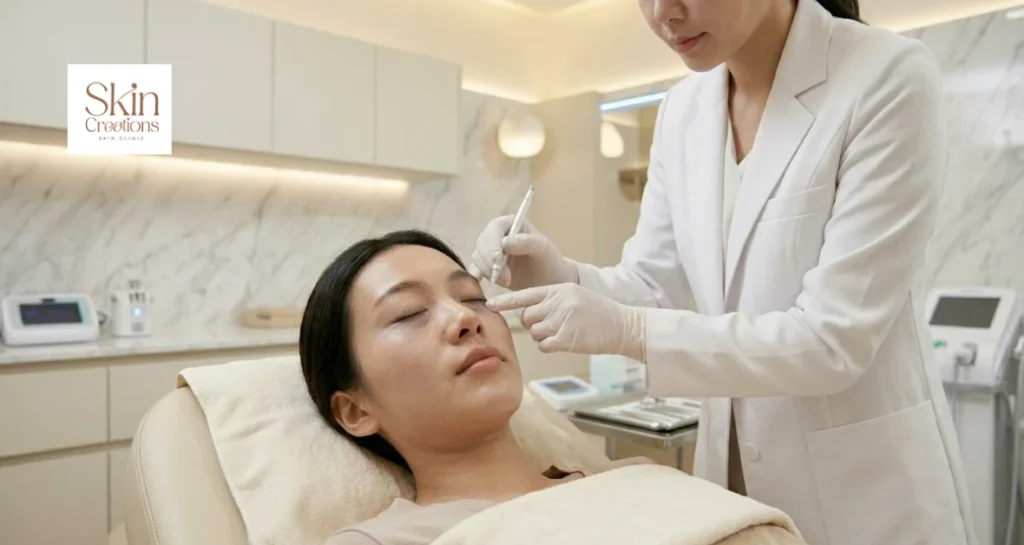
Best for vascular dark circles, which have a bluish or purplish tint caused by visible blood vessels. Rejuran uses an ingredient derived from salmon DNA to rebuild and thicken the thin under-eye skin from within, making those vessels far less visible over time.
3. Skinbooster Injections
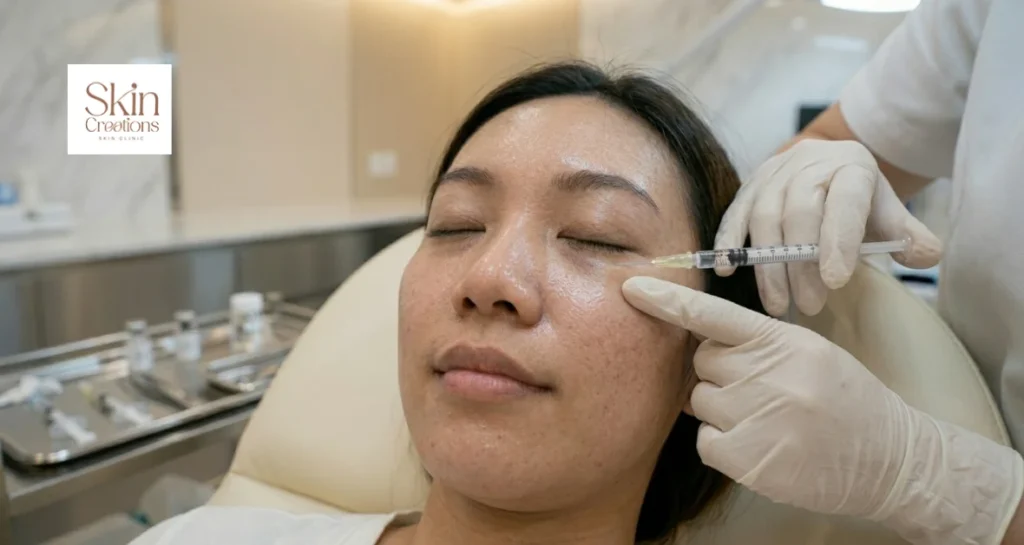
Works well for dark circles made worse by dehydration and volume loss. Hyaluronic acid is delivered directly into the under-eye area, plumping and hydrating the skin from within. Results typically last several months.
4. HIFU / Radiofrequency (RF) Lifting
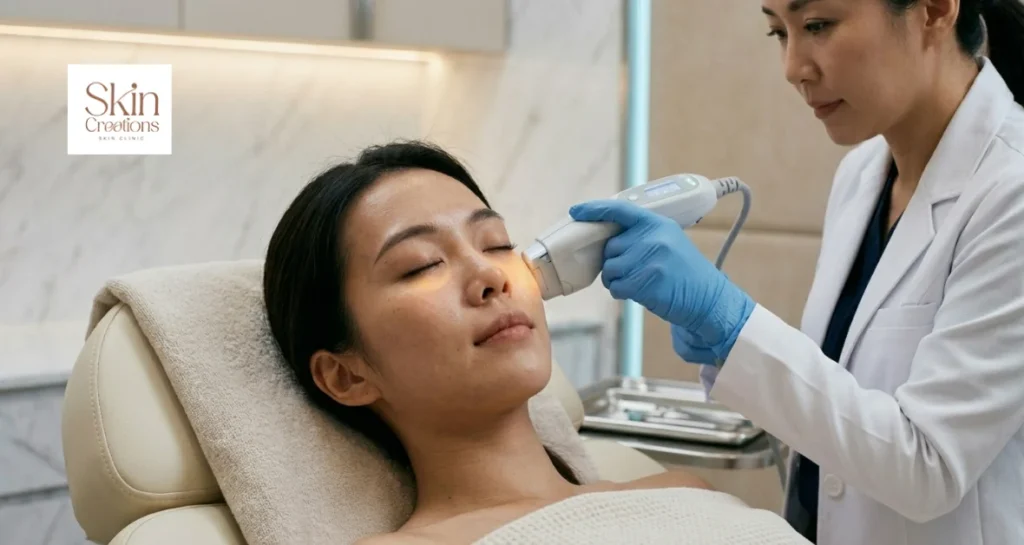
Ideal for structural dark circles where hollowing and loose skin are casting shadows. Focused energy tightens and lifts the eye area gradually with no needles and virtually no downtime.
Not sure if HIFU is right for you? Check out our complete guide on What is HIFU Treatment to find out which type suits your skin best.
5. Chemical Peels
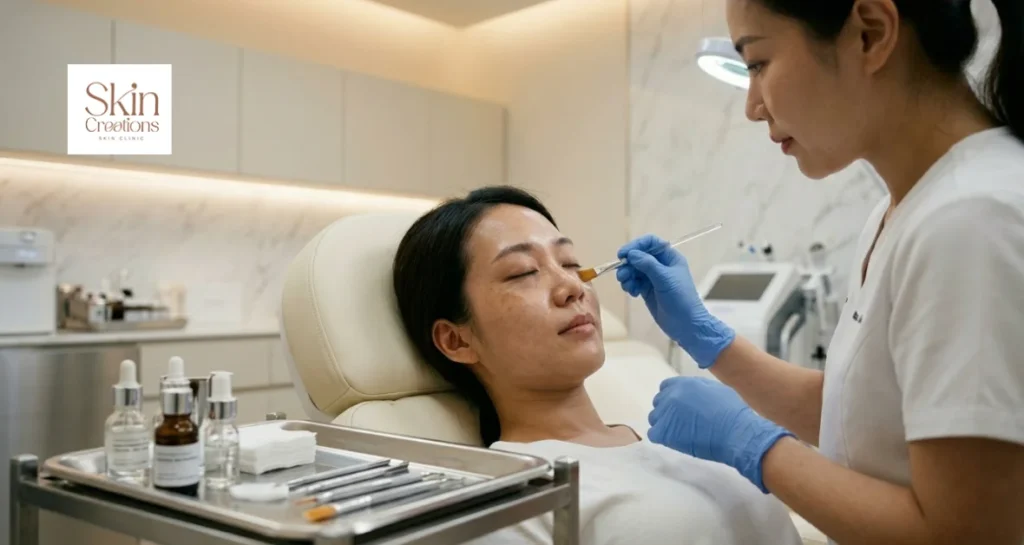
A good option for surface-level pigmented dark circles caused by sun damage. A gentle peel removes dull, uneven skin and encourages fresher, brighter skin to come through.
It works best for mild to moderate dark circles, puffiness, and early signs of ageing. For deeper pigmentation or significant hollowing, a clinical treatment may still be the stronger option, and a consultation will help you figure out which route suits you best.
If needles and lasers aren’t something you’re comfortable with yet, the Rejuve-Lift Eye Treatment at Skin Creations is worth considering. It’s a completely needle-free, laser-free session that combines lymphatic drainage, microcurrent lifting, collagen infusion and deep cleansing into one sixty-minute treatment.
Getting Dark Eye Circle Treatment in Singapore: What to Expect
Never been to an aesthetic clinic before? No worries. Your first visit is really just a conversation. A professional will look at your eyes, figure out your circle type, and suggest a plan that suits you. No pressure, no commitment on the spot.
Most treatments in Singapore range from $150 to $800 per session. Some people see a difference after one session, others need three to six sessions for lasting results. And downtime? Most people walk straight back to work after. Maybe some mild redness for a few hours, but nothing major.
To keep results going, wear sunscreen daily and come back for maintenance sessions every few months. In Singapore’s sun, that one habit alone makes a huge difference.
Conclusion
Dark eye circles are one of those things that quietly affect how you feel about yourself every single day. You now know what causes them, the different types, and what treatments are out there. But if you’re still not sure what’s actually going on with your eyes specifically, that’s completely okay.
Not everyone can tell their type just from reading an article. And getting it wrong means wasting time and money on the wrong solution all over again.
If you want to finally get rid of dark eye circles for good, book a consultation at Skin Creations. Our trained aestheticians will take a close look at your under-eye area, identify your circle type, and recommend the most suitable non-invasive treatment plan for you personally. No guesswork, no pressure, just clear answers and a path forward that actually makes sense for your skin.
FAQs
1. Does rubbing your eyes cause dark circles?
Yes, it can. Rubbing puts repeated pressure on the delicate under-eye skin, which breaks tiny blood vessels and triggers inflammation. Over time, this darkens the skin and makes things look worse. If allergies are making you rub your eyes often, treating the allergy is just as important as treating the circles.
2. Do dark eye circles get worse with age?
They often do. As you get older, your skin naturally loses collagen and fat, making the under-eye area thinner and more hollow. This makes both pigmentation and blood vessels more visible than they were in your twenties. Starting treatment earlier generally gives better long-term results.
3. Can dark circles come back after treatment?
They can, especially if the root cause isn't managed. Sun exposure, poor sleep, and skipping maintenance sessions can all bring them back over time. Most people find that occasional top-up treatments combined with good daily habits keep results lasting much longer.
4. Are dark eye circles a sign of a health problem?
In most cases, they're purely a cosmetic concern and not a sign of anything serious. However, if your circles appeared very suddenly or come with swelling and persistent itchiness, it's worth checking with a doctor to rule out allergies or underlying health issues first.
5. At what age do dark eye circles usually start?
It varies from person to person. Some people in Singapore start noticing them as early as their teens or twenties, especially if genetics or pigmentation is involved. Others develop them gradually through their thirties as skin starts to lose volume and thickness.
Recent Posts
Contact Details
Contact Details