Expert Skin Care in Singapore
Personalised Skin & Beauty Solutions
Beauty Treatments for Radiant Results
- Home
- Treatments
- CurveLift Sculpting Treatment Singapore
- Non-Surgical Body Contouring Treatment Singapore
- PurifyScalp Detox Treatment Singapore
- All-Inclusive Glow-Up Treatment in Singapore
- Tone & Body Sculpting Treatment Singapore
- Brightening Face Treatment Singapore
- Cryotherapy Skin Repair Treatment Singapore
- Diamonte Anti-Aging Treatment Singapore
- Hair Rejuvenation Treatment Singapore
- Korean Baby Face Therapy Singapore
- Neck & Jaw Lifting Singapore
- Precision Pore Tightening Treatment Singapore
- Rejuve-Lift Eye Treatment Singapore
- RevitaGrow Hair Regrowth Treatment Singapore
- Products
- Gallery
- Our Story
- Blog
- Contact Us

- Aesthetic Clinic in Singapore
- Our Story
- Aesthetic Treatments in Singapore
- PurifyScalp Detox Treatment Singapore
- Non-Surgical Body Contouring Treatment Singapore
- All-Inclusive Glow-Up Treatment in Singapore
- Tone & Body Sculpting Treatment
- Brightening Face Treatment Singapore
- Cryotherapy Skin Repair Treatment Singapore
- Diamonte Anti-Aging Treatment Singapore
- Hair Rejuvenation Treatment Singapore
- Korean Baby Face Therapy Singapore
- Neck & Jaw Lifting Singapore
- Precision Pore Tightening Treatment Singapore
- Rejuve-Lift Eye Treatment Singapore
- CurveLift Sculpting Treatment Singapore
- RevitaGrow Hair Regrowth Treatment Singapore
- Products
- Treatment Booking
- Gallery
- Blog
- Contact Us
- Call Us
- Aesthetic Clinic in Singapore
- Our Story
- Aesthetic Treatments in Singapore
- PurifyScalp Detox Treatment Singapore
- Non-Surgical Body Contouring Treatment Singapore
- All-Inclusive Glow-Up Treatment in Singapore
- Tone & Body Sculpting Treatment
- Brightening Face Treatment Singapore
- Cryotherapy Skin Repair Treatment Singapore
- Diamonte Anti-Aging Treatment Singapore
- Hair Rejuvenation Treatment Singapore
- Korean Baby Face Therapy Singapore
- Neck & Jaw Lifting Singapore
- Precision Pore Tightening Treatment Singapore
- Rejuve-Lift Eye Treatment Singapore
- CurveLift Sculpting Treatment Singapore
- RevitaGrow Hair Regrowth Treatment Singapore
- Products
- Treatment Booking
- Gallery
- Blog
- Contact Us
- Call Us
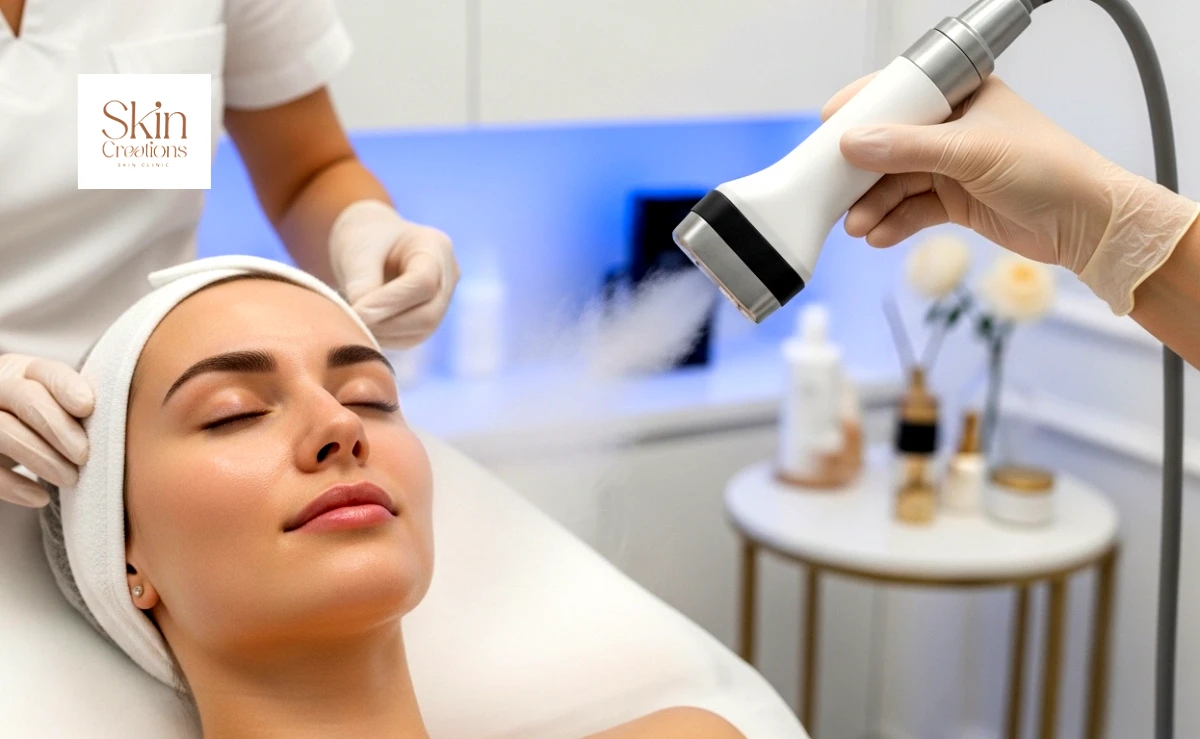
Most people look into cryotherapy facials after hitting a wall. The skincare routine is consistent, the serums are high-quality, yet by midday, the skin still looks tired, slightly puffy, a little dull, not quite as firm as it once was.
Treatments that actually move the needle, lasers, injectables, RF microneedling, come with real trade-offs: redness that lasts days, recovery windows that don’t fit around a work week, or price tags that make monthly maintenance hard to justify.
So what is a cryotherapy facial, exactly? At its simplest, it’s controlled bursts of ultra-cold nitrogen vapour applied to the skin, causing blood vessels to constrict and then dilate, increasing circulation and oxygen delivery to the surface, often leaving skin looking brighter, tighter, and less puffy, all in under 15 minutes. It sounds almost too simple. Here’s what’s actually going on.
How Does a Cryotherapy Facial Work?
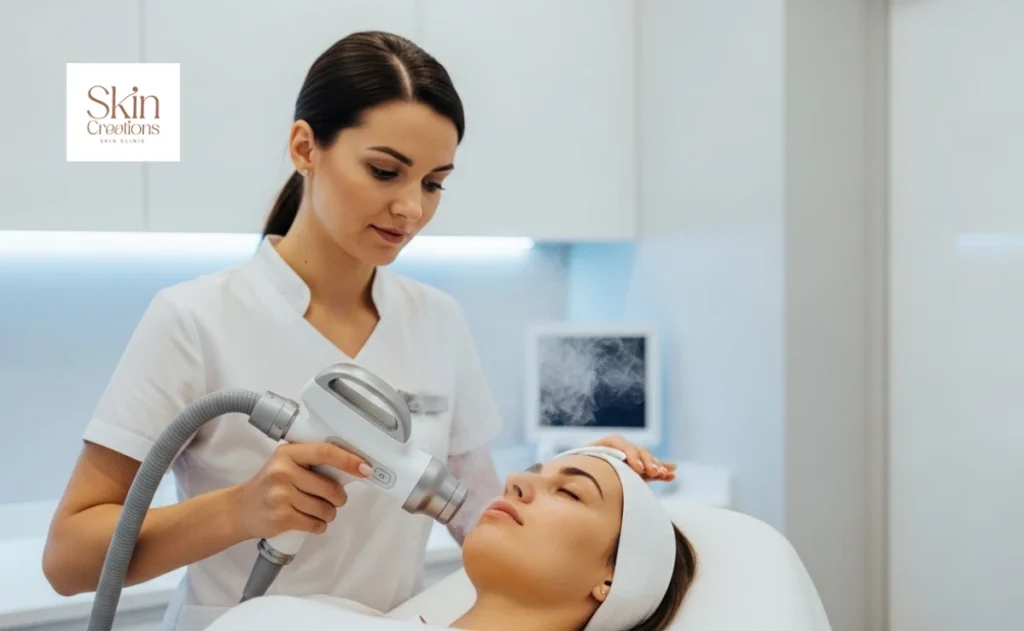
At its core, the process is surprisingly simple. A trained aesthetician directs a controlled stream of cryogenically cooled nitrogen vapour, typically between -110°C and -160°C, across the face in slow, circular motions. The nozzle never touches the skin, which is why the cryo facial treatment feels intense but remains safe when performed correctly.
When your skin is exposed to that level of cold, it responds immediately. Blood vessels constrict, a process called vasoconstriction. The moment the cold is removed, they rapidly expand again, flooding the surface with oxygenated, nutrient-rich blood. This thermal shock effect is what creates the fresh, slightly tightened, less puffy look most people notice the moment they look in the mirror after a session.
Cold exposure may also activate fibroblasts, the cells that produce collagen and elastin. The boost from a single session is modest, the kind of improvement that compounds quietly over consistent sessions rather than announcing itself all at once.
What Does a Cryotherapy Facial Actually Treat?
Cryotherapy facials aren’t designed to address a single concern. They’re better thought of as a multi-benefit treatment that improves several visible issues at once, particularly those linked to circulation and mild inflammation.
Here’s where they tend to make the most noticeable difference:
Puffiness and facial oedema — The rapid vasoconstriction effect is especially helpful for morning puffiness, particularly around the eyes. The result is immediate, though temporary, usually lasting 24 to 48 hours.
Enlarged or congested pores — Extreme cooling contracts pores, creating a smoother-looking surface. It won’t permanently shrink them, but the refined appearance is exactly why some people book sessions before events or photographs.
Dull or uneven skin tone — Better microcirculation means better oxygen and nutrient delivery to skin cells. Over time, that translates into a brighter, more even complexion, subtle but consistent.
Mild inflammatory skin concerns — Some clinics use cryotherapy alongside treatments for rosacea-prone or sensitive skin. The cold response can temporarily reduce redness, though it works best as a complement to proper medical treatment rather than a standalone fix.
Fine lines and early signs of ageing — With consistent sessions, the gradual collagen stimulation may soften fine lines over time. Think refinement, not transformation; the changes are real but progressive.
If your skin feels reactive, stressed, or stuck, not responding the way it once did, Skin Creation’s Cryotherapy Skin Repair Treatment is designed specifically for that, combining cold therapy with a structured protocol built around skin recovery, barrier strengthening, and long-term renewal.
What to Expect During and After the Treatment
During the Session Most people describe the sensation as intensely cold but not painful, similar to standing in front of an air conditioner at full blast, just more concentrated. There’s often a brief tingling as the skin adjusts, which fades quickly. Sessions usually last 10 to 15 minutes, and while the cold is noticeable, it remains tolerable for most people.
Immediately After, the skin may appear flushed or slightly pink for 20–30 minutes as circulation returns to normal; this simply reflects increased blood flow returning to the surface. Many people notice visible tightening and brightening within hours, with no peeling, increased sun sensitivity, or downtime required.
In the Days That Follow The brightness and subtle tightening tend to peak within the first 24 hours and gradually soften over the next two to three days. For cumulative improvements in skin texture and firmness, most practitioners recommend a series of 6–10 sessions spaced one to two weeks apart, followed by monthly maintenance.
Is a Cryotherapy Facial Safe?
When performed by a trained professional using medical-grade equipment, cryotherapy facials generally carry a low risk profile. The nitrogen used in modern facial cryo devices is delivered as vapour rather than liquid, which means it doesn’t make direct contact with the skin. Reputable clinics follow strict temperature controls to keep the treatment within safe limits.
That said, cryotherapy isn’t suitable for everyone. If you have any of the following conditions, it’s worth speaking with your doctor before booking:
- Raynaud’s disease or cold urticaria (cold-induced allergies)
- Active rosacea flare-ups or open wounds
- Uncontrolled diabetes or circulatory disorders
- Pregnancy (as a precaution)
- Known hypersensitivity to cold
A brief medical screening before your first session should always be part of the process.
One important distinction worth making: professional cryo freeze treatments are very different from DIY cold tools. At-home ice rollers don’t reach the controlled temperatures needed to create the same physiological response, and if used too aggressively, they can cause localised skin damage rather than any real benefit.
Cryotherapy Facial vs. Other Popular Treatments in Singapore
Singapore’s aesthetic landscape is packed with options, so it helps to understand where cryotherapy fits and where it doesn’t.
Cryotherapy vs. HydraFacial: HydraFacial focuses on deep cleansing. Using vortex suction technology, it extracts impurities while infusing hydrating serums into the skin. It’s particularly effective for congestion, blackheads, and dehydration.
Cryotherapy doesn’t cleanse; its strength lies in tightening, reducing puffiness, and creating that immediate “refreshed” look. Many clinics offering cryotherapy in Singapore now combine the two, using HydraFacial first to clear and hydrate the skin, followed by cryotherapy to enhance circulation and give a firmer finish.
Cryotherapy vs. LED Light Therapy: LED facials use specific wavelengths of light, red to support collagen production, blue to target acne-causing bacteria. The approach is gradual and biological rather than circulatory.
Compared to LED, a cryo facial Singapore tends to deliver more immediate visible changes, especially in brightness and tightness. LED therapy, however, may offer more consistent long-term support for acne management and collagen stimulation when done regularly.
Cryotherapy vs. RF (Radiofrequency) Treatments: Radiofrequency treatments such as Thermage or Morpheus8 work by heating the deeper layers of the skin to stimulate significant collagen remodelling. The results are typically more dramatic and longer-lasting, but they also involve more discomfort, higher costs, and recovery time.
The cryo lifting facial is far gentler by comparison, no heat, no post-treatment recovery, and no corrective downtime. It’s best viewed as a maintenance or enhancement treatment rather than a solution for significant skin laxity.
How Much Does a Cryotherapy Facial Cost in Singapore?
The cost varies depending on the clinic type, location, and whether the treatment is offered on its own or as part of a multi-step facial.
As a general guide:
- Medical aesthetic clinics: SGD 150–350 per session
- Beauty spas and wellness centres: SGD 80–180 per session
- Package deals (6–10 sessions): usually 15–30% savings compared to single sessions
Clinics along Orchard Road or in the CBD tend to charge toward the higher end, while heartland outlets may be more competitively priced. When comparing costs, check what each session includes; some packages bundle LED therapy or serum infusions, which can add value even if the headline price looks higher.
For a full breakdown by clinic type and package size, see our complete guide on how much a cryotherapy facial costs in Singapore.
Conclusion
Cryotherapy facials occupy a useful middle ground in Singapore’s aesthetic landscape, more than a spa indulgence, less than a clinical intervention. The immediate effects are real, the biology behind them is sound, and for anyone dealing with persistent puffiness, dullness, or early signs of ageing, it’s a legitimately worthwhile addition to a skincare routine.
The evidence for longer-term benefits, particularly collagen stimulation, points to consistent sessions over time rather than a single cryo treatment. Think of it less as a fix and more as maintenance that compounds quietly: something you build into a routine rather than reach for occasionally.
If you’re considering trying one, our aesthetic clinic in Singapore offers the treatment using medical-grade equipment, performed by trained practitioners who assess your skin before your first session. The basics we’d insist on for any client, a proper consultation, the right device, and realistic expectations, are the same things worth asking about wherever you go.
FAQs
1. How often should I get a cryotherapy facial in Singapore’s climate?
Singapore’s heat and humidity make skin more prone to oiliness, puffiness, and congestion, all of which cryo facials help address. Most practitioners suggest starting with a course of sessions spaced one to two weeks apart, then moving to monthly maintenance once the skin has responded well. Because there’s no cumulative skin stress, those with oilier or puffier skin often continue bi-weekly sessions long-term without issue.
2. Can I wear makeup right after a cryotherapy facial?
Yes. There are no open pores, micro-channels, or surface disruption to worry about post-treatment. Skin may appear slightly flushed for 20–30 minutes, but after that you’re good to go. Many clients schedule sessions the day before an event for exactly this reason.
3. Does a cryotherapy facial help with acne?
It can help as an anti-inflammatory measure; the cold reduces redness and swelling around active breakouts. However, it doesn’t address root causes like bacteria or sebum overproduction, so it works better as a complementary treatment alongside targeted acne therapy rather than a primary solution.
4. Can I combine a cryotherapy facial with other treatments in the same session?
Yes, and this is common practice. Cryo facials pair particularly well with LED light therapy or microdermabrasion beforehand; the cold calms the skin after exfoliation and may enhance serum absorption by improving microcirculation. Avoid combining with treatments that significantly compromise the skin barrier, like deep chemical peels or ablative lasers, on the same day.
5. Is there any prep I need to do before a session?
Very little. Arrive with clean, makeup-free skin if possible, though most clinics will cleanse your face as part of the process. If your skin is sensitive, avoid exfoliating acids (AHAs, BHAs) or retinoids for 24 hours beforehand, as these can temporarily increase skin reactivity to temperature extremes.
Recent Posts
Contact Details
Contact Details